


I’ve always been wary of VPNs. Even though I am security-oriented, the concept of funneling my data through someone else’s server raised immediate red flags. It felt risky to share data with a third-party company, one that could say one thing while doing another.
But 2025 changed things for a lot of people. Between expanding data broker networks, new surveillance legislation in several countries, and a wave of high-profile breaches that exposed just how much of our digital lives sit vulnerable, online privacy stopped feeling like a niche concern.
Online privacy in 2026 looks very different than it did just a few years ago. Governments collect more metadata, advertisers rely less on cookies, and websites use increasingly sophisticated methods to recognize users across sessions and devices.
This shift has created confusion around tools that were once considered essential, especially VPNs. Many users still associate VPNs with anonymity, while others now believe they are outdated and ineffective. The truth is somewhere in between. VPNs haven’t disappeared from the privacy landscape, but the role they play has quietly changed.
Understanding whether a VPN is still worth using in 2026 requires looking back at how tracking actually works today, what VPNs are designed to protect, and where their limitations begin. Only then does it become clear why VPNs still matter — just not in the way many people expect.
Not long ago, using a VPN felt like a clear upgrade. You turned it on, your IP address disappeared, and suddenly you felt safer online. Streaming worked across borders, public Wi-Fi felt less risky, and advertisers seemed easier to escape.
Fast forward to 2026, the internet looks very different. Tracking is smarter, browsers behave differently, operating systems leak more metadata, and AI-driven analytics can recognize users without relying on old-school identifiers. This naturally leads to a question many people now ask before renewing their subscription.
What Does A VPN Actually Protect?
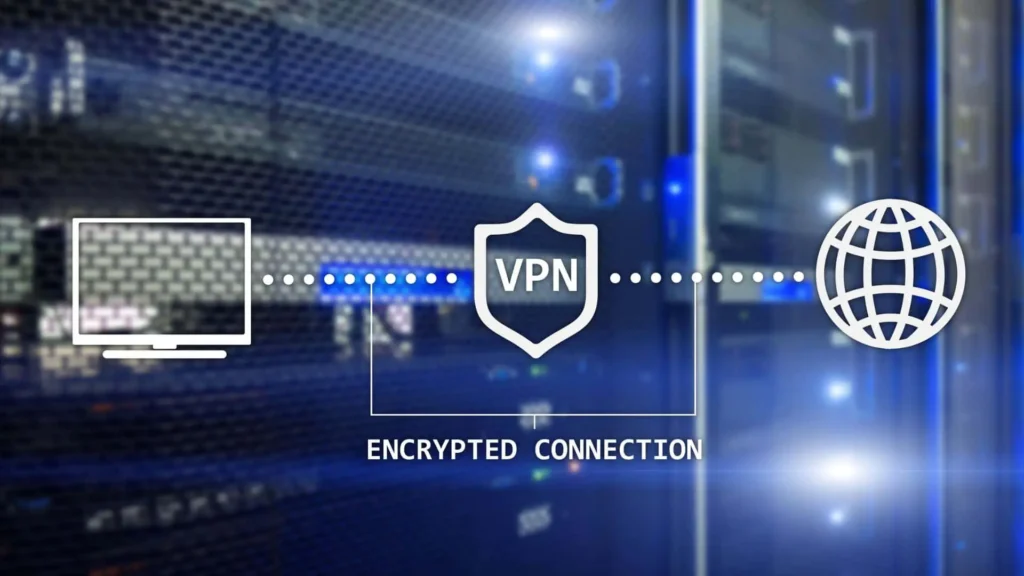
A VPN (Virtual Private Network) secures your internet connection by encrypting your traffic and routing it through its own servers before sending it to its final destination. This process hides your IP and encrypts the traffic between your device and the VPN server, offering protection from prying eyes on local networks like public Wi-Fi networks or even from your ISP.
This remains completely relevant in 2026 as well. Internet service providers continue to log connection metadata, public Wi-Fi networks remain vulnerable, and many regions still practice aggressive traffic inspection. Encryption is no longer an option — it is table stakes.
However, websites increasingly rely on probabilistic identification, browser fingerprinting, behavioral analysis, and AI-assisted correlation. Your screen size, time zone, font rendering, typing rhythm, and even how quickly you scroll can contribute to a profile that persists across sessions.
This has led some critics to argue that VPNs are obsolete. That conclusion is misleading. The real issue is not that VPNs stopped working — it’s that tracking expanded beyond the network layer.
Whether connecting from home, a cafe, or while traveling. VPNs now combine high-speed connections with strong encryption standards. No-logs policies and RAM-only servers ensure sensitive data never lingers, while advanced tunneling protocols like WireGuard and OpenVPN provide bank-grade protection.
These protocols use AES-256 encryption to prevent hackers, ISPs, or governments from reading transmitted data. Real IP addresses are replaced with server locations, bypassing geo-blocks and blocking advertisers from targeting users based on their region.
Not only that, but they also hide your online habits from ISPs, who often monetize anonymized user data. Kill switches automatically cut the internet if VPN drops, preventing accidental data leaks, while DNS leak protection keeps queries secure. Split tunneling allows local connections to bypass the VPN, balancing security with speed.
Providers audited in 2026 confirm zero-lagging: no records of timestamps, bandwidth, or destinations are stored. RAM-only servers erase all information on reboot, making it impossible for seized hardware to reveal activity.
Modern VPN protection is designed to prevent leaks through IPv6, WebRTC, and browser fingerprinting. IPv6 tunneling ensures dual-stack systems don’t expose real IP addresses, and WebRTC is blocked by default to protect video and audio call privacy.
They force perfect forward secrecy, generating unique keys for every session so compromising one session does not affect others. Audits in 2026 confirm zero leaks across platforms, with kill switch activating in milliseconds.
Quantum-resistant encryption, such as ML-KEM, is integrated into top providers, future-proofing VPN for security without affecting speed. Based on the study conducted by PCMag, these full-stack protections make modern VPNs highly reliable for maintaining online privacy.
Common Myths
The misconception arises when users expect VPN to solve problems it was never designed to handle. A VPN does not prevent websites from identifying your browser configuration. It does not stop trackers embedded in apps from collecting telemetry. Also, it does not magically anonymize accounts you are logged into.
If you sign into Google, Amazon, or social media platforms, a VPN does not make you anonymous. Those services already know who you are — and they don’t need you IP address to confirm it.
Another common myth is that all VPNs dramatically slowdown your internet connection. This worry is largely outdated with modern technology. Factors that affect internet include long server distances, higher server traffic congestions, used protocols for VPN like WireGuard, based internet speed from your network and providers quality.
Are Free VPNs Safe?
And to think that free VPNs are as good as paid ones. This assumption can put your privacy and security at risk. 38% of malware infection come from free android VPNs. These appear in the form of Trojans, adware, and spywares. Along with that, free VPNs also use tracking libraries mostly, leading to personal data violation and breaches.
This data leaked is further used for many purposes and sold to agencies and companies for marketing and surveillance. Therefore, if you are not paying for the service, you are likely being sold as the product through data harvesting and advertising.
VPNs help across geo-restricted content, but they don’t guarantee universal access to any website or streaming service. For instance, Netflix has a very high detection level which allows it to block any VPN on ad-supported plans. Similarly, Hulu, BBS iPlayer, and YouTube TV require location verification, some require region wise payment method and have advanced IP blacklisting in order.
The concept of “zero-log” VPNs is largely a marketing myth used to attract privacy-conscious customers. All VPNs require logs to function properly, these logs could include connection times, server selection, server speeds, usage history, and payment records.
Limitations
VPNs offer significant protection, but they come with their own set of risks. When you use a VPN, you are placing complete trust in the provider. Providers know each and every activity you go through, when and how long you stay connected.
Does A VPN Hide Everything Online?
They can see your connection’s origin and what devices you are using. Moreover, claims of “no logging” aren’t always reliable — some providers have been caught secretly logging user activity.
A security tool shouldn’t introduce new risks — but with VPNs, these are real concerns. Even the most well-meaning VPN provider could be compromised by external pressure, new investors, or targeted attacks.
Age verification is set to become a defining topic of the year. As most countries continue to implement processes that can be bypassed by using a VPN, these privacy tools will continue to be a talking point in 2026.
The key dilemma for governments is whether they can implement child safety measures on devices in a way that makes VPNs redundant. SafeToNet’s collaboration with HMD offers a blueprint for such an approach. Using SafeToNet’s HarmBlock, the system blocks all nude content on the HMD Fuse at the OS level.
Because the block happens on the device itself, it works whether a VPN is being used or not. According to reports, this approach is currently of interest to the UK government. However, if measures designed to protect children continue to focus on network-level blocks that can be easily bypassed by using a VPN, governments may target the VPN industry itself.
But the conversation isn’t just about regulatory challenges VPNs pose; it’s also about the technological threats they face. Quantum computing is among the biggest cybersecurity topics of recent years, and it’ll only get bigger in coming years.
Without post-quantum encryption (PQE) capabilities, VPN encryption will be rendered futile once quantum computing becomes a reality.
The topic of free VPNs also is an important factor to discuss here. Free VPNs often come with limitations such as data caps, server limits, and speed throttling, which can compromise user experience.
Who Truly Needs One?
A VPN is no longer a privacy silver bullet. It won’t stop AI-driven tracking, it won’t hide logged-in identities, and it won’t replace smart browsing habits. What it does offer is something still extremely valuable: control over your network exposure. It protects you from local surveillance, insecure connections, geographical restrictions, and certain forms of profiling.
VPN is crucial for everyone who uses the internet and values privacy, but it’s especially important for several professionals and niches. Remote workers require a VPN that helps them secure company’s data and communications, especially when working outside of a secure office network.
Public Wi-Fis are not reliable at all. Travelers can use a VPN to improve their safety on public Wi-Fi in airports, hotels, and cafes. For maintaining anonymity, journalists might require a VPN to protect themselves and resources in sensitive cases and regions with restricted internet policies.
Can A VPN Improve Speed?
For gamers a VPN can provide immersive experience, helping to avoid ISP throttling and reduce lag. VPNs also act as a secure traffic carrier when banking, shopping, or communicating privately online.
At the end of the day, a VPN isn’t a magic shield for the internet — but it’s not useless either. In 2026, most websites already use HTTPS and home networks are generally secure, so not everyone needs a VPN all the time.
When Should You Use A VPN?
However, if you travel often, use public Wi-Fi, work remotely, or simply care about limiting how much your ISP and networks can see, a VPN can still be a smart extra layer of protection. The key is understanding what it actually does — and what it doesn’t. Instead of seeing it as a must-have for everyone or a total scam, think of a VPN as one practical tool in your digital safety kit.
Is VPN Use Legal?
Yes, VPN use is legal in most countries in 2026. Millions of people use VPNs every day for privacy, remote work, public Wi-Fi security, and business communications.
More Guides
Mac Vs Windows For Students – Which Makes More Sense In 2026?
5G vs 4G – Is Upgrading Your Phone Really Worth It?
Cloud Storage Compared – Google Drive vs OneDrive vs Dropbox
