


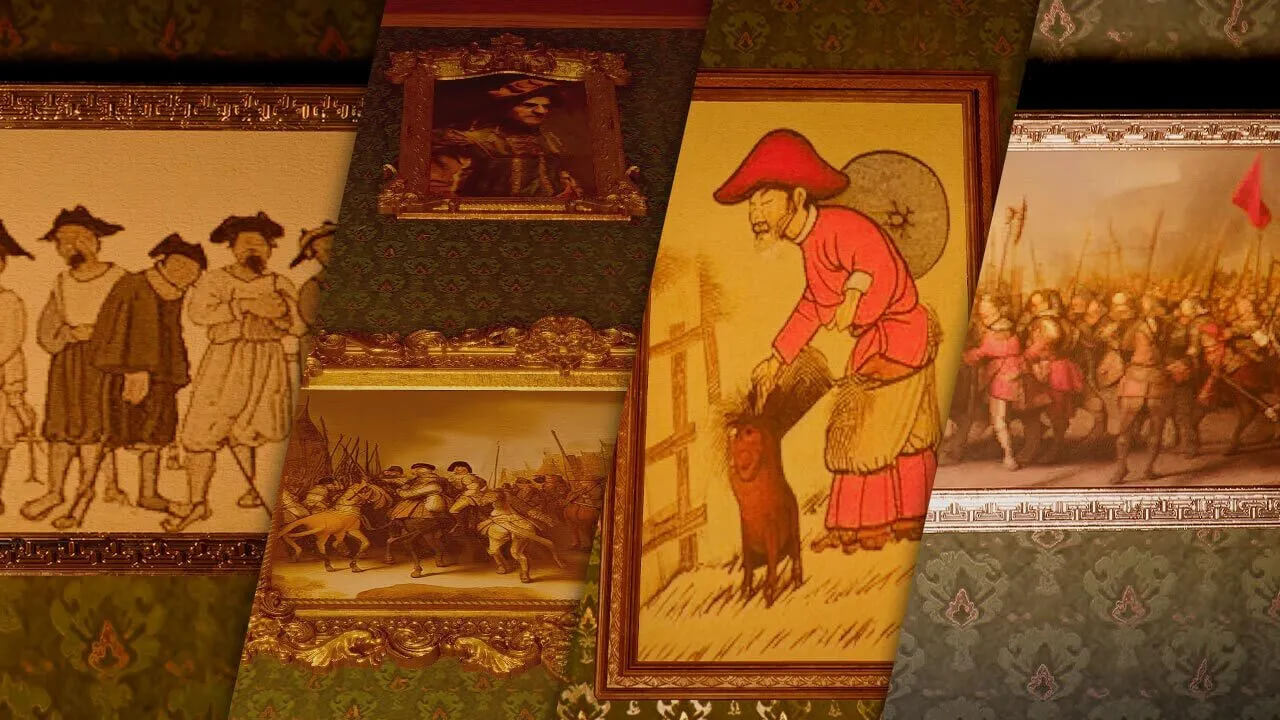
Pearl Abyss has publicly apologized after players discovered generative AI-created assets in the final version of Crimson Desert, admitting that the content was never meant to ship and should have been replaced before release. The studio also acknowledged it failed to clearly disclose its use of AI tools—an omission that has now become central to the backlash.
The issue surfaced within days of the game’s March 2026 launch, when players began identifying unusual in-game artwork—particularly 2D visual elements—that bore clear signs of AI generation.
These findings quickly spread across online communities, forcing Pearl Abyss to respond. In its statement, the company said the assets were created during early development using “experimental AI generative tools” to explore visual tone and atmosphere, but were always intended to be replaced by finalized, human-made art.
According to the developer, the inclusion of these assets in the final build was an internal oversight. “Some of these assets were unintentionally included in the final release,” the company admitted, adding that the mistake “is not in line with our internal standards.”
Pearl Abyss has since launched a “comprehensive audit” of all in-game assets and confirmed that patches are already in development to remove and replace any AI-generated content.
The controversy is particularly significant given the game’s scale and commercial success. Crimson Desert sold over 2 million copies within its first 24 hours and reached nearly 240,000 concurrent players shortly after launch. While Crimson Desert did not satisfy investors, it still is one of the biggest single-player releases of the year.
However, the AI issue has compounded other early criticisms, contributing to a “mixed” reception among players on platforms like Steam.
At the core of the backlash is not just the presence of AI-generated assets, but the lack of transparency. Pearl Abyss explicitly admitted it “should have clearly disclosed” its use of AI during development—a key point as platforms like Steam increasingly require developers to declare AI involvement.
This failure has raised broader concerns about trust between developers and players, particularly as generative AI becomes more common in game production.
Industry-wide, the use of AI tools remains deeply divisive. On one hand, studios argue that AI can accelerate workflows—especially in early prototyping—by rapidly generating concepts and placeholder assets. On the other, critics warn that undisclosed AI use risks undermining artistic integrity and may introduce quality inconsistencies, as seen in Crimson Desert. Reports of distorted or inconsistent imagery discovered by players underscore these concerns.
Pearl Abyss has attempted to draw a clear line, stating that AI was limited to minor visual elements and not used in core gameplay systems or narrative design. Still, the incident reflects a growing pattern across the industry, where AI tools are quietly integrated into pipelines but only addressed publicly after community detection.
Looking ahead, the company’s response—particularly how quickly it replaces the affected assets and improves transparency—will likely determine whether the controversy fades or lingers. More broadly, this case may accelerate calls for stricter disclosure standards across the gaming industry, as players increasingly demand clarity on how AI is shaping the games they play.
More News:
Do You Really Need 32GB RAM in 2026?
External SSD vs Internal SSD – Which Is Better for Storage?
Resident Evil Code: Veronica Remake Reportedly in Development by RE2 and RE4 Remake Team
