


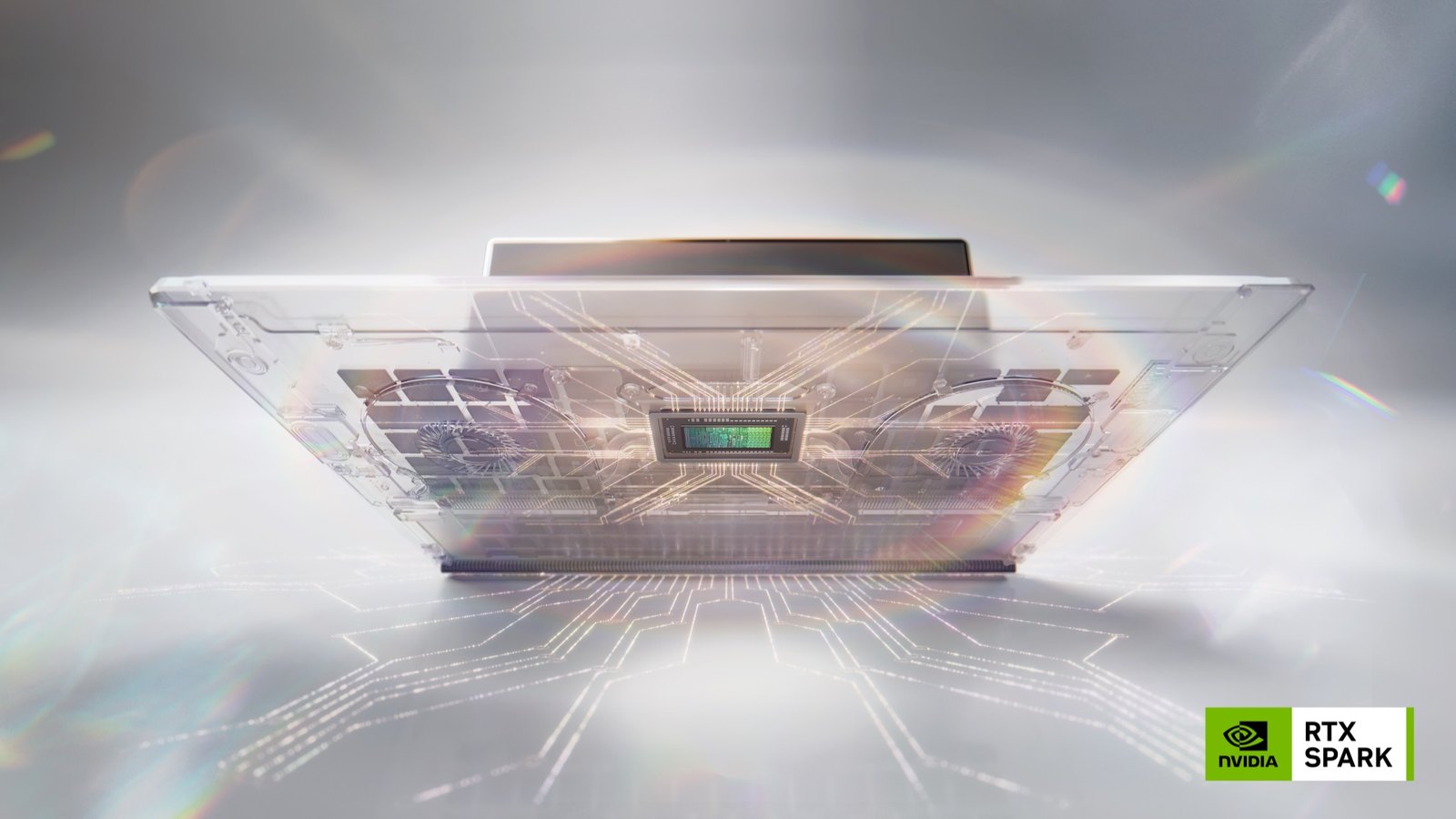
NVIDIA has announced a new wave of local AI tools and hardware at IFA 2026, including RTX Spark Windows PCs arriving in October and software designed to make personal AI agents easier and faster to run on-device. The company is expanding its work with Microsoft and other partners across Windows, local inference and agent applications. NVIDIA also introduced PAIR, a free tool that can distribute AI workloads across multiple compatible computers on the same network.
RTX Spark is the hardware centerpiece of the announcement. NVIDIA says systems powered by the platform will begin shipping in October, with Acer showing a compact desktop concept at IFA and Lenovo announcing the Yoga Pro 9n and Yoga 9n 2-in-1. Those machines join previously announced RTX Spark designs from other PC manufacturers scheduled for the same launch period.
The RTX Spark platform combines an RTX Blackwell GPU capable of up to 1 petaflop of AI performance with as much as 128GB of unified memory and a 20-core Grace CPU. NVIDIA is positioning the hardware for developers, creators, gamers and users who want to run larger AI models and always-on agents directly on Windows PCs. The unified memory is particularly important for local AI workloads that can exceed the capacity available on conventional consumer GPUs.
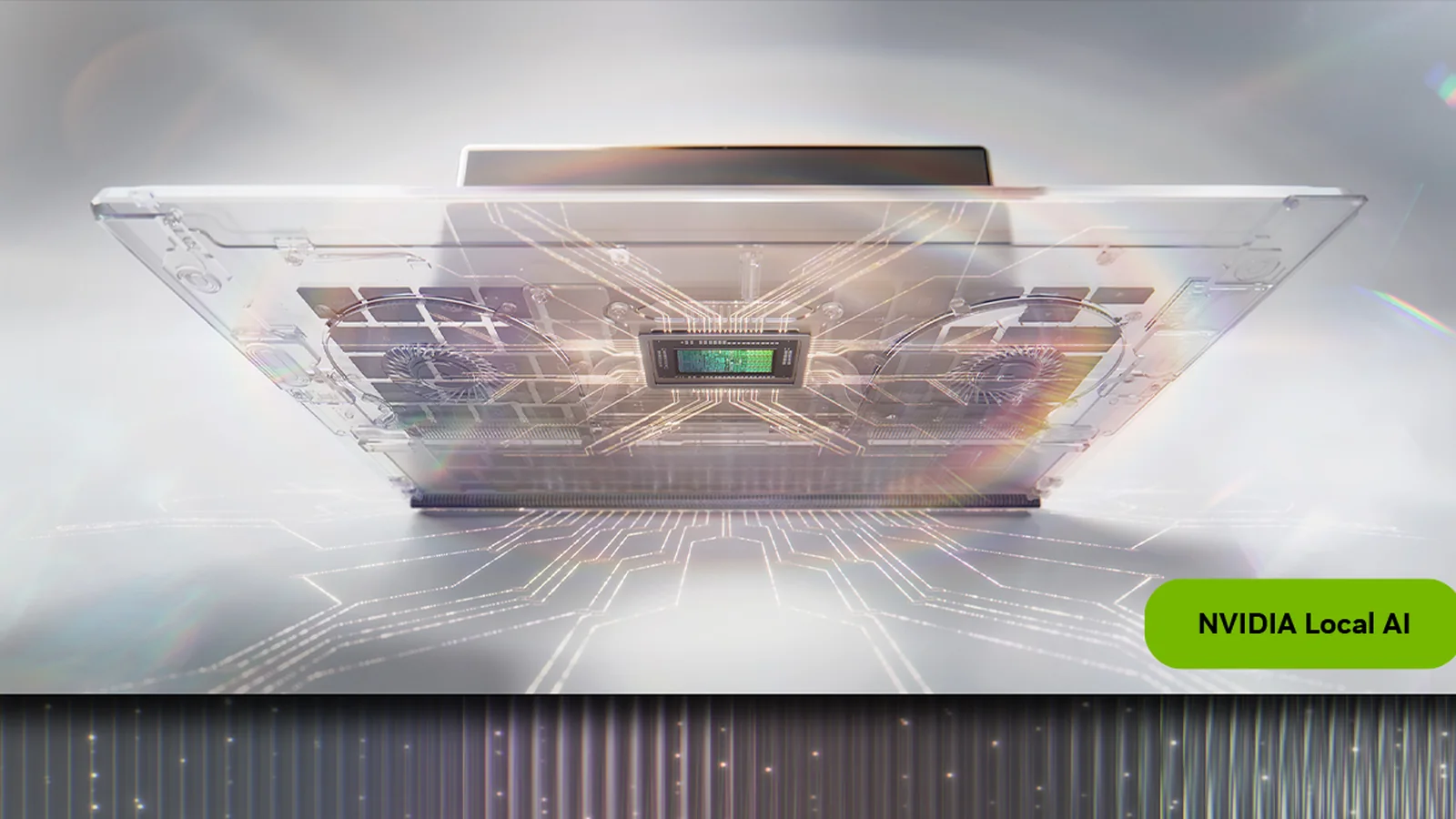
NVIDIA and Microsoft are also continuing to build the software layer around those systems. RTX Spark is designed to work with the new Windows Agent framework, giving agents a way to operate in the background while remaining under operating-system-level controls. The broader goal is to let more agentic workloads run locally instead of requiring every task, document or prompt to be sent to cloud services.
Several popular agent applications are being updated to simplify local model setup on NVIDIA hardware. Hermes Agent now offers one-click configuration on Windows, automatically detecting the installed NVIDIA GPU, selecting an appropriate model and running it through an optimized llama.cpp setup. OpenClaw is receiving a Windows app designed to simplify local model deployment on RTX GPUs with at least 24GB of VRAM, while Perplexity Portable Computer is also preparing Windows support after initially launching on Linux.
Inference performance is another focus of NVIDIA’s IFA announcements. The company says new llama.cpp optimizations can deliver up to 1.9 times higher throughput on a GeForce RTX 5090 through kernel changes, speculative decoding improvements and faster prefill. vLLM optimizations provide smaller but still measurable gains on RTX PRO 6000 Blackwell Workstation hardware and multi-DGX Spark configurations, with those improvements also accessible through applications including LM Studio and Ollama.
NVIDIA PAIR takes a different approach by using multiple computers rather than relying on a single system. The Personal AI Router automatically discovers compatible machines on a local network and sends independent inference requests to whichever device has available capacity. That allows multi-agent workloads to run across several GPUs in parallel instead of forcing every task to queue on one computer.
PAIR is available in beta on Windows, macOS and Linux and supports GeForce RTX 20 Series GPUs and newer, compatible RTX PRO workstation hardware, DGX Spark systems and Apple M4 or newer devices. It works with Ollama and LM Studio and can dynamically adapt as computers join or leave the network. NVIDIA’s aim is to make idle computing power elsewhere in a home or workspace useful for local AI without requiring a dedicated server.
Creative applications are also beginning to target RTX Spark directly. CyberLink’s upcoming PhotoDirector AI PC Mode will use local image-generation and editing models for tasks including object removal, background replacement, image enhancement and portrait refinement. The feature is scheduled to arrive alongside RTX Spark in October and will let users choose between local and cloud processing depending on the workload.
NVIDIA is also widening RTX Spark beyond pure AI development. Electronic Arts, Embark and Ubisoft are among the publishers bringing games to RTX Spark systems, joining previously announced support from KRAFTON, NetEase, Riot Games and Xbox. NVIDIA is therefore positioning the platform as a general Windows PC architecture capable of combining gaming, creative workloads and local AI rather than functioning as a dedicated AI appliance.
RTX Spark Windows PCs are scheduled to begin arriving in October 2026. Combined with one-click local agent setup, faster inference and the PAIR network-distribution tool, NVIDIA’s IFA announcements show a broader effort to move increasingly capable AI workloads from cloud infrastructure onto personal computers while keeping more processing and data on-device.
