

Close Menu
    Facebook X (Twitter) Instagram
    Facebook X (Twitter) Instagram
    TechtroduceTechtroduce
    Subscribe
    • NEWS
    • GUIDES
    • COMPARISONS
    • REVIEWS
    TechtroduceTechtroduce
    Home » KDE Locks Heated Discussion Over Proposed LLM Contribution Rules
    NEWS Updated:September 23, 2026

    KDE Locks Heated Discussion Over Proposed LLM Contribution Rules

    Abyan KhanBy Abyan KhanSeptember 23, 2026Updated:September 23, 2026No Comments4 Mins Read
    Facebook Twitter Pinterest LinkedIn Tumblr Email
    KDE Plasma desktop showing the launcher and multiple desktop applications
    Share
    Facebook Twitter LinkedIn Pinterest Email

    KDE has closed a contentious discussion over proposed guidelines for using large language models in project contributions after developers and community members clashed over how AI-assisted work should be handled. The proposal, opened by KDE Plasma developer Nate Graham on September 19, attempted to define acceptable uses of LLMs across coding, documentation and communication. Graham closed the discussion on September 21 and said another attempt would follow after participants had time to cool down.

    The draft centered on what it called a “Don’t be lazy” principle. Contributors were told not to replace their own judgment, communication or learning process with an LLM, and not to take shortcuts that would leave maintainers responsible for low-quality work. It also proposed that contributions showing obvious or careless LLM use could be ignored or closed rather than requiring maintainers to spend time repairing them.

    For code contributions, the proposed rules emphasized keeping a human actively involved rather than accepting model output with little scrutiny. The draft discouraged submitting “vibe-coded” changes that contributors did not understand or could not reasonably produce themselves, along with throwaway AI-generated work presented as a first draft for maintainers to finish. Contributors would remain responsible for understanding, checking and refining anything produced with AI assistance.
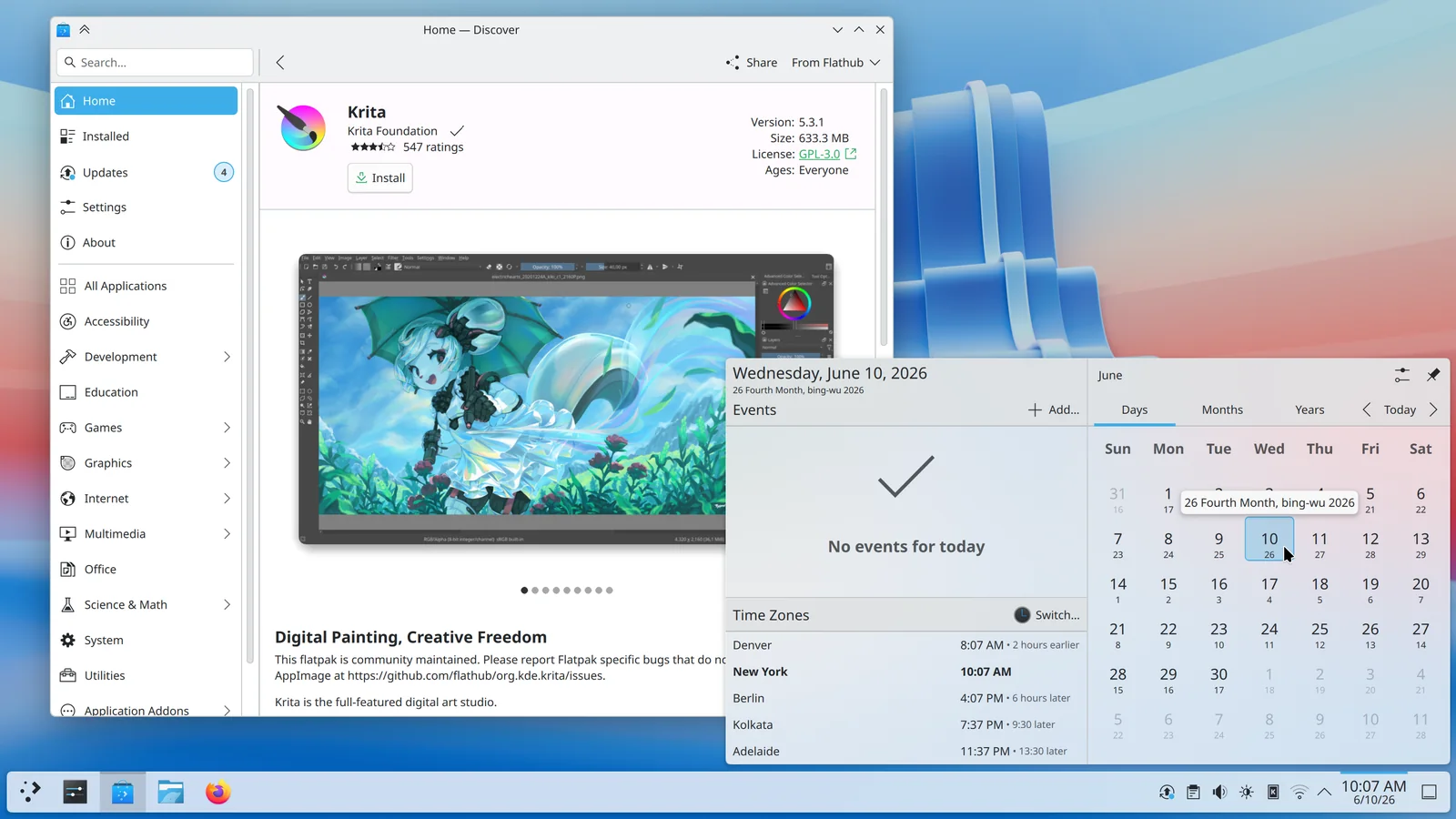
    Current KDE Plasma desktop screenshot with the application launcher open

    The proposal took an even more restrictive position on LLM-generated communication. It discouraged using models to generate commit messages, merge request descriptions, replies to other contributors or reorganized prose that would simply be copied into KDE discussions. One explicitly accepted example was machine-translating text that a contributor had written in their own language into English without changing its tone or style.

    Other uses were treated more permissively. The draft allowed contributors to use LLMs for debugging, research and understanding technical material, provided they independently verified the resulting information. That distinction reflects a broader concern in software development that AI tools can assist investigation without necessarily replacing the human responsibility required when code or documentation is ultimately submitted to a project.

    The argument did not remain limited to code quality. Participants raised questions about environmental costs, ethics, transparency and whether contributors should disclose AI assistance. Some objected to an LLM policy that did not make environmental concerns a central requirement, while others questioned whether mandatory disclosure would meaningfully improve review when model use can be difficult to detect reliably.

    Those disagreements contributed to the thread being closed. Graham said KDE would try again after taking more feedback into account and suggested that a future proposal could restrict participation to KDE developers, who would ultimately be responsible for applying and enforcing whatever guidelines are adopted. The closed proposal therefore should not be treated as finalized KDE policy.

    The discussion follows earlier debate inside KDE over fully LLM-generated merge requests. In September, developers discussed whether maintainers should be explicitly allowed to close submissions that appeared to have been generated almost entirely by AI. Graham’s earlier draft drew from policies used by projects including Jellyfin and Fedora while attempting to adapt those approaches to KDE’s own contributor culture.

    KDE’s debate is part of a wider software-industry struggle over how generative AI should be used in development. Organizations are increasingly separating assisted workflows such as debugging or translation from cases where generated material is submitted with little human understanding. Similar concerns have appeared outside open-source development as companies and creators decide how much AI-generated work is acceptable, including disputes such as Level-5’s recent controversy over generative AI use.

    No final KDE-wide LLM contribution policy has been announced. For now, the closed discussion represents another draft in an ongoing effort to set clearer boundaries around AI-assisted contributions without creating additional work for maintainers. The next version will need to reconcile practical review requirements with the broader ethical and environmental objections that turned the latest proposal into a much larger community dispute.

    Share. Facebook Twitter Pinterest LinkedIn Tumblr Email
    Abyan Khan
    • Instagram
    • LinkedIn

    Abyan Khan is a dedicated writer and tech enthusiast currently pursuing a Bachelor’s degree in Information Technology. With over 3 years of professional writing experience, he specializes in crafting clear, engaging, and informative content across a range of topics, particularly in the tech and gaming industries. Abyan combines his academic knowledge with real-world insights to deliver articles that are both well-researched and reader-friendly.

    Related Posts

    US Challenges Australia’s Proposed Social Media Algorithm Rules

    September 23, 2026

    Sea Becomes First ASEAN Enterprise to Adopt NVIDIA Vera Rubin

    September 23, 2026

    CS2 Player Reports Receiving Mysterious Chicken Egg Weekly Drop

    September 23, 2026
    Leave A Reply Cancel Reply

    Google Techtroduce

    See more Techtroduce stories on Google.

    Add us on Google

    • KDE Locks Heated Discussion Over Proposed LLM Contribution RulesSeptember 23, 2026
      KDE has closed a heated discussion over proposed LLM contribution guidelines and plans to revise the draft after further feedback.
    • US Challenges Australia’s Proposed Social Media Algorithm RulesSeptember 23, 2026
      The US has objected to Australia’s proposed digital duty-of-care rules and urged exemptions for American social media platforms.
    • Sea Becomes First ASEAN Enterprise to Adopt NVIDIA Vera RubinSeptember 23, 2026
      Sea becomes the first ASEAN enterprise to adopt NVIDIA Vera Rubin as NVIDIA expands Nemotron-based AI deployments across Southeast Asia.
    TRENDING NOW

    Blackbird Interactive Rumored to Be Working on Blizzard RTS

    LG Denies Smart TV Spying Claims but Confirms Network Scanning

    Shade of the Marionette Announced for Consoles and PC

    Nacon Unveils Comprehensive Accessories Lineup for Nintendo Switch 2

    Facebook Instagram YouTube
    © 2026 Techtroduce. All Rights Reserved | Cookies Policy | Privacy Policy | Contact Us | About Us | Corrections Policy

    Type above and press Enter to search. Press Esc to cancel.

    Manage Consent
    To provide the best experiences, we use technologies like cookies to store and/or access device information. Consenting to these technologies will allow us to process data such as browsing behavior or unique IDs on this site. Not consenting or withdrawing consent, may adversely affect certain features and functions.
    Functional Always active
    The technical storage or access is strictly necessary for the legitimate purpose of enabling the use of a specific service explicitly requested by the subscriber or user, or for the sole purpose of carrying out the transmission of a communication over an electronic communications network.
    Preferences
    The technical storage or access is necessary for the legitimate purpose of storing preferences that are not requested by the subscriber or user.
    Statistics
    The technical storage or access that is used exclusively for statistical purposes. The technical storage or access that is used exclusively for anonymous statistical purposes. Without a subpoena, voluntary compliance on the part of your Internet Service Provider, or additional records from a third party, information stored or retrieved for this purpose alone cannot usually be used to identify you.
    Marketing
    The technical storage or access is required to create user profiles to send advertising, or to track the user on a website or across several websites for similar marketing purposes.
    • Manage options
    • Manage services
    • Manage {vendor_count} vendors
    • Read more about these purposes
    View preferences
    • {title}
    • {title}
    • {title}