


Ubisoft has reportedly expanded its Motherbrain generative-AI initiative into a company-wide “global entity,” giving the project a broader role across the publisher’s development organization. Insider Gaming’s Tom Henderson reports that Motherbrain is no longer being treated as a limited internal experiment, with the initiative now positioned to serve teams throughout Ubisoft. The company has not publicly announced this organizational change, so the global-entity designation currently comes from Henderson’s reporting rather than an official Ubisoft statement.
Motherbrain first drew wider attention through trademark filings made by Ubisoft Entertainment in September. Those applications cover a broad range of artificial-intelligence uses, including software development, video game creation, interactive content, natural-language conversation, text generation, data analysis and predictive modeling. Separate filings also cover AI-as-a-service tools and software intended specifically for building games and interactive experiences, indicating that the name is attached to something considerably broader than a single experimental feature.
The newly reported company-wide role would fit Ubisoft’s existing strategy around development technology. The publisher already operates centralized technology groups responsible for engines, online services and production tools used by studios around the world. Treating Motherbrain as a global entity could similarly allow AI infrastructure and tools developed by one group to be distributed across multiple teams rather than built separately inside individual studios.
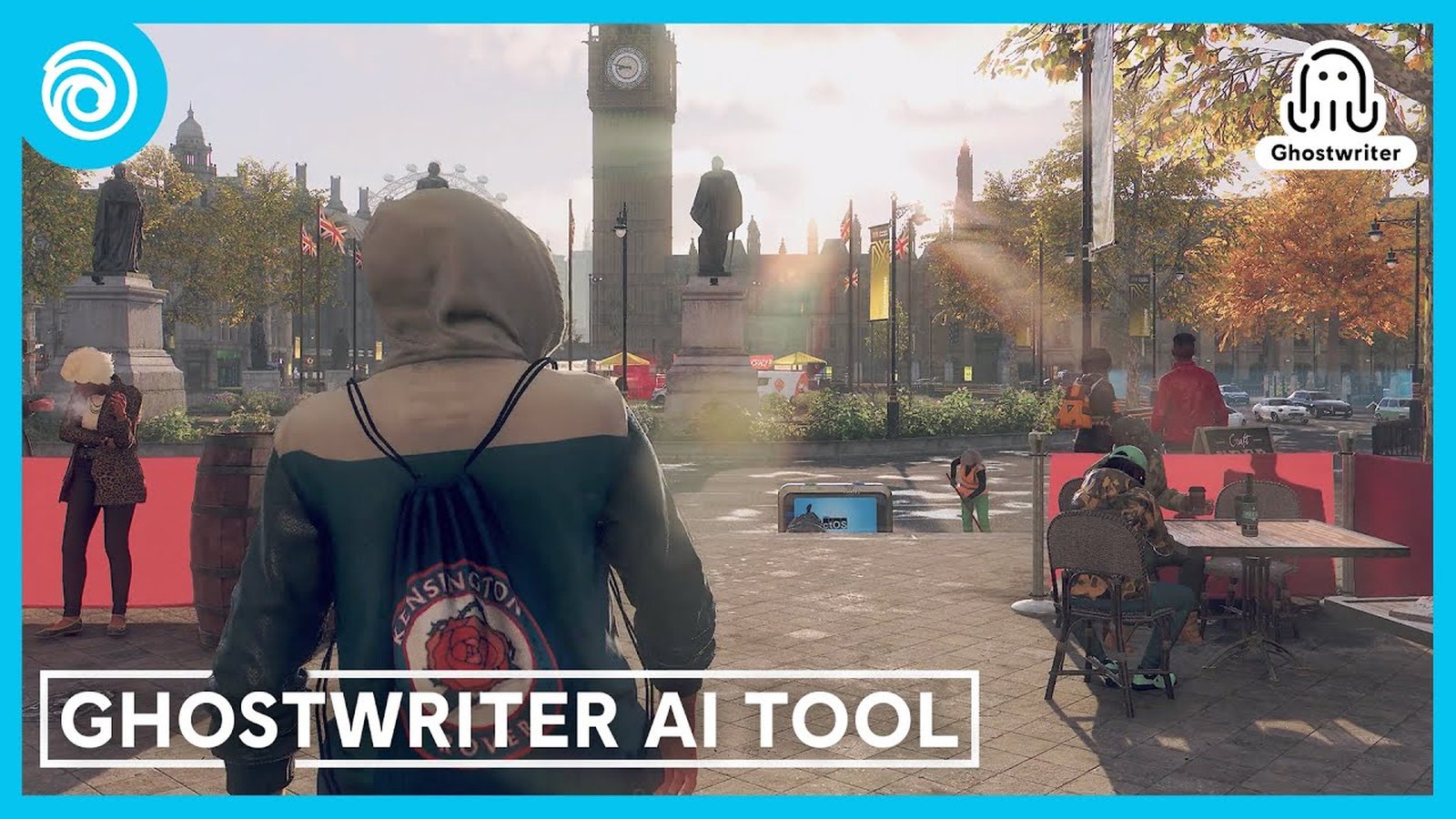
Ubisoft has publicly discussed generative AI for several years, both as a production tool and as technology that can appear directly inside games. Its Ghostwriter project was designed to help narrative teams generate first drafts of background NPC dialogue, while later experiments such as NEO NPCs and Teammates explored characters capable of responding dynamically to players through generative AI. Ubisoft has consistently presented those projects as research and development efforts rather than replacements for complete creative disciplines.
The publisher has also made clear in corporate materials that generative AI forms part of its broader production strategy. Ubisoft has described AI and machine learning as technologies capable of accelerating iteration, supporting creators and enabling more reactive game systems. More recent company restructuring announcements have continued to reference increased investment in player-facing generative AI alongside other technologies intended to improve development efficiency and game design.
Motherbrain’s trademark descriptions suggest the initiative could span both internal production and player-facing applications. Ubisoft’s filings include AI software for writing content from a theme, summarizing text, creating interactive content and assisting software development, as well as tools for image, sound, video and text generation in some territories. That breadth does not mean every listed function will necessarily become a production feature, as trademark filings routinely cover more possibilities than companies ultimately deploy.
The “global entity” language is therefore more significant than the Motherbrain name itself. If Henderson’s report is accurate, it indicates Ubisoft has moved beyond simply protecting a brand for future AI software and is assigning the initiative a formal place within its international organization. That could make Motherbrain a shared technology resource for studios working across Ubisoft’s portfolio rather than a standalone research project attached to one location.
The change also arrives while Ubisoft is reorganizing much of its development structure into Creative Houses built around different franchises and types of games. Shared technology functions remain important under that model because teams spread across multiple entities still require common infrastructure, development tools and technical expertise. A centralized AI group could provide those services across organizational boundaries while individual game teams decide how, or whether, to integrate specific tools.
Ubisoft has not detailed which games or studios are currently using Motherbrain, nor has it announced whether the technology will directly generate finished game assets, assist developers behind the scenes or power player-facing systems. There is also no indication that the company intends to apply every capability listed in the trademark filings across all projects. For now, the clearest development is that Motherbrain appears to be evolving from a newly disclosed AI brand into a much broader internal initiative, with Henderson reporting that it now serves Ubisoft on a global basis.
