


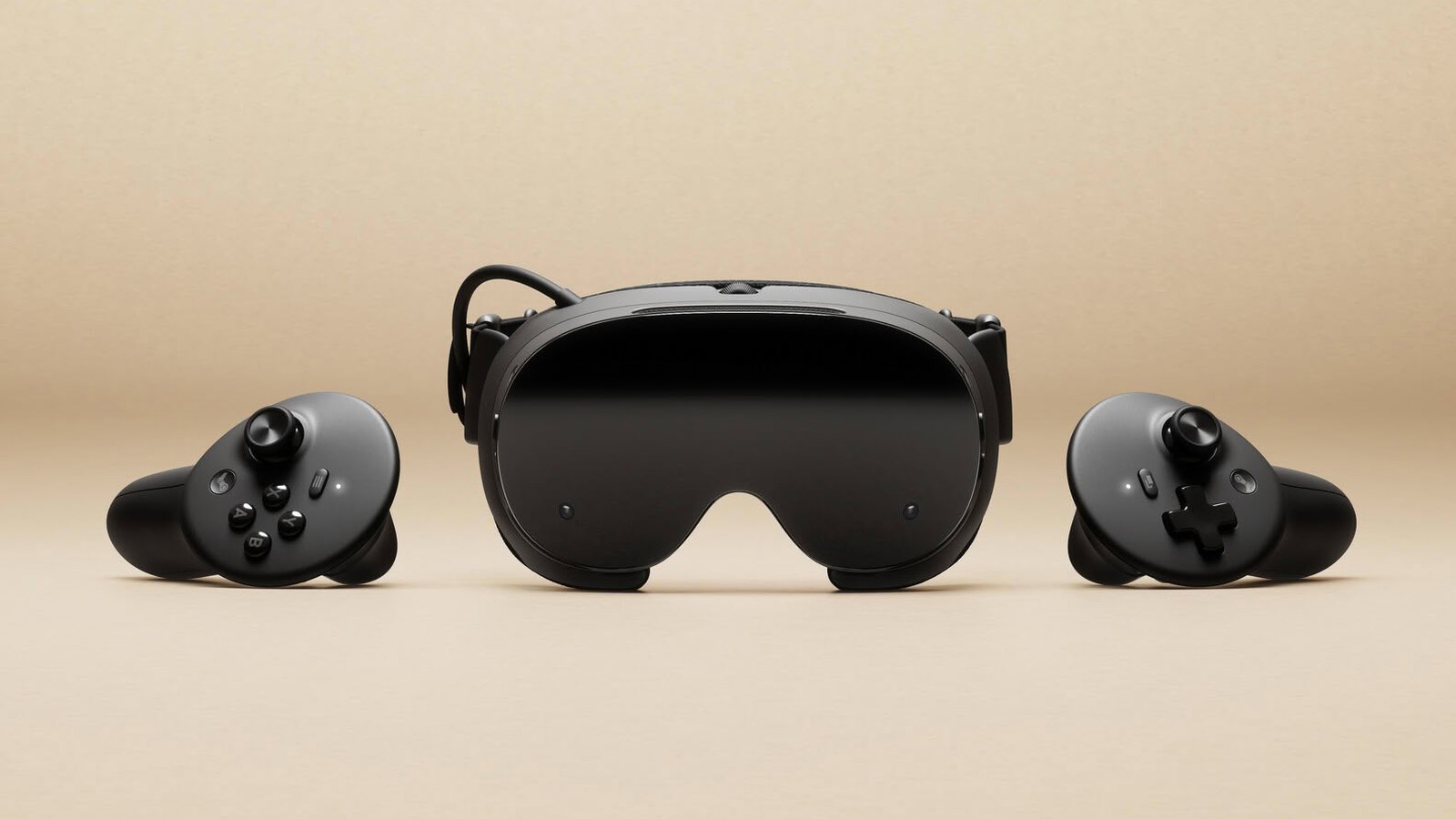
Valve has clarified that the standard Steam client for Linux does not officially support Arm-based PCs and gaming handhelds, despite the company now maintaining native Arm64 Steam technology for its own Steam Frame hardware. The distinction surfaced after a Valve employee closed a bug report involving the native Arm64 Steam client running on an AYN Odin 3. Valve’s published Steam for Linux requirements likewise continue to specify x86-64 hardware rather than Arm processors.
The GitHub report was opened on October 4 by a user running Armada, a Fedora-based Linux distribution, on an AYN Odin 3 powered by Qualcomm’s SM8750 platform. The system was using an Arm64 Steam beta client and encountered a Remote Play problem in which Steam’s V4L2 hardware-decoding path failed to expose AV1 support. Although the handheld’s decoder could handle AV1, Steam instead selected HEVC when streaming from an AV1-capable PC.
The report contained traces showing that Steam detected H.264 and HEVC during codec enumeration but stopped before reaching the AV1 entry exposed by the Qualcomm video decoder. The user argued that Steam’s V4L2 implementation was not mapping the available AV1 format even though other parts of the client already contain AV1 streaming support. In response, Valve employee kisak-valve closed the report and stated that Steam for Linux is currently unsupported on Arm-based hardware.

That position is also reflected in Valve’s public Steam for Linux documentation. The official client requirements call for a 64-bit x86-64 or AMD64 Linux kernel and an x86-64 processor supporting specific instruction sets. Valve therefore does not currently present the general Linux Steam client as a supported solution for Snapdragon-powered handhelds, Arm laptops or other third-party Arm PCs, even when community projects manage to get existing Arm builds running.
The situation is more complicated because Valve itself now uses Arm extensively. Steam Frame runs an Arm64 Snapdragon 8 Gen 3 processor and an Arch-based SteamOS environment, with Valve providing native Arm64 components alongside compatibility technology designed to run software built for other architectures. Steam’s official developer documentation says Frame can execute native Arm64 software while also using FEX to translate x86 code and Proton for Windows games.
That means the existence of a functional Arm64 Steam client should not be interpreted as a general release for all Linux Arm devices. Valve appears to be supporting that software as part of the controlled Steam Frame platform, while installations on hardware such as the Odin 3 remain outside its official support matrix. Community Linux distributions can extract or adapt parts of Valve’s Arm work, but bugs specific to those unsupported configurations may not receive fixes through the standard Steam for Linux tracker.
Armada and similar community projects have been attempting to extend Valve’s Arm software to gaming handhelds powered by Qualcomm chips. The approach is particularly interesting because an increasing number of portable devices use efficient Arm processors while still targeting PC-style gaming experiences. However, the latest clarification reinforces that those systems currently depend on community support rather than an officially sanctioned Steam-on-Arm PC platform.
Valve’s own Steam Frame work nevertheless demonstrates that the technical barriers are not absolute. The company has already built an ecosystem capable of combining Arm64-native software with translated x86 games, and its Steamworks documentation specifically encourages developers to continue shipping their established Windows x86 builds when appropriate because Proton and FEX can handle them on Frame. That architecture could theoretically form the foundation for broader Arm hardware support in the future.
Valve has not announced plans to release a general-purpose Arm64 Steam client or SteamOS image for third-party Arm PCs and handhelds. There is also no public timetable indicating when devices such as the AYN Odin series might become officially supported. For now, the important distinction is that Steam running on Arm hardware is technically possible and already central to Steam Frame, but ordinary third-party Arm Linux systems remain outside Valve’s official Steam support policy.
