


Keychron has introduced Magnetic Keyboard Firmware (MKF), a new open-source project designed for gaming keyboards equipped with Tunnel Magnetoresistance (TMR) and Hall effect magnetic switches. The initiative aims to provide a customizable firmware foundation supporting advanced keyboard features, including 8,000 Hz polling, Rapid Trigger, adjustable actuation and analog-style inputs.
The project is still in its early stages. Keychron has established a public GitHub repository under the MKF name, but it currently contains only a GPL-3.0 license file, with no functional firmware source code available. The company’s published plans outline the intended capabilities rather than features gamers can currently download and use.
Unlike conventional mechanical switches, which register a keypress through a physical actuation mechanism, magnetic keyboards use sensors to measure key travel. This allows compatible firmware to determine when a key activates or resets based on its position, enabling more precise control over input behavior.
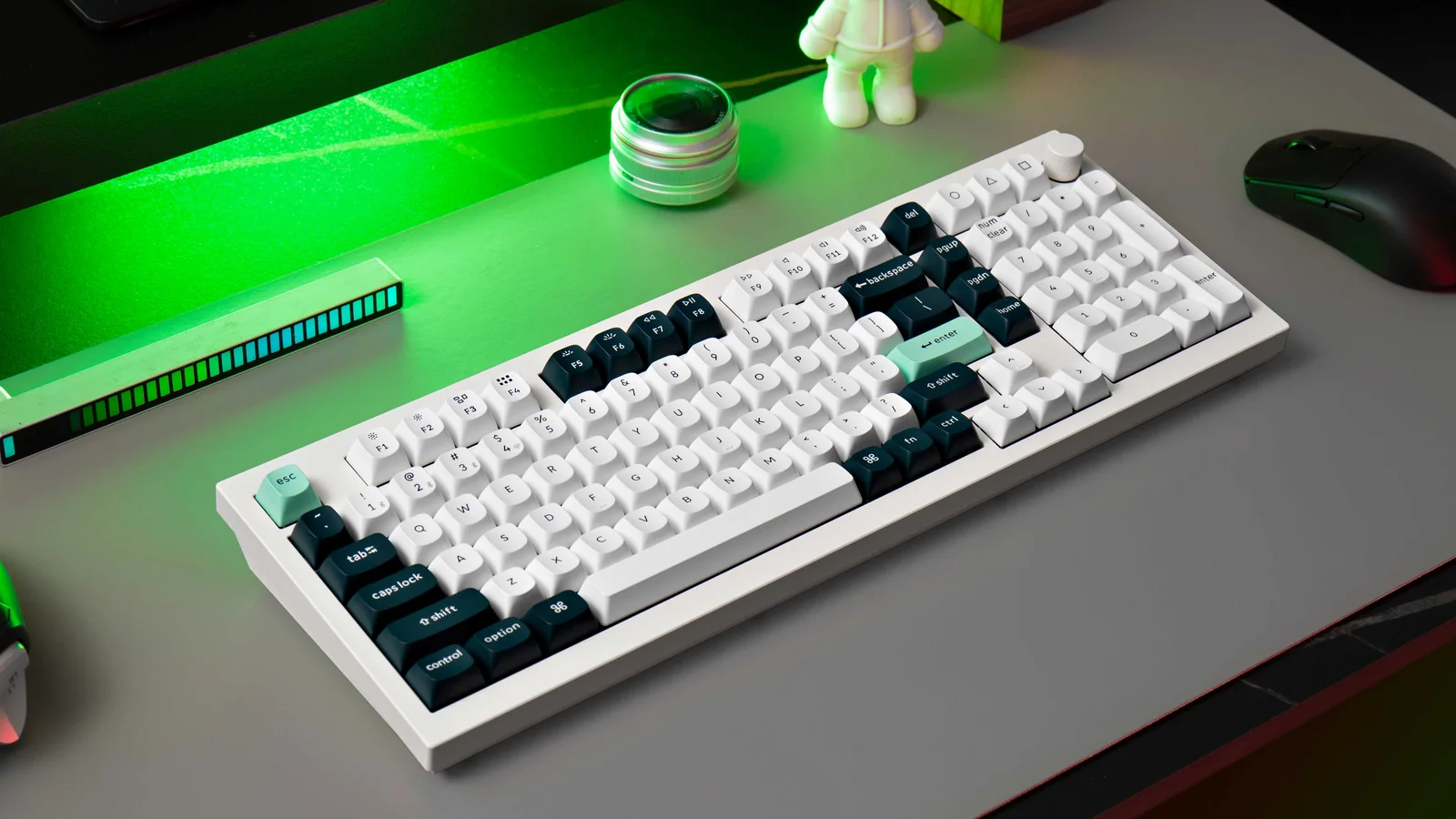
Keychron’s proposed firmware includes several features already associated with competitive gaming keyboards. Adjustable actuation would allow users to select how far a key must travel before registering an input, while Rapid Trigger would dynamically reset keys as they move upward. The latter is particularly useful in games requiring frequent movement changes and repeated keypresses.
The planned 8,000 Hz polling rate would allow compatible keyboards to report input to a connected PC up to 8,000 times per second. However, the project has not yet provided working firmware or independent performance measurements demonstrating its implementation.
SOCD handling is another proposed capability. Short for Simultaneous Opposing Cardinal Directions, SOCD determines how the keyboard processes conflicting directional inputs, such as pressing left and right simultaneously. Different handling methods can affect movement behavior in competitive games, although individual games and tournaments may restrict certain implementations.
Keychron is also exploring more advanced features that could distinguish MKF from conventional gaming keyboard firmware. Custom response curves would allow users to modify how physical key travel translates into input, potentially giving developers and enthusiasts greater control over analog-style interactions.
Another planned feature is pressure-dependent output (PDO), which would allow a key to generate additional inputs as it is pressed deeper. This could support different input behaviors across a single key’s travel range, although Keychron has not yet demonstrated a working implementation.
Controller emulation is also included in the proposed feature set. This could allow compatible magnetic keyboards to translate key travel into controller-style inputs rather than relying exclusively on conventional digital keypresses. Such functionality could be useful in games that support analog movement, provided the eventual implementation and game compatibility allow it.
The emphasis on configurable magnetic inputs reflects the growing range of features available in gaming peripherals. Products such as the MCHOSE Ace68 V2 magnetic gaming keyboard already combine Rapid Trigger functionality with 8K polling, making firmware customization an important consideration alongside switch hardware.
MKF is a separate initiative from Keychron’s existing QMK-based keyboard firmware and its previously introduced Zephyr Gaming Mouse open-source project. Keychron already offers magnetic keyboards with adjustable actuation and Rapid Trigger through its Launcher configuration software, but MKF is intended to establish a dedicated open-source platform for further development.
The initial MKF feature outline appears focused on wired connectivity, with wireless support not currently identified as an initial capability. Keychron has also indicated that the project could expand into additional features and applications beyond competitive gaming as development progresses.
For now, the announcement represents a proposed firmware platform rather than a completed software release. Keychron has not established a public release date, confirmed a list of compatible keyboards or published functional MKF code. Its practical capabilities will depend on future development and the eventual availability of working firmware.
