


Wi-Fi standards are apparently on the same upgrade treadmill as smartphones now. Blink and you’re “behind.” WiFi 7 shows up with a glossy spec sheet and suddenly everyone’s asking if their perfectly fine WiFi 6 setup is obsolete junk. It isn’t. Not even close. But marketing departments would really like you to feel otherwise.
I’ve lost count of how many router launches I’ve watched promise “game-changing” speeds that, in reality, translate to my YouTube video buffering one second less often. The truth is boring and mildly irritating: most people don’t need bleeding-edge Wi-Fi. They need their Netflix not to stutter when someone joins a Zoom call. That’s it.
So let’s cut the brochure talk and deal with what actually matters when WiFi 6 and WiFi 7 collide inside a real house, with real walls, and a router shoved behind a TV stand collecting dust.

Why Wi-Fi 6 Still Makes Sense in Real Homes
WiFi 6 was the first standard that felt like it understood modern homes. Not faster just for the sake of faster, but smarter. It showed up right when everyone decided they needed three phones, two laptops, a console, a smart TV, smart lights, and a doorbell that tattles on delivery drivers. Crowded networks were the problem, and WiFi 6 handled that mess surprisingly well.
What Wi-Fi 7 Actually Brings to the Table
WiFi 7, meanwhile, is swinging for the fences. Absurd speeds. Ultra-low latency. Features clearly designed by people thinking about 8K streams, cloud gaming rigs, and VR headsets that don’t exist in most homes yet. It’s impressive. It’s also overkill for a lot of people right now.
WiFi 6 tops out at a theoretical 9.6 Gbps, which sounds insane until you remember no normal internet plan hits that number, and most devices can’t either. Still, the jump from WiFi 5 was real. I noticed it immediately in my apartment: fewer hiccups, better consistency, and my router stopped acting like it was having a panic attack every time guests came over.
A big reason is OFDMA and MU-MIMO actually doing their jobs. Instead of devices fighting for attention like kids in a back seat, WiFi 6 schedules traffic properly. Streaming stays smooth. Games stay responsive. Video calls don’t turn into pixel soup when someone starts a download.
WiFi 7 cranks everything to eleven. We’re talking up to 30 Gbps on paper, 4096-QAM, and channel widths so wide they’d be wasted on most internet connections today. The headliner feature is Multi-Link Operation, which lets devices talk to your router over multiple bands at once. Less latency, fewer drops, more stability. In theory, it’s fantastic.
In practice? You need compatible devices, a WiFi 7 router that costs real money, and a use case that actually stresses your network. Otherwise, you’re paying to admire a speedometer you’ll never peg.
Who Wi-Fi 7 Is Really For (and Who It Isn’t)
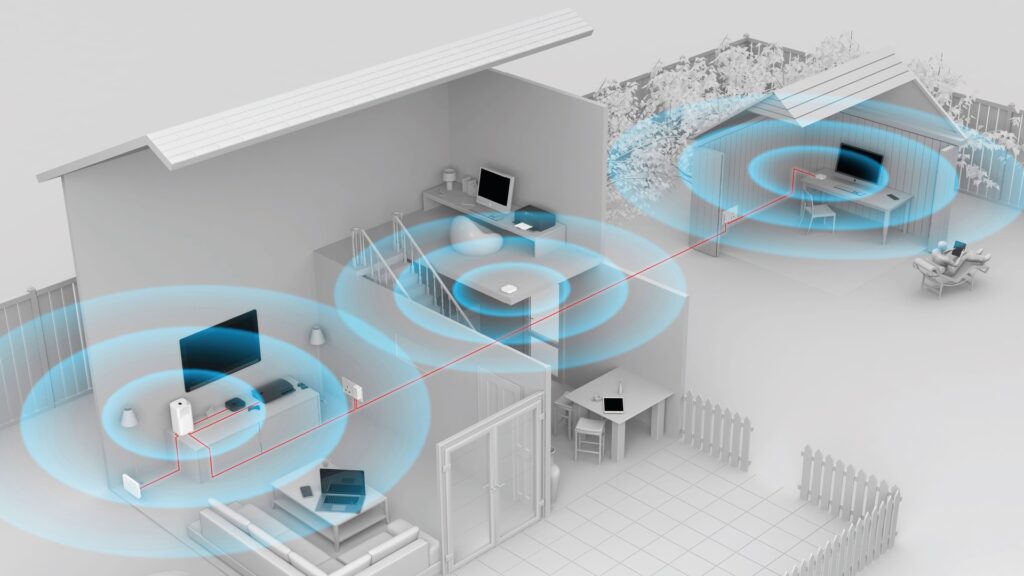
High-demand environments are where WiFi 7 finally makes sense. Big houses. Offices. Smart homes with an unhealthy number of connected gadgets. People running local servers, moving massive files, or gaming competitively while someone else streams and another person uploads raw video. That’s the crowd WiFi 7 is clearly built for.
For everyone else, it’s like buying a supercar to sit in traffic.
Yes, you need new hardware for WiFi 7. No firmware update is saving your old router. And yes, your existing WiFi 6 devices will still connect just fine. Backward compatibility is doing its thing. But they won’t magically gain WiFi 7 powers. I’ve seen people upgrade routers and then wonder why nothing feels different. This is why.
Apartments and small homes are where the hype really falls apart. I’ve tested this stuff in tight spaces with crowded airwaves, and unless you’re drowning in devices or sitting on multi-gig internet, WiFi 6 already does the job. Cleanly. Quietly. Reliably. WiFi 7 might smooth out edge cases, but it’s not a night-and-day experience unless your setup is already pushing limits.
And no, WiFi 6 isn’t about to be tossed into the trash heap. It’s everywhere. Phones, laptops, TVs, consoles. This standard is going to hang around well into the late 2020s, just like WiFi 5 stubbornly refused to die. WiFi standards age slowly. Painfully slowly.
WiFi 7 will creep in over the next couple of years, get cheaper, get better supported, and eventually become the obvious choice. That time just isn’t now for most people.
The Verdict: Who Should Actually Buy It?
If you’ve got multi-gig internet, a house full of power users, or you’re constantly saturating your network and cursing at latency spikes, then sure — WiFi 7 is worth a hard look. You’ll actually feel the difference. Everyone else? Stick with a solid WiFi 6 or 6E setup and spend the savings on something that actually improves your daily experience.
More Guides:
RAM Prices May Never Be Cheap Again – A Simple Guide to Why
