

Android vs iPhone, this debate is not new. It sits right next to comparisons like cats vs dogs and Coke vs Pepsi. In 2026, this comparison is more than just brand loyalty. It is all about budget, security, freedom, AI, and features that buyers look for.
Smartphones define daily life in 2026, from snapping family moments to closing deals on the go, and the iPhone vs Android showdown remains the ultimate showdown, with Android reaching 3.9 billion individuals worldwide while iPhone attracting around 1.56 billion loyal consumers, based on reported figures.
In 2026, Apple introduced iOS 26 with flashy AI upgrades. Android 16 has been driven by Google with usual flexibility and technology experiments. But the catch is, on paper they both look powerful and loaded with everything, however, in real life the differences are highly personal and practical.
Cost Analysis
The price varies in both systems. Android phones begin with basic variants which are affordable to buy even for a student, ranging up to a maximum price tag which still hardly undercuts even the cheapest iPhone. Hence, any cheap iPhone still costs more than many Solid Android mid-rangers.
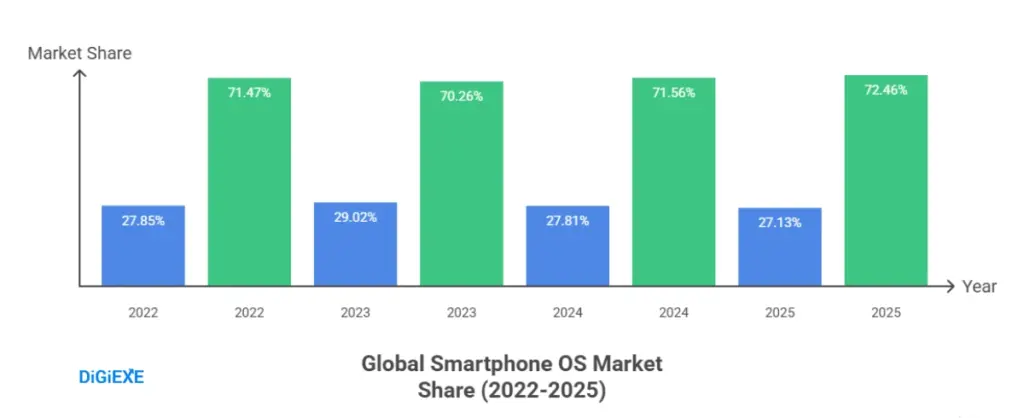
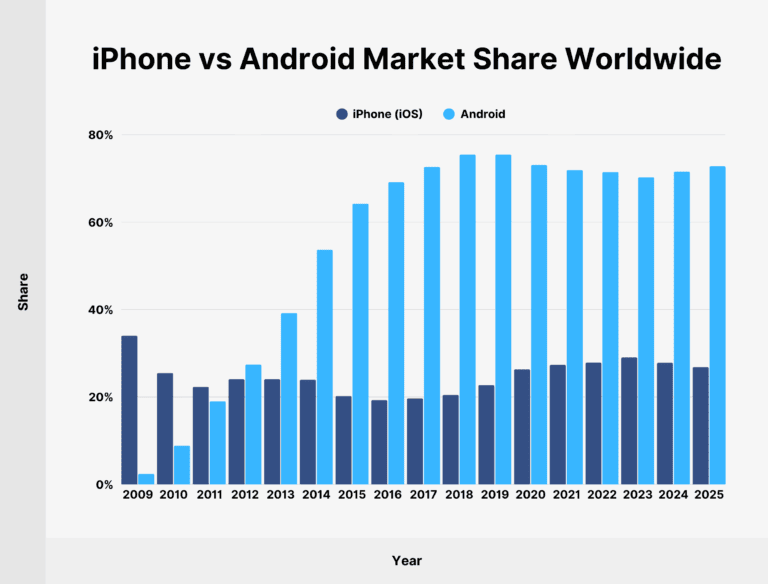
Statistics show that Android devices are more economical than iPhones. Android’s three-quarter global market share clashing against iPhone’s commanding 58% in the US. The average spending on apps and features is twice as much for iPhones than Android ($142 billion vs $65 billion annually).
Therefore, when it comes to budget friendly choice, Android would be the best suitable option to purchase and use. Though, you might need to compromise on some features but it’s worth the cost.
This could be proven by the fact that in Q2 of 2025 alone, Android gained 72.46% of the global smartphone market, with brands like Samsung, Xiaomi, holding 19.7% and 14.4% shares, respectively. On the contrary, iOS held 27.13% with Apple’s 46.4 million iPhone shipments compared to 295 million units of Android’s.
Privacy And Security
According to the research, Android devices are more vulnerable to mobile malware attacks compared to iOS. Although there is still margin for improvements in iPhones, they remain the top choice for smartphone safety in 2026.
Are iPhones Really More Secure Than Android?
This could be highlighted by some distinctive features which iPhones offer, like the addition of recording indicator feature, the option for an approximate location, and enhanced password and tracker monitoring.
They are more cautious and offer more advanced features, like limiting an app’s ability of tracking and data collection, which is a welcome addition for users concerned about privacy.
On the other hand, Android is an open-source platform, meaning that its code is openly available and could be altered with some technical effort. While iOS offers different safety model. Hence, Android devices are more open to customization, but it also leaves them more open to threats.
Google has been working on eliminating these concerns by introducing Play Protect, which detects and eliminates any malicious activity in apps. Moreover, Google’s bug bounty program also helps in identifying and reporting security weaknesses inside Android OS.
In contrast, iOS operates with different strategy. Apple has strict rules and regulations over the activities that an app can or cannot perform on the device. It’s like a shadow checking over each and every task and identifying its need.
App stores play a significant role in privacy protection when it comes to Android vs iPhones comparison. While both platforms have their personal application stores, iOS’s App Store provides major security as it limits the content according to its strict regulations for developers.
However, there is also a bad aspect to this strategy. This iOS approach restricts the level of customization for both users and developers.
Notably, there are some cases which completely depend on user itself and cannot be overlooked. Even the most secure OS can be compromised due to user negligence in their activities. This includes using common easy to guess passwords, clicking and going to unsecure and phishing links, or downloading apps form unreliable sources.
Nevertheless, when it comes to protection and security in mobile devices, iPhones stand out as more trustworthy and easier to rely on due to its implementation of advanced safety measures like end-to-end encryption and data minimization.
Android Vs iPhone Performance
When comparing Android and iPhone by performance, processor comes first in debate. It is important to consider that each platform offers distinct strategy. Android focuses on diversity whereas iOS offers consistency. This leads to different strengths and trade-offs for users.
Android’s diversity is reflected in its chips as well, offering 3nm in advanced models, while mid-range devices may still use 4-5nm. iOS in contrast, applies its latest tech in all new devices, ensuring uniform efficiency but limiting choice.
One more important aspect supporting iPhone’s faster performance is its dedicated chipsets that are specifically designed to run the iOS operating system. This helps to ensure that iPhones are able to process data at a faster rate, resulting in better speed.
Usually this is the case where iOS has faster processors than most Android phones, but some Android sets might include higher RAM than iPhones, allowing smoother multitasking.
Apple’s iPhones come with pre-installed software essential for device performance. For example, Safari web browser, iCloud Storage, and the App Store. Additionally, iOS sets come with pre-installed hardware and software features that further boost performance.
For instance, the True Tone display, which minimizes power usage along with better display experience. The Apple’s Neural Engine, designed to accelerate machine learning tasks, helps in increasing iPhones efficiency.
Performance In Gaming
As the all-new Qualcomm’s Snapdragon 8 Elite Gen 5 processor is out in the market for Androids in comparison to Apple’s A19 Pro chip, the Android chip lives up to the hype on benchmark results.
A test done through Geekbench 6 app, it was found that the Snapdragon 8 Elite Gen 5 stands out as the fastest chip ever tested, leaving the iPhone 17 Pro far behind with a difference of 3000 points.
The analysis revealed that Snapdragon 8 Elite Gen 5 offers a remarkable 30.6% faster CPU performance than the A19 Pro in the iPhone 17 Pro and it’s also 31% faster than its own predecessor.
This shows that although Apple offers durability and reliability in its chips, the gaming performance and suitability is in favor of Android with its latest Snapdragon 8 Elite Gen 5 processor.
Even though Android gave tough competition to iOS in this experiment, iPhone’s consistent frame rates and thermal management gives it a slight edge over Android devices for prolonged gaming sessions.
Battery Health Comparison In Androids And iPhones
Android flagships like Galaxy S25 Ultra lasts 15-18 hours on mixed use (5000mAh + batteries), outpacing iPhone 17 Pro Max’s 12-14 hours despite smaller cells due to Snapdragon 8 Elite’s 20% efficiency gains.
iOS Vs Android Updates
Which Platform Gets Updates For Longer?
Going with the iOS system, you will find more updates spanning over several years. Android manufacturers are improving update policies, but they still fall behind iPhones. Reason being, Android’s OS and updates launch exclusively on Google Pixel devices first, after that they are rolled out after quite some time, leading to further fragmentation.
One of the biggest obstacles leading toward inconsistencies in Android’s development, management, and security is the existence of multiple Android OS versions, which is open source and runs on many different devices, making it harder to ensure compliance and data protection.
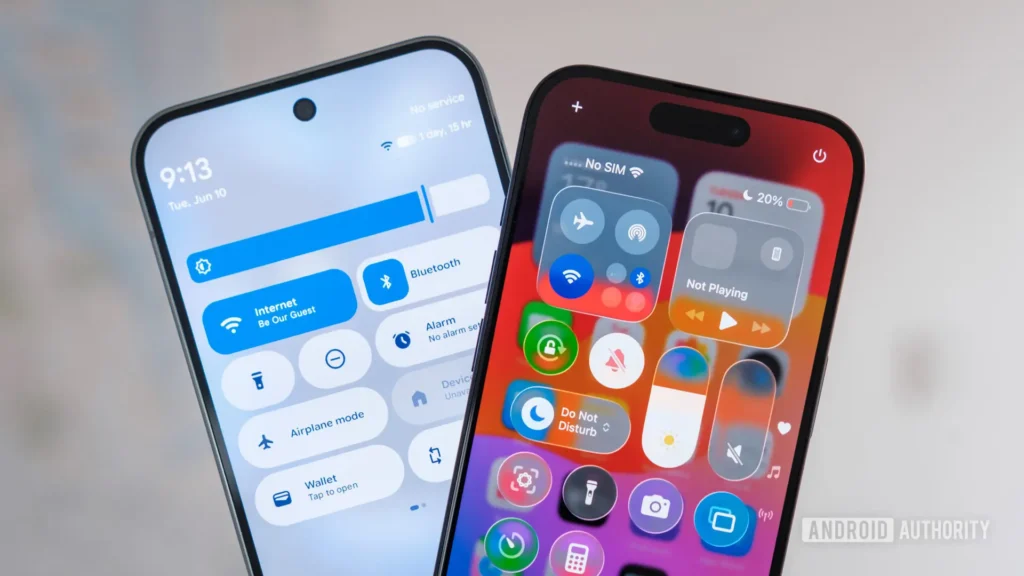
Android’s update process requires a bit more effort than iOS, it might involve additional steps depending on manufacturer-specific tools, making the process less intuitive. On the contrary, Apple’s iOS updating is typically a smoother process, allowing users to directly install updates from settings app with just few clicks.
Along with that, Apple’s update focuses on security as well, every patch and update tends to include extensive security enhancements, while Android’s upgrades depend heavily on the manufacturer alone. Although Google releases patches, they might not reach average user promptly due to reliance on third-party device manufacturers.
This extensive discussion on updating process of both Android and iPhone suggests a major gap between the two, placing the Apple’s platform in advantage.
Camera Quality: iPhone’s Consistency VS Android’s Versatility In 2026
Both Apple and Android manufacturers offer cutting-edge camera technologies in their flagship devices. With multiple lens setups, advanced sensors, and AI assistance, both platforms aim for a professional-grade photography experience in a compact device.
When it comes to numbers, Androids take the race with their latest phones featuring high-resolution sensors (up to 200MP) in Samsung’s Galaxy S25 Ultra and Google Pixel 10 Pro. They also include periscope zoom and ultra-wide options for betters zooming capabilities along with versatility in shooting scenarios.
However, with the passage of time and advancements, iPhones didn’t increase their number of megapixels, instead they have always worked on consistent image quality and color accuracy, particularly in challenging lighting conditions.
Models like iPhone 17 Pro, still comes with main sensor as 48MP but offering advanced computational photography features that make Apple outstand in the line.
When you are capturing in low-light conditions, Apple’s new sensor-shift stabilization technology enhances image clarity. The front-camera offers 50MP sensor capable of capturing 8K and advanced portrait modes.
While Android offers a quad-lens setup, including a 250MP periscope-style telephoto lens with 15x zoom, ultra-wide, and macro lenses. Android now offers advanced video capabilities, such as 10-bit HDR recording and AI assisted stabilization mode.
When it comes to megapixel count and image processing, iOS stands out with consistent excellent image quality despite their low megapixel counts and its advanced image processing capabilities often result in vibrant and well-balanced images.
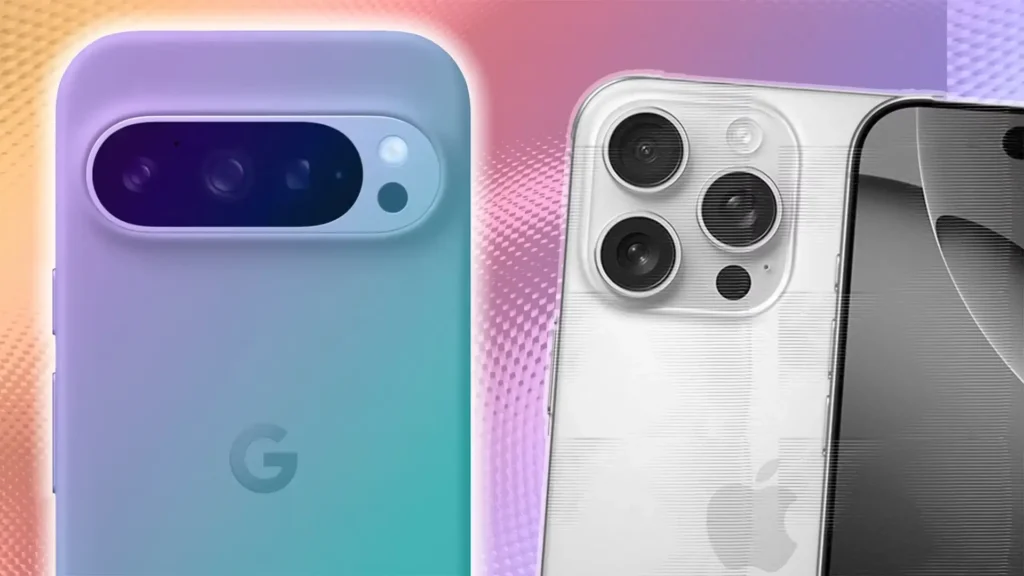
Choosing the latest iPhone series mobile will give you a 4K video resolution, plus Apple’s “ProRes” video recording, useful for advanced users.
Meanwhile, most Android models offer 4K video recording as standard. Models like Samsung Galaxy S23 Ultra and newer – can also shoot at the higher 8K resolution. Therefore, if video matters for you, Androids could be the better option to choose.
Ultimately, the choice between iPhone and Android in terms of camera performance will depend on individual preferences and specific needs.
Ecosystem Of Both Platforms
Both the platforms offer a wide range of apps on their specific stores, but the experience differs. Android excels with utility-driven tools like call recorder apps, applock app, and advanced android keypad phone functions.
It also integrates tightly with Google services such as Google Wallet app, Google Camera Lens, and pre-installed app Google services. However, iOS shines in optimization and privacy-centric approach. Tools like iPhone tracking app, iPhone scan, translate, and polished speech to text app, they are tightly integrated.
Android allows open environment in which it offers more flexibility for app distribution through Google Play and third-party stores. While iOS users tend to spend more on apps and in-app purchases, making development more lucrative.
This leads to less restrictive APIs in Android ecosystem, allowing for more creative and powerful app functionalities. However, Apple’s App Store review process ensures quality but also restricts certain types of apps and functionalities.
This is clearly seen in Apple’s ecosystem, which is unified. Meaning that the development for iOS targets a small range of devices with consistent hardware and software. On the contrary, Android introduces multiple revenue models, including ads, in-app purchases, and paid apps, though average revenue per user tends to be lower.
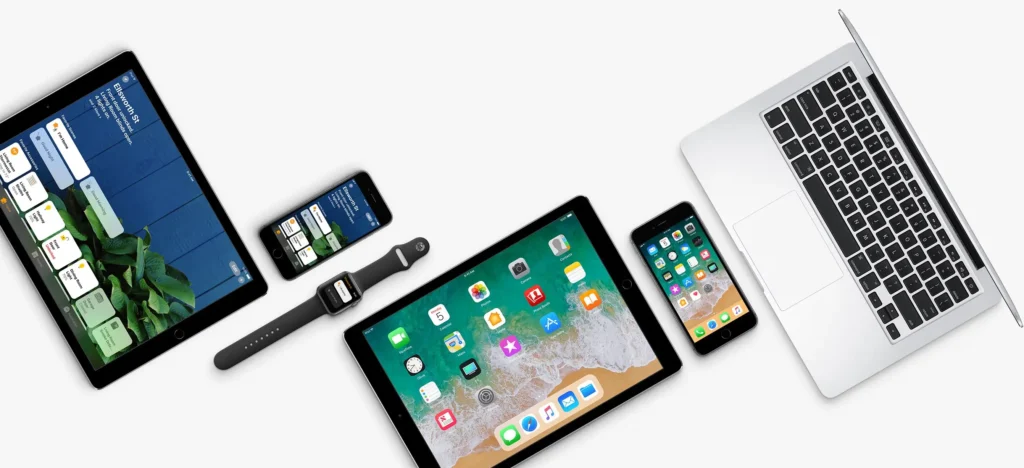
One of the most important factors defining both the platforms in their integration with other devices. iOS has seamless integration between iOS devices and broader Apple ecosystem, including Macs, Apple Watch, and HomeKit, providing a cohesive user experience. This interoperability enhances the utility and appeal of iOS devices within its ecosystem.
Compared to iOS, Android being open-source platform, enables a wide range of integrations with devices from various manufacturers, including wearables and smart devices. It supports extensive cross-compatibility, though experiences may vary by device and manufacturer.
Which One Is Best For You?
Lately, the variety and differences in smartphones have disappeared. Most phones look pretty much identical, with the days of distinct designs long since passed. As a result, the best choice for your needs reflects what you value in a phone.
Those who want a secure device with greater privacy protections, frequent software updates and patches, and a wide range of apps will likely gravitate toward the iOS system, particularly if you are already using other Apple devices.
Is Android Better Value For Money?
While Android might be lacking consistent updates, it still has a lot to offer users in terms of variety, current AI features and more. If you don’t want to pay flagship prices for iPhones, there are plenty of mid-range and budget friendly options that deliver a perfectly fine Android experience.
Which One is Better For Long-Term Use?
Due to their long-term software and upgrades support, iOS generally offers better longevity plus better resale value as well.
Which Is Easier For Non Tech Users?
iPhones are generally considered easier to use due to its intuitive and straightforward interface. The home screen is uncluttered, with clear labels making navigation much easier.
More Guides
SSD vs NVMe vs HDD – Which Storage Type Makes Sense in 2026
WiFi 6 vs WiFi 7 – What’s the Real Difference for Everyday Users?
