


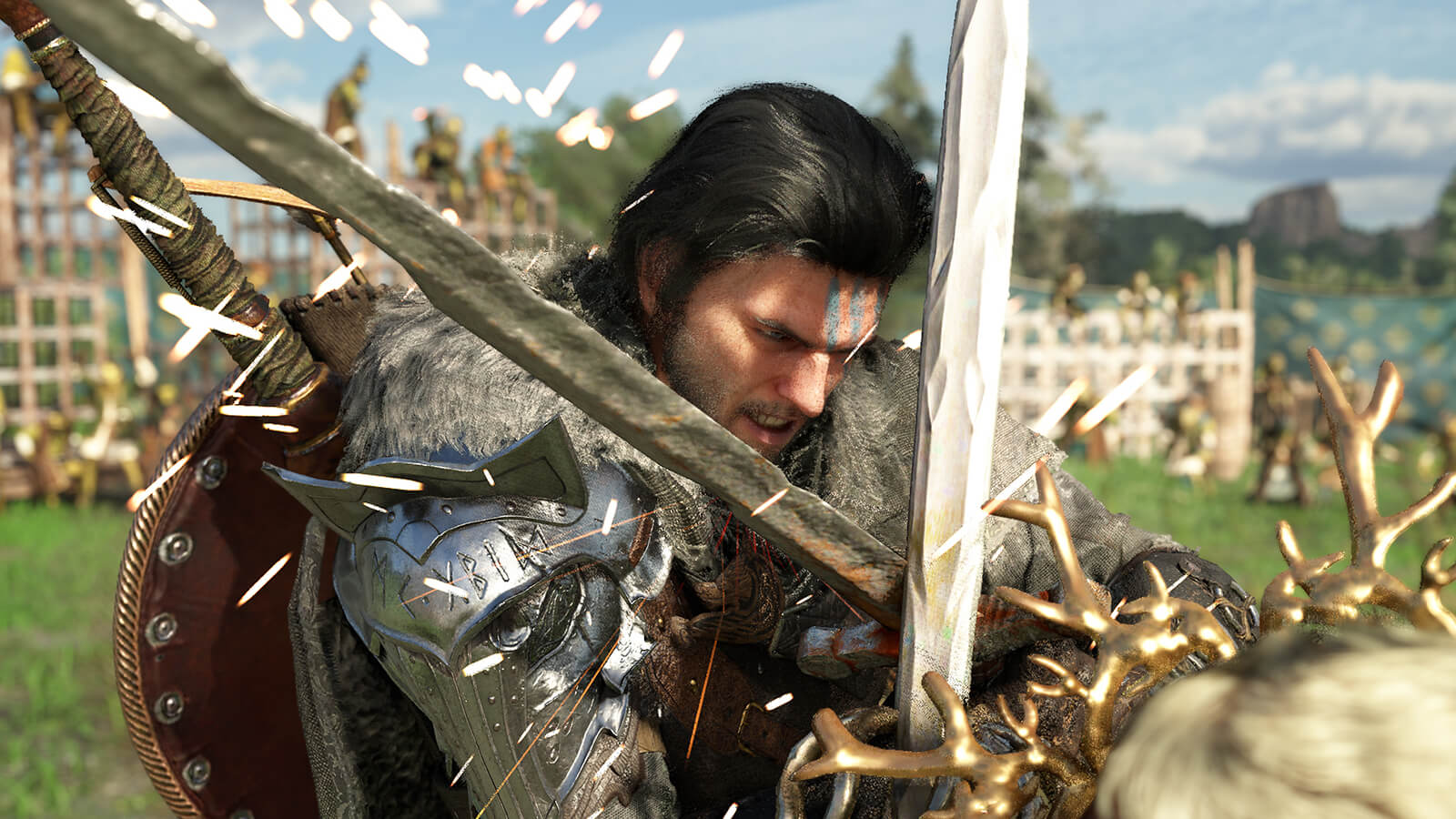
By all conventional metrics, Crimson Desert should be a runaway success. Pearl Abyss’ open-world action RPG has sold millions of copies, generated strong critical buzz for its combat system, and consistently ranks among Steam’s most-played titles. Yet hidden inside the game’s achievement data is a troubling statistic that most marketing reports ignore: nearly four out of every five players never make it halfway through the main story.
According to Steam global achievement tracking, only 21.9% of Crimson Desert players have unlocked the milestone tied to completing Chapter 7, which represents the game’s approximate narrative midpoint. Even more revealing is the completion rate for the final chapter.
Fewer than 5% of players—specifically between 2.4% and 4.6%, depending on region and platform variation—have obtained the achievement for finishing the main campaign. For a story-driven AAA title released just over one month ago, on March 19, 2026, these retention figures are statistically anomalous.
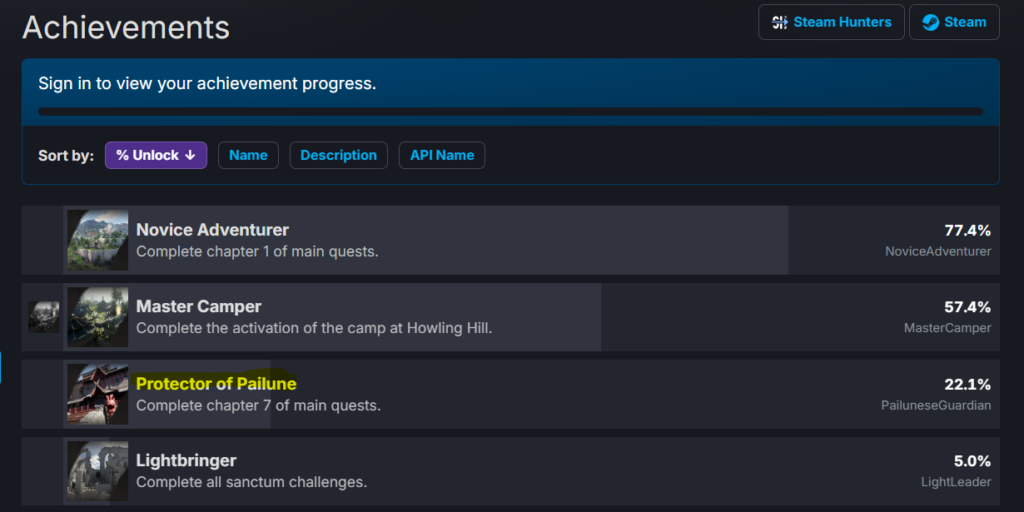
To put this in perspective, comparable open-world titles such as Elden Ring and The Witcher 3 saw mid-game completion rates between 45% and 60% at similar points in their life cycles.
Design Choices Over Narrative Urgency The explanation is not that players are abandoning the game entirely. Steam concurrent user data tells a very different story. Even five weeks after launch, Crimson Desert has maintained peak concurrent player counts exceeding 100,000, with daily averages rarely dipping below 65,000.
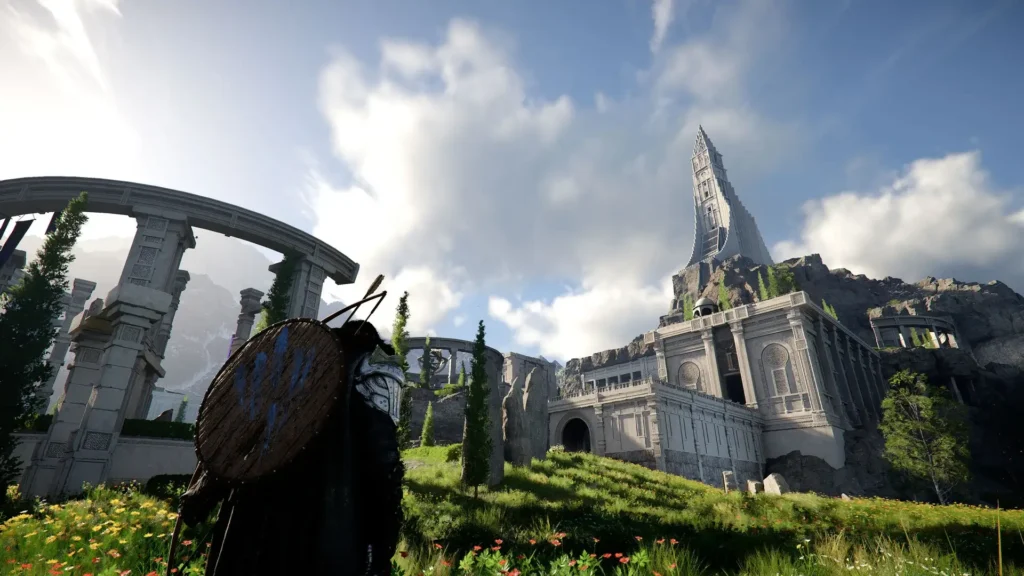
These are not numbers associated with a game that players dislike. Rather, they suggest a fundamental mismatch between developer intent and player behavior. Pearl Abyss designed a vast sandbox filled with side activities, trading mechanics, mount collecting, and territory exploration in zones such as Hernand and the Serpent’s Pass. Players, it appears, have chosen to engage almost exclusively with these systems while ignoring the critical path.
Industry analysts have pointed to the game’s narrative quality as a secondary factor. Post-launch player reviews on Steam—currently sitting at “Mostly Positive” following several performance patches—frequently praise the combat and world density but criticize the story as disjointed and the protagonist, Kliff, as lacking meaningful development.
Internal reports from the game’s extended development cycle indicated that the script underwent significant rewrites as late as early 2025, which may explain why many players describe the main quest as feeling like a series of disconnected set pieces rather than a cohesive journey.
The commercial implications are mixed. On one hand, Pearl Abyss has already recouped its development budget through strong initial sales. On the other hand, a 20% mid-game retention rate is a warning sign for any studio planning story-driven DLC or narrative expansions. It suggests that the vast majority of the player base will never encounter paid story content if it requires completing the base campaign.
Looking forward, analysts expect Pearl Abyss to pivot toward sandbox-focused updates rather than narrative additions. The studio has already hinted at a major “Explorer Mode” patch scheduled for late June, which would add new side activities and territory control mechanics. For players, the message is clear: the desert is vast, but the road to the credits remains largely empty.
More News:
Gears of War 6 Considered Before Prequel E-Day Development
Call of Duty Movie Director Resurfaced Comments Calls Gamers ‘Weak’ and ‘Pathetic’
Alien: Isolation Sequel Teaser Trailer Reveals First Look at the Game
