


Framework has officially opened preorders for its Wireless Touchpad Keyboard, a compact keyboard with an integrated trackpad designed for living-room PCs, desktop setups and other devices that benefit from wireless input. The keyboard costs $99 in the United States, with a fully refundable $50 preorder deposit. Initial shipments are scheduled for the first quarter of 2027.
The company confirmed the preorder launch in a November 17, 2026 announcement, providing pricing and shipping details for a product it had previously previewed. Framework says the first production batches will ship between January and March 2027 across its supported markets, although specific delivery dates have not yet been announced.
The Wireless Touchpad Keyboard combines a laptop-style keyboard with a clickable Windows Precision Touchpad, eliminating the need for a separate mouse when navigating a PC from a sofa or across a room. Framework also identifies gaming simulation rigs, single-board computers and home entertainment systems as potential applications.
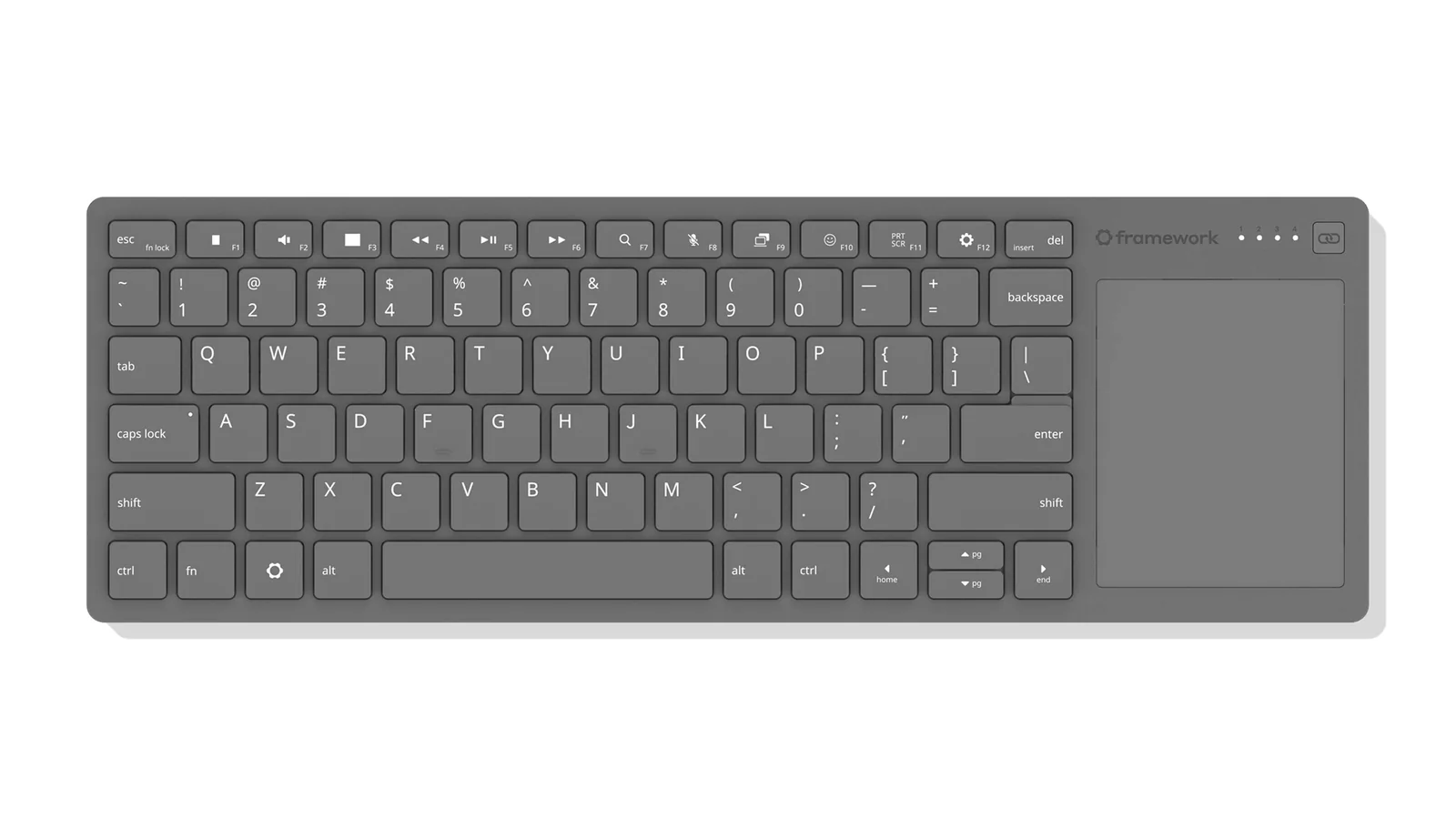
The keyboard uses the same keyboard module developed with Lite-On for the Framework Laptop 12. It features a scissor-mechanism design with 1.5mm key travel and 19mm key spacing. A 0.8mm internal steel plate provides rigidity, while a translucent black underside exposes some of the internal components.
Its integrated touchpad measures 68.8 × 85.6mm and uses a PixArt Precision Touchpad controller with a 120Hz sampling rate. The touchpad supports multi-finger gestures on Windows, while a dedicated Mac mode provides compatibility with many macOS trackpad gestures and keyboard shortcuts.
Connectivity includes Bluetooth 6.0, a bundled 2.4GHz USB-A wireless dongle and wired USB-C operation. The keyboard can connect to up to four devices, with the included dongle assigned to the first connection channel and three additional channels available for Bluetooth pairing.
Framework also specifies support for an 8,000Hz polling rate in wired USB-C mode. The company lists compatibility with Windows and Linux computers, gaming consoles, Steam Machines, smartphones, tablets, Raspberry Pi systems and smart TVs, although functionality can vary depending on the connected device.
Battery life is another focus. The keyboard includes a rechargeable 1,200mAh battery that Framework claims can last more than a month with several hours of daily use. For occasional operation, such as controlling a living-room PC, the company estimates more than a year of battery life in standby-heavy usage. Charging takes place through USB-C.
The device measures 357 × 118.7 × 16.4mm and weighs approximately 485g. Its initial configuration uses a US English ANSI keyboard layout without backlighting.
Framework has also carried its repairability approach into the new peripheral. The battery, control board and USB-A dongle are designed to be replaceable, with replacement components planned for the Framework Marketplace.
For customization, the keyboard uses firmware based on the open-source ZMK project, enabling key remapping and other modifications. Framework has released open-source CAD files for designing accessories, including 3D-printed mounts for simulation rigs. The company also plans to publish the firmware source code on GitHub.
Framework is developing a separate USB-A Adapter Expansion Card that allows the wireless receiver to sit flush inside compatible Framework computers. That accessory is expected to become available in early 2027.
Customers can reserve the Wireless Touchpad Keyboard by paying the $50 deposit, with the remaining purchase balance, applicable taxes and shipping charges collected shortly before dispatch. Framework allows customers to cancel their preorder and receive a full deposit refund before the remaining balance is charged.
The confirmed $99 price and Q1 2027 shipping schedule establish the keyboard as an upcoming option for users seeking integrated keyboard-and-pointer controls without maintaining separate wireless peripherals. Actual typing performance, wireless responsiveness and battery endurance will require independent testing once units become available.
