


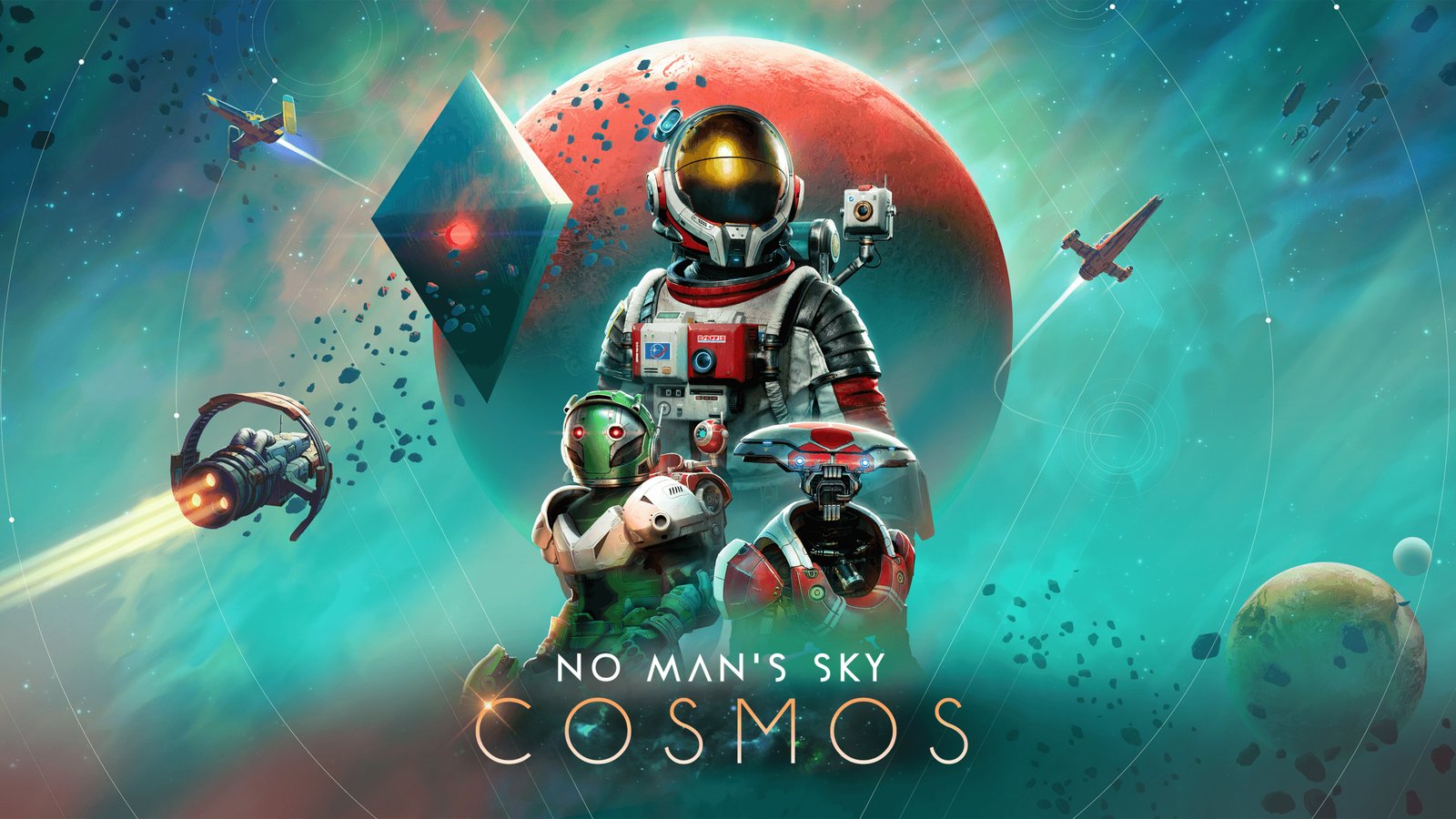
Hello Games has released No Man’s Sky: Cosmos, a major free update that substantially expands what players can do in space. The update is available now for existing PlayStation players and is being positioned as part of the game’s tenth-anniversary celebrations. Among its biggest additions are player-owned space stations, modular bases that can be built in open space, new asteroid belts, space hulks, outposts, missions and a redesigned solar-system map.
Founder Sean Murray described Cosmos as the biggest overhaul to space that No Man’s Sky has received across its decade of updates. While planets and planetary exploration have been expanded repeatedly over the years, Hello Games says space itself has remained comparatively unchanged. Cosmos attempts to address that by filling star systems with more points of interest and giving players additional reasons to remain in orbit rather than simply travelling between planets.
Warping into a system now gives players access to a new solar-system map that can reveal nearby locations and activities. These include massive derelict space hulks that can be salvaged for valuable materials, with players using the game’s physics-based gravity gun to tear pieces from the wreckage before transferring them to their ship with a tractor beam. Taking too much can destabilize a hulk and cause it to begin melting down, adding some risk to the salvage process.
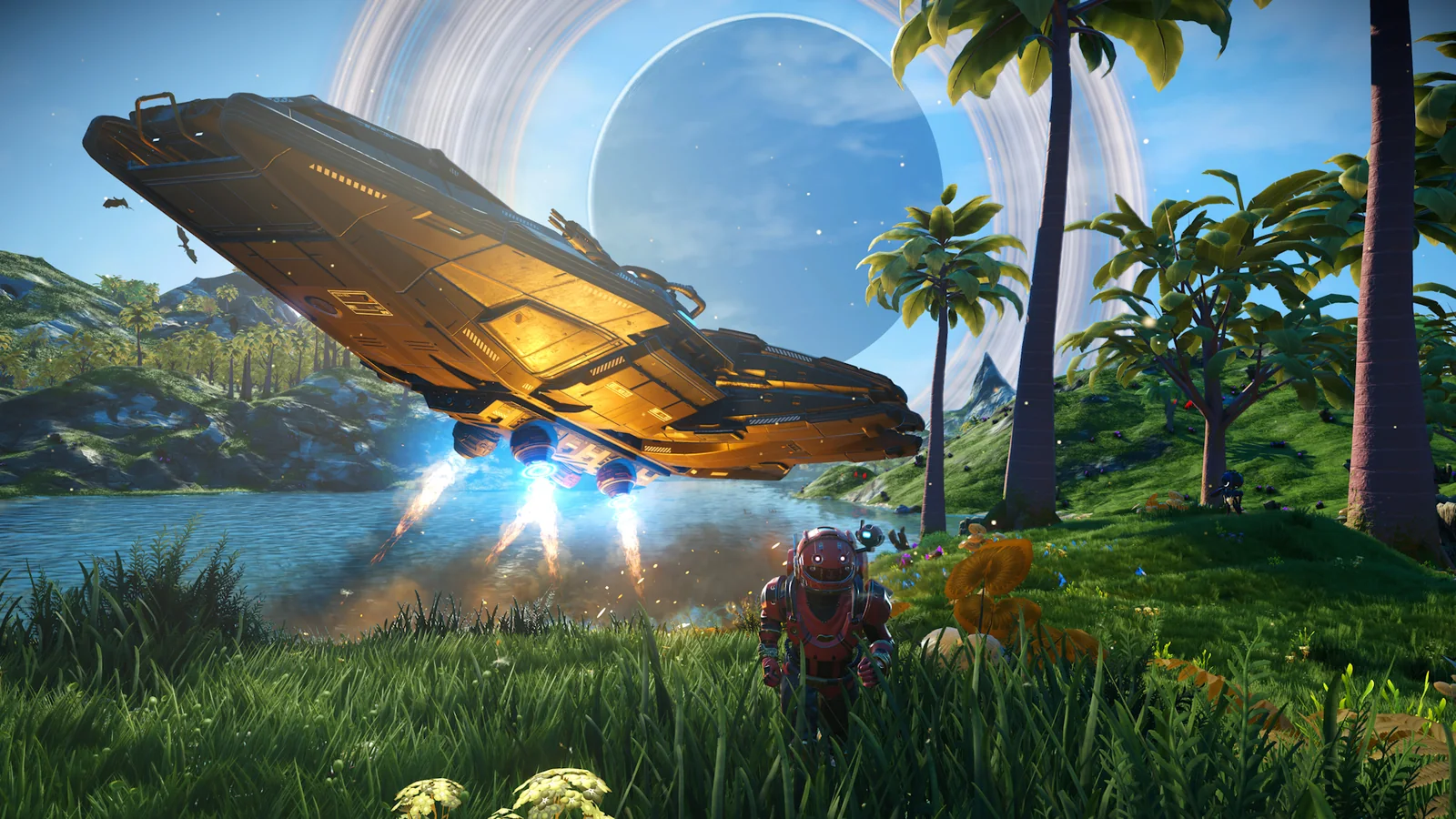
New space outposts provide another type of destination. Players can visit them to trade with alien lifeforms, purchase maps, gather information and accept missions, although some installations may have been overtaken by biological hazards and need to be cleared before they can be safely used. Cosmos also introduces large asteroid belts made up of rock and ice formations, with some rare asteroids big enough for players to land on directly.
Base building has expanded beyond planets and freighters as well. Players can now construct free-floating modular bases anywhere in space, opening the door to orbital restaurants, trading stops, military facilities or other custom structures suspended above planets. Certain large asteroids can also serve as foundations for bases, giving builders significantly more freedom over where their creations are located.
The most substantial progression addition is the ability to purchase a star system’s space station. Once owned, stations can be modified and decorated both internally and externally, allowing players to create personalized orbital hubs that friends can visit. This builds on the major space-station redesign introduced in the 2024 Orbital update, but goes considerably further by turning stations into properties players can actually own and customize.
Station ownership also connects to a new Alliance system. Players can establish an Alliance and invite others to join, then work together to create a network of stations across different systems. Hello Games says Alliances can compete on new leaderboards based on measures such as their size, wealth or prominence, adding a new social and long-term progression layer to the game’s multiplayer universe.
Cosmos even allows players to attempt something No Man’s Sky has historically kept out of reach: travelling toward the star at the center of a solar system. Hello Games describes reaching these suns as a dangerous undertaking, although the studio has not detailed exactly what players may encounter during the journey. The feature forms part of the broader effort to make space itself feel like an explorable environment rather than primarily a route between established destinations.
The update also introduces a special tenth-anniversary expedition built around No Man’s Sky’s history. Each milestone corresponds to one of the more than 40 major updates released during the past decade, with objectives inspired by features introduced in those respective updates. Developer logs are included throughout the expedition, giving players additional background on how different parts of the game evolved over the years.
No Man’s Sky originally launched in August 2016, and Hello Games has continued expanding it through free updates ever since. Cosmos pushes that long-running development in a different direction by concentrating heavily on the space between planets, while tying together exploration, base building, salvage and multiplayer progression. With station ownership and orbital construction now available alongside the new activities scattered across star systems, the update changes space from a largely transitional environment into a much more substantial part of the game.
