


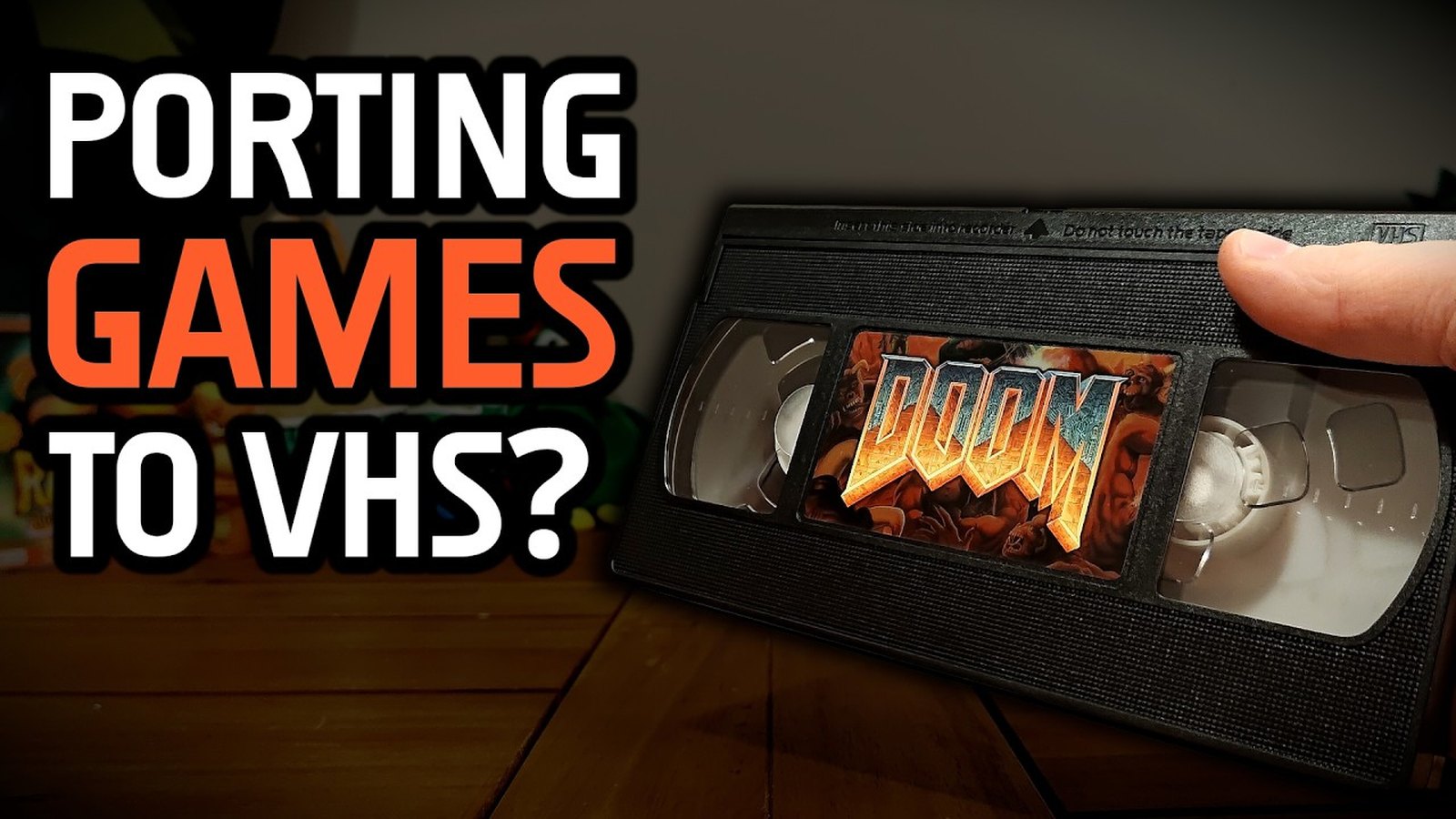
Hardware experimenter Throaty Mumbo has built a working video-game system around VHS tapes, using modern FPGA and microcontroller hardware to create interactive versions of Doom and Super Mario Bros. The project was inspired by the 1987 Action Max, a VHS-based console whose games relied largely on prerecorded footage and light-gun scoring rather than meaningful branching gameplay. Mumbo’s system goes considerably further by storing both game data and multiple video streams on the tape and allowing player input to determine what happens next.
The setup uses a DE1-SoC FPGA development board alongside an RP2350-based microcontroller. Video from the VHS deck is fed through the FPGA, while the RP2350 handles decoded game data and controller input. The tape can therefore carry prerecorded footage alongside binary information that tells the hardware how the interactive portions of the game should behave.
Doom is one of the most striking demonstrations, although the result is not a conventional port of id Software’s original shooter. Instead, Mumbo created an on-rails full-motion-video interpretation in which the VHS tape contains multiple prerecorded video streams. The FPGA can switch between eight streams, while timed controller inputs determine which sequence is selected and whether the player successfully completes an action.
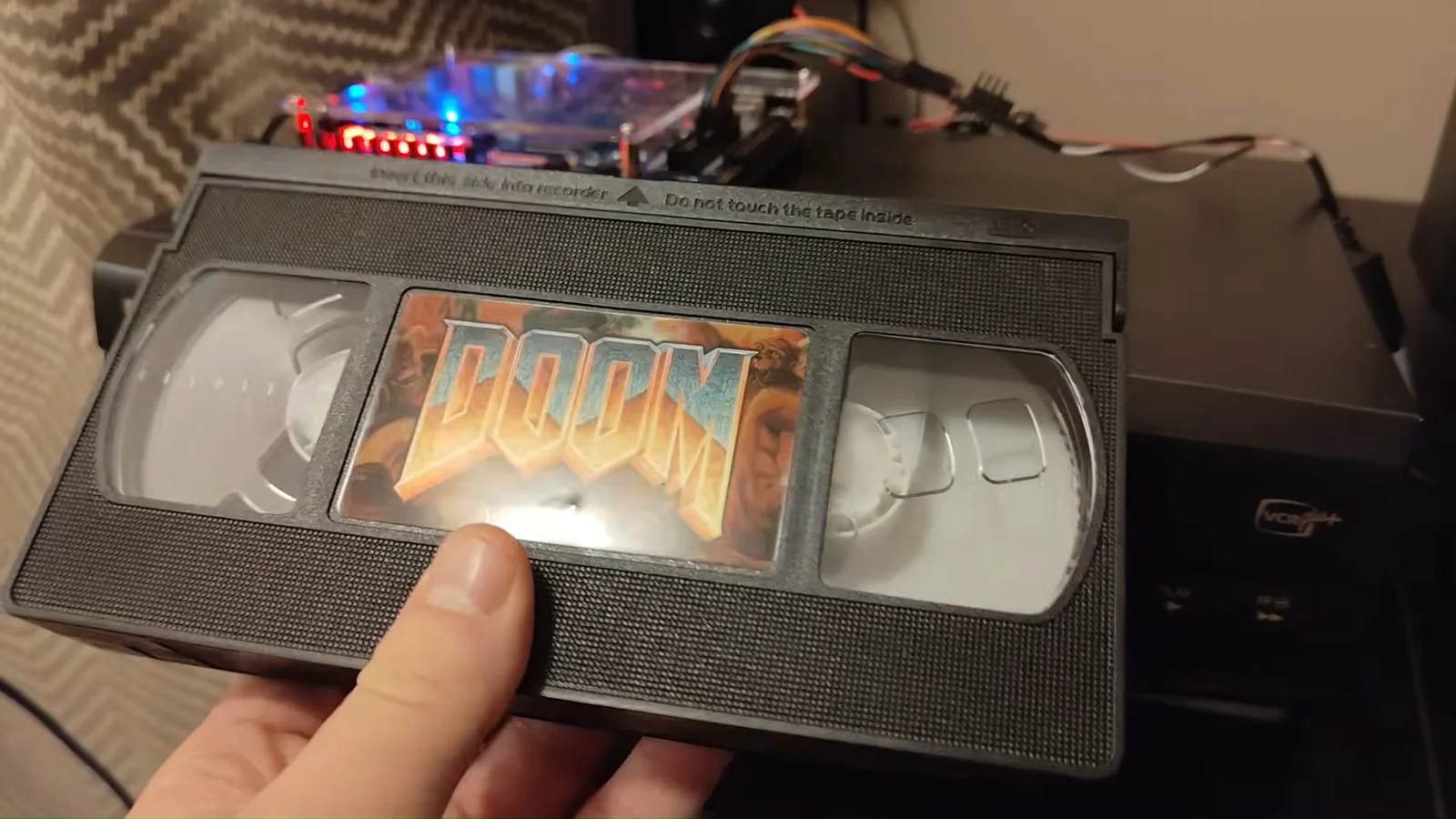
That design preserves some of Doom’s recognizable visual and audio character while working within the physical limitations of VHS. Players are prompted to press the correct button before an on-screen timer expires, with the system tracking successful inputs and scoring them. It behaves more like an elaborate FMV game than a freely controlled first-person shooter, but the interaction is being processed by the custom hardware rather than simply playing the same video from beginning to end.
Super Mario Bros. uses the system differently. Instead of turning the entire game into branching prerecorded footage, the hardware runs a playable representation of the Nintendo classic while VHS video is used as the background. The approach creates a hybrid of conventional rendered gameplay and analog full-motion video, resembling some of the techniques used by early CD-ROM games that combined game graphics with prerecorded scenery.
The system also demonstrates a Night Trap-style concept, showing how the same basic architecture could support games designed around prerecorded scenes and branching events. Because binary code can be stored alongside the video material, the tape is not limited to acting as a passive movie source. The RP2350 can execute game logic while the FPGA handles the incoming composite video and overlays, giving the format significantly more flexibility than original VHS gaming hardware.
The project grew out of Mumbo’s experimentation with the Action Max, a console released by Worlds of Wonder in the late 1980s. Action Max games used VHS tapes combined with a light gun and screen sensor, but the footage itself never changed in response to the player. Mumbo’s design instead lets software react to input and choose between available video paths, addressing one of the fundamental limitations of the original hardware.
It is another example of Doom being used as a technical test for unconventional computing platforms. Recent projects have included running Doom inside a SQL database, while other hobbyists have continued porting or recreating the game on hardware that was never intended to support it. Mumbo’s VHS experiment is different because the challenge is less about raw processing power and more about turning a fundamentally linear analog medium into something interactive.
The project is still an experimental maker build rather than a commercial console, and its limitations remain obvious. Mechanical tape seeking introduces delays, branching is constrained by how footage is laid out on the cassette, and the Doom demonstration cannot offer the movement freedom of the original game. Even so, the combination of FPGA video processing, RP2350 game logic and prerecorded VHS streams shows that the medium can support far more sophisticated interaction than the VHS gaming systems that reached consumers in the 1980s.
