


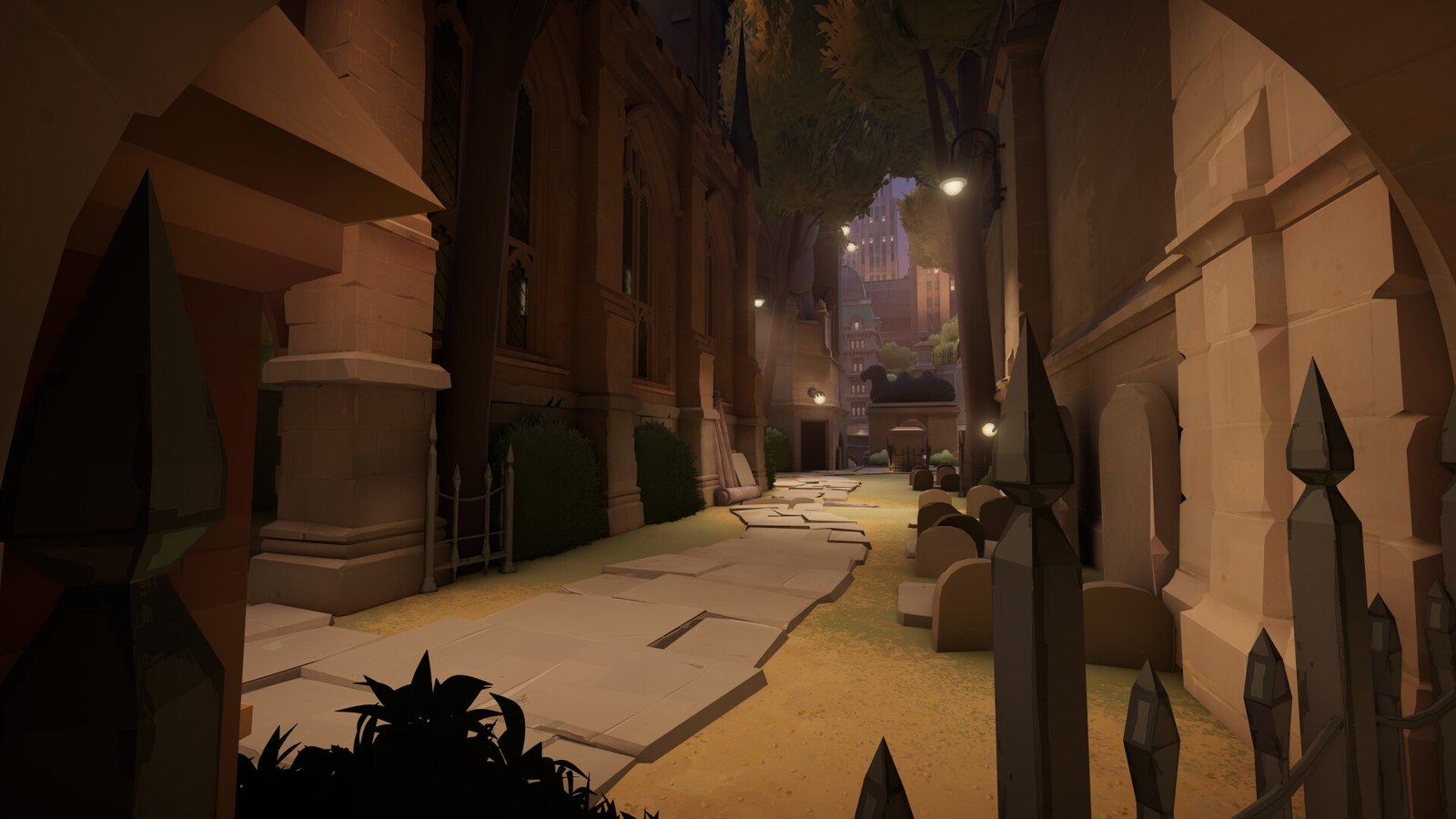
Valve appears to be developing a more extensive customization system for Deadlock’s Hideout, with newly discovered game data pointing to placeable decorative objects. Valve-focused dataminer Gabe Follower says the current implementation appears to support at least two types of decoration: a small item and a poster. The feature has not been formally announced in this specific form, so its final design and release timing remain uncertain.
The discovery is more credible than an isolated unused-file reference because Valve has already confirmed that Hideout customization is actively in development. In a recent development update accompanying Deadlock’s City Never Sleeps overhaul, Valve said it has been working on progression and “hero/hideout customizations” alongside other major systems. The studio specifically noted that these features are being developed early enough for them to change substantially in response to player feedback before the game’s full release.
Deadlock’s Hideout currently serves as the game’s interactive main-menu environment, giving players access to matchmaking, testing tools and other systems while displaying their selected hero. Valve has already begun adding more controls around the space, including dedicated camera settings and keybinds for use inside the Hideout. The newly datamined decoration functionality suggests the studio may be moving beyond interface improvements toward letting players personalize the physical environment itself.
According to Gabe Follower, the current work points to players being able to position either a small object or a poster. That does not necessarily mean Valve plans to limit the final system to those two categories, as early development assets often represent only the first implemented examples of a broader feature. There is also no indication yet of how decorations would be earned, whether placement locations are predetermined, or whether other players visiting a Hideout would be able to see them.
There is some existing evidence for persistent Hideout collectibles. Community documentation already tracks event-related souvenirs displayed in the space, including seasonal items associated with earlier Deadlock events. Turning those fixed rewards into a more flexible placement system would fit naturally with Valve’s stated plans for Hideout personalization, although the datamine alone does not establish how customizable the final version will become.
Hideout customization also appears to be developing alongside Deadlock’s broader cosmetic work. Files discovered earlier contained wardrobe-related references and concept material connected to alternate hero appearances, while Valve has publicly listed hero customization among the systems currently being developed. The studio has been expanding the game rapidly alongside external contributors, including Roarty Digital’s confirmed work on Deadlock and the City Never Sleeps update, as it continues building out art, environments and supporting systems.
Valve has stressed that Deadlock remains unfinished and that several features are still subject to significant revision. Its recent developer note distinguishes systems such as progression and customization, which it clearly intends to develop further, from more speculative ideas such as some alternate game modes and major item redesigns that could still change depending on playtesting. That makes Hideout customization broadly confirmed, even if the newly uncovered object and poster placement mechanics remain unannounced implementation details.
The Hideout itself has become increasingly important to Deadlock’s presentation since replacing the game’s more conventional menu structure. It gives each hero a physical space before matches and provides Valve with an obvious location for cosmetics, event rewards and progression displays that do not directly affect gameplay. A decoration system could therefore give players another form of long-term personalization without interfering with competitive balance.
For now, the placeable-item and poster functionality should be treated as a datamined feature rather than a guaranteed release. Valve has not announced a launch date, pricing model, unlock structure or complete list of supported decorations. Still, with the developer already publicly confirming that Hideout customization is underway, the latest files provide the clearest indication yet of how at least part of that system could eventually work.
