
Close Menu
    Facebook X (Twitter) Instagram
    Facebook X (Twitter) Instagram
    TechtroduceTechtroduce
    Subscribe
    • NEWS
    • GUIDES
    • COMPARISONS
    • REVIEWS
    TechtroduceTechtroduce
    Home » AMD Bringing FSR 4 to APUs, Gaming Laptops and Handhelds
    NEWS Updated:October 8, 2026

    AMD Bringing FSR 4 to APUs, Gaming Laptops and Handhelds

    Abyan KhanBy Abyan KhanOctober 8, 2026Updated:October 8, 2026No Comments4 Mins Read
    Facebook Twitter Pinterest LinkedIn Tumblr Email
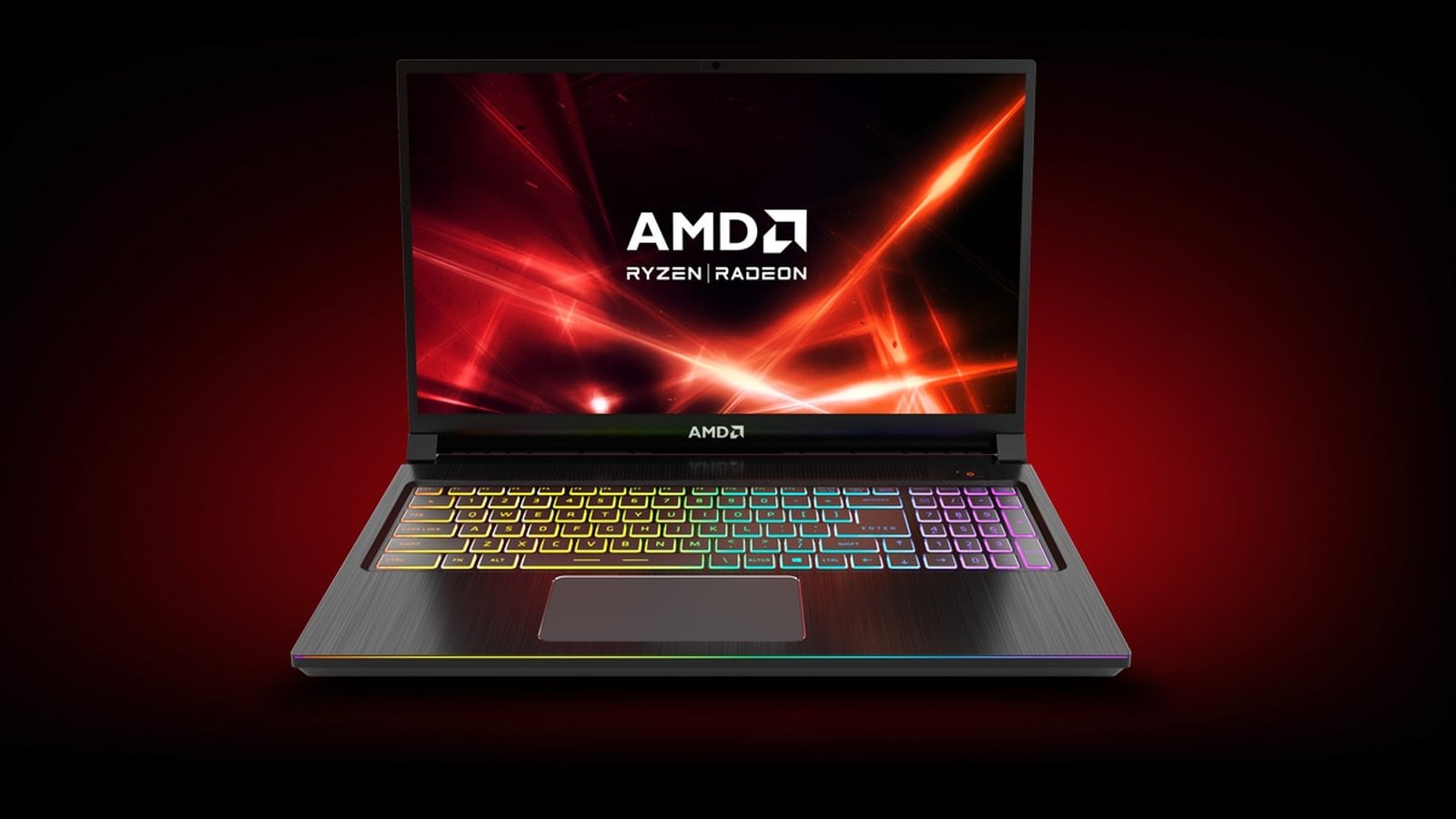
    Official AMD gaming laptop image with Ryzen and Radeon branding on the display
    Share
    Facebook Twitter LinkedIn Pinterest Email

    AMD plans to bring its machine-learning FSR 4 technology to APUs, gaming laptops and handheld gaming devices before the end of 2026. Jack Huynh, AMD senior vice president and general manager of its Computing and Graphics Group, confirmed the expanded rollout during a meeting with Korean media in Seoul on October 7. The move will take AMD’s latest upscaling technology beyond discrete Radeon graphics cards and into systems that rely primarily on integrated GPUs.

    Speaking to The Elec, Huynh said AMD intends to expand FSR 4 across its product lineup by the end of the year, explicitly naming APUs, gaming laptops and handheld devices. AMD is approaching that expansion through both support for existing APUs and new APU products. The company has also developed a lighter machine-learning model specifically designed around the lower performance and memory-bandwidth limits of integrated graphics.

    That lightweight model is intended to preserve much of FSR 4’s image-quality advantage while keeping processing cost and latency under control. Running the same machine-learning workload designed for a higher-end discrete GPU can be disproportionately expensive on an integrated GPU, where graphics hardware also shares memory bandwidth and power with the CPU. AMD therefore appears to be adapting the technology rather than simply enabling the existing implementation unchanged across every device.

    Official AMD gaming laptop image with Ryzen and Radeon branding on the display

    The announcement is particularly significant for handheld PCs. AMD processors power a large portion of the current Windows handheld market, but devices using RDNA 3 and RDNA 3.5 integrated graphics have so far lacked official access to the company’s newest ML-based upscaling path. Handheld systems have more to gain from effective reconstruction technology than many desktop PCs because they often render demanding games at lower internal resolutions to stay within tight power and thermal limits.

    AMD has already been steadily widening FSR 4 support beyond its original hardware base. The technology initially launched around RDNA 4 and Radeon RX 9000-series graphics cards, while FSR Upscaling 4.1 was later expanded to Radeon RX 7000-series GPUs. AMD has also said Radeon RX 6000-series support is planned for early 2027, continuing an effort to make its latest reconstruction technology available on older architectures rather than keeping it exclusive to new cards.

    Integrated graphics remained a more complicated target. Earlier this year, AMD publicly confirmed that it was developing lightweight machine-learning models for RDNA 3 APU users, but the company stopped short at the time of promising FSR 4.1 for every RDNA 3.5 device. Huynh’s latest comments provide a much clearer timetable and specifically extend the company’s plans to APUs and handheld gaming systems before 2026 ends.

    The exact compatibility list has not yet been announced. Current AMD handheld and laptop hardware spans several GPU architectures and configurations, including Ryzen Z-series processors and Ryzen AI chips with RDNA 3.5 graphics, so it remains unclear which existing products will receive the optimized FSR 4 implementation first. AMD has also not confirmed whether every supported integrated GPU will receive the same feature set or image-quality modes.

    For gamers, the most important consequence is potentially higher playable performance from integrated graphics without relying solely on traditional spatial or analytical upscaling. FSR 4 uses machine learning to reconstruct higher-resolution frames from lower-resolution inputs, placing AMD’s approach closer to technologies such as NVIDIA DLSS and Intel XeSS. A version optimized for lower-power APUs could allow handhelds and thin gaming laptops to target more demanding visual settings while maintaining acceptable frame rates and image quality.

    The expansion also fits AMD’s broader effort to apply machine learning throughout its gaming stack. Huynh has said the company is working across upscaling, frame generation and other rendering technologies while continuing to support hardware ranging from enthusiast desktops to consoles and portable gaming devices. With FSR 4 now officially headed toward APUs and handhelds before the end of 2026, integrated Radeon graphics are set to become one of the next major targets for AMD’s machine-learning gaming technology.

    Share. Facebook Twitter Pinterest LinkedIn Tumblr Email
    Abyan Khan
    • Instagram
    • LinkedIn

    Abyan Khan is a dedicated writer and tech enthusiast currently pursuing a Bachelor’s degree in Information Technology. With over 3 years of professional writing experience, he specializes in crafting clear, engaging, and informative content across a range of topics, particularly in the tech and gaming industries. Abyan combines his academic knowledge with real-world insights to deliver articles that are both well-researched and reader-friendly.

    Related Posts

    Dead of Darkness 2 Announced for PS5, Xbox, Switch and PC

    October 8, 2026

    Windows 11 Search Rebuilt With Typed Actions and WinUI 3

    October 8, 2026

    Sonic Racing: CrossWorlds Avatar Legends DLC Launches October 13

    October 8, 2026
    Leave A Reply Cancel Reply

    Google Techtroduce

    See more Techtroduce stories on Google.

    Add us on Google

    • Dead of Darkness 2 Announced for PS5, Xbox, Switch and PCOctober 8, 2026
      Dead of Darkness 2 is coming to PS5, Xbox Series, PS4, Xbox One, Switch and PC with new characters, isometric survival horror and expanded combat.
    • AMD Bringing FSR 4 to APUs, Gaming Laptops and HandheldsOctober 8, 2026
      AMD plans to expand FSR 4 to APUs, gaming laptops and handhelds by the end of 2026, including a lighter model designed for integrated graphics.
    • Windows 11 Search Rebuilt With Typed Actions and WinUI 3October 8, 2026
      Microsoft is rebuilding Windows 11 Search with typed system actions, a lighter WinUI 3 design, richer results and planned Copilot integration.
    TRENDING NOW

    Square Enix Showcases 2B Battle In New Ever Crisis Trailer

    Fortnitemares 2026 Reveals Six Major Fortnite Crossovers

    Gears of War Begins Fifth Year of Never Fight Alone Campaign

    Xbox Will Reportedly Have A Major Presence At Gamescom

    Facebook Instagram YouTube
    © 2026 Techtroduce. All Rights Reserved | Cookies Policy | Privacy Policy | Contact Us | About Us | Corrections Policy

    Type above and press Enter to search. Press Esc to cancel.

    Manage Consent
    To provide the best experiences, we use technologies like cookies to store and/or access device information. Consenting to these technologies will allow us to process data such as browsing behavior or unique IDs on this site. Not consenting or withdrawing consent, may adversely affect certain features and functions.
    Functional Always active
    The technical storage or access is strictly necessary for the legitimate purpose of enabling the use of a specific service explicitly requested by the subscriber or user, or for the sole purpose of carrying out the transmission of a communication over an electronic communications network.
    Preferences
    The technical storage or access is necessary for the legitimate purpose of storing preferences that are not requested by the subscriber or user.
    Statistics
    The technical storage or access that is used exclusively for statistical purposes. The technical storage or access that is used exclusively for anonymous statistical purposes. Without a subpoena, voluntary compliance on the part of your Internet Service Provider, or additional records from a third party, information stored or retrieved for this purpose alone cannot usually be used to identify you.
    Marketing
    The technical storage or access is required to create user profiles to send advertising, or to track the user on a website or across several websites for similar marketing purposes.
    • Manage options
    • Manage services
    • Manage {vendor_count} vendors
    • Read more about these purposes
    View preferences
    • {title}
    • {title}
    • {title}