


Anthropic has updated Claude Code to discourage users from recreating existing commercial video games with its AI coding assistant. The company confirmed on October 30, 2026, that it added two sentences to Claude Code’s instructions for the Opus 5.5 model, directing the tool away from copying specific games while continuing to support original development projects.
Addy Osmani, a member of Anthropic’s technical staff, confirmed the change in a public statement on X. He explained that the restriction was introduced because using Claude to infringe intellectual property violates Anthropic’s usage policy. The update follows growing concerns among game developers about AI-assisted tools being used to rapidly reproduce existing titles.
The new instructions were initially identified around October 27 by an X user named Chasm, who shared details of an addition to Claude Code’s internal rules under the identifier “tengu_heron_brook.”
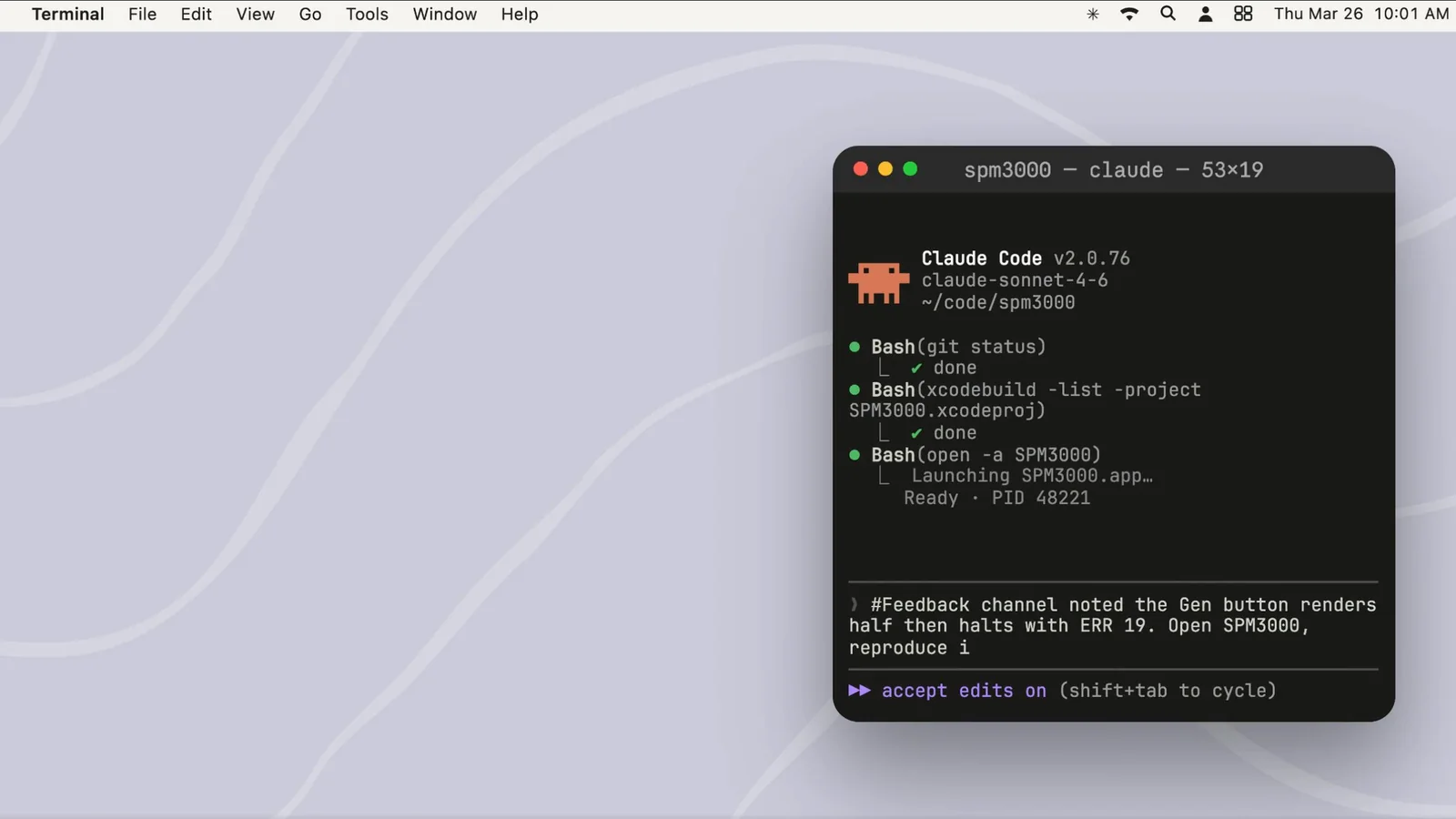
The instructions explicitly permit developers to create original games, projects within established genres and games using their own designs and assets. However, they direct Claude not to recreate a particular existing game, even when users rename the project or describe the resulting copy as original.
This distinction means developers should still be able to use Claude Code to create their own first-person shooters, racing games, platformers and other genre-based projects. Requests to reproduce a specific commercial title, however, are now intended to encounter restrictions.
Osmani emphasized that Anthropic does not intend to prevent legitimate game development. “Original games, genre games, and games built from your own designs and assets are meant to keep working,” he stated.
The company also acknowledged that the instructions could require further adjustments. Osmani said Anthropic would continue refining the restrictions and invited developers to contact him if Claude incorrectly declined to work on projects they own.
The change arrives during increased scrutiny of AI-assisted game development, particularly as coding assistants become capable of generating playable projects with relatively little manual programming. The technology is already being incorporated into established development workflows, including AI-assisted programming work involving Unreal Engine 6 and Fortnite.
Some independent developers have expressed concerns that publicly released demos and early gameplay footage could provide enough reference material for AI tools to generate competing imitations. Those concerns have prompted discussions about how storefronts should handle games that closely reproduce other developers’ work.
The wider adoption of generative AI is also becoming more visible across PC gaming. A recent analysis found that nearly half of Steam games released in October 2026 disclosed generative AI use, illustrating how extensively the technology is being incorporated into game production.
Anthropic’s new instruction is intended to discourage direct recreations rather than prohibit AI-generated games altogether. Its effectiveness remains uncertain, particularly because distinguishing an unauthorized copy from a legitimate project can depend on intellectual property ownership, licensing and the particular materials being reproduced.
Developers have also raised questions about how the restriction might affect fan projects, preservation efforts, modifications and authorized recreations. Anthropic has not provided detailed public guidance addressing every such scenario.
The confirmed change specifically concerns Claude Code’s instructions when using Opus 5.5. Anthropic has not announced an equivalent restriction across every Claude model or product, and the company has not established that the new instructions will prevent all attempts to recreate existing games.
For developers using Claude Code, the practical distinction is now clearer: creating original games and working with their own assets remains supported, while requesting a reproduction of another creator’s existing game is explicitly discouraged.
