


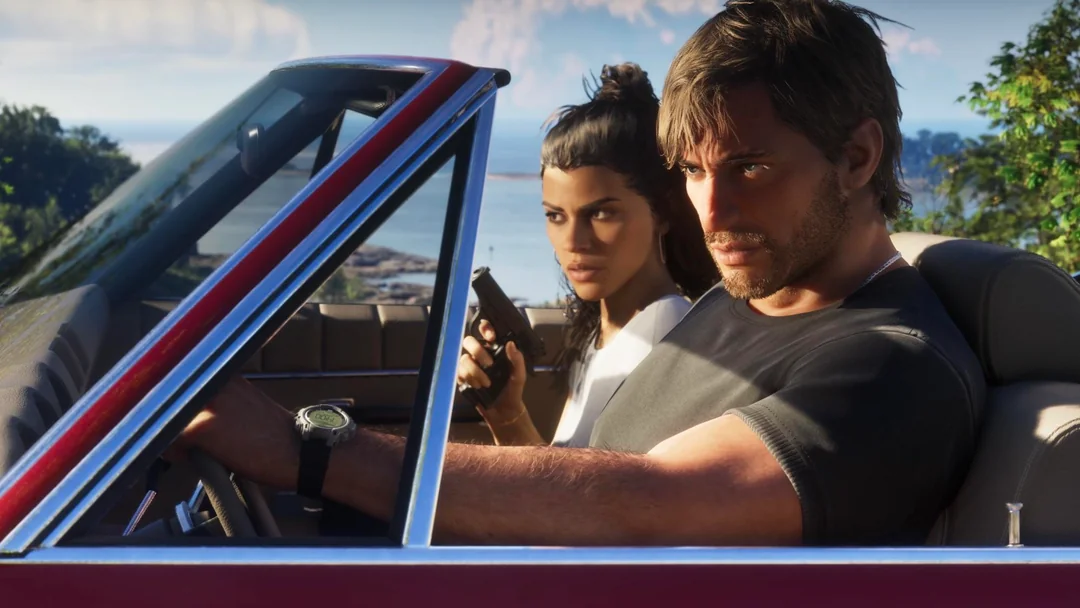
Rockstar Games is taking a more careful approach to satire in Grand Theft Auto VI, with Rockstar North studio head Rob Nelson explaining that the studio wants the game’s jokes and cultural commentary to remain relevant rather than feel outdated soon after release.
Speaking about GTA VI’s portrayal of modern American culture, Nelson said Rockstar has to be selective about what it chooses to satirize because the studio’s games spend so long in development. A joke built around a short-lived political story, meme or cultural moment could easily lose its relevance before players ever see it.
Nelson explained that Rockstar therefore looks for subjects with more staying power. The goal is not to remove the social commentary that has defined Grand Theft Auto, but to avoid tying too much of the game’s humor to references that could become dated during a lengthy development cycle.
That challenge is particularly significant for GTA VI. The game has been in development for years while the political, technological and social landscape it draws from has changed rapidly.
Vice City and the wider state of Leonida are still presented as exaggerated versions of contemporary America. Rockstar’s newly released Extended Look shows a heavy focus on social media, influencers, viral videos, smartphones and the kinds of online behavior that have become central to modern culture.
In earlier Grand Theft Auto games, Rockstar frequently built its satire around television, radio, advertising, celebrity culture and political stereotypes. GTA VI appears to shift some of that attention toward online platforms and the way people communicate through them.
The in-game phone shown during the Extended Look plays a significant role in that approach. Characters can send messages, view photos and short-form videos, check apps and interact with systems that closely resemble modern messaging, ride-hailing, payment and social-media services.
Rockstar’s challenge is that those services and behaviors evolve far more quickly than older forms of media. A joke about a specific app, internet trend or public figure could be recognizable during development but feel outdated several years later.
Nelson’s comments suggest the studio is trying to focus instead on broader behaviors and cultural patterns that are likely to remain familiar even as individual platforms or personalities change.
That does not mean GTA VI will avoid current events or contemporary culture entirely. Rockstar has already shown material clearly inspired by modern Florida, including viral-video culture, unusual local news stories, influencer behavior and highly exaggerated social-media personalities.
The distinction appears to be between satirizing a specific moment and satirizing a broader cultural trend.
That approach could also explain why Rockstar has emphasized Leonida’s social-media ecosystem so heavily in its marketing. Rather than relying only on conventional cutscenes or radio stations, GTA VI can show the player an exaggerated version of modern life through the constant flow of posts, messages and clips circulating inside the game world.
Grand Theft Auto has always depended heavily on satire as part of its identity. GTA V took aim at celebrity culture, technology companies, reality television, politics and social media as they existed in the early 2010s.
GTA VI arrives in a very different cultural environment, and Rockstar appears aware that recreating the same style of topical humor would be difficult without risking jokes becoming obsolete.
Nelson has also acknowledged how strange the real world has become since GTA V released, raising the question of how far Rockstar can exaggerate reality when reality itself frequently resembles satire.
Grand Theft Auto VI launches November 19, 2026 for PlayStation 5 and Xbox Series X|S.
Rockstar’s comments make clear that the studio is not abandoning Grand Theft Auto’s trademark satire. Instead, it is trying to make sure the targets it chooses still make sense years after they were first written.
