


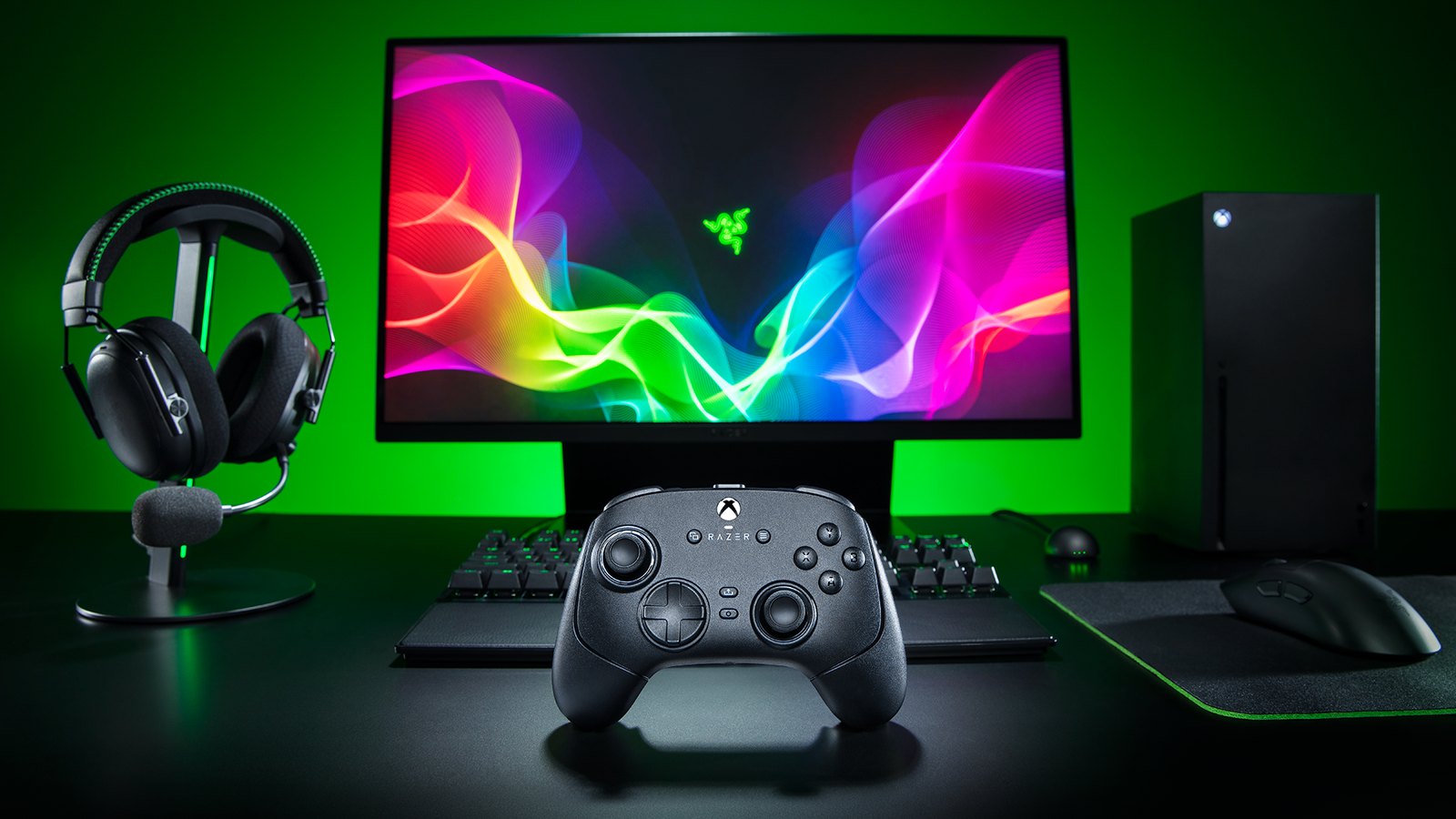
Razer has unveiled the Wolverine V4 Pro, its new flagship wireless controller for Xbox and PC, with capacitive thumbsticks, removable magnetic rear buttons and polling rates of up to 8,000Hz on PC. The $199.99 controller is part of a new Wolverine V4 lineup that also includes a wired Tournament Edition priced at $99.99. Both models are officially licensed for Xbox and are aimed primarily at competitive players.
The biggest technical change is Razer’s move to high-resolution capacitive thumbstick sensors. Unlike conventional potentiometer-based sticks, the new contactless design is intended to avoid mechanical wear that can contribute to stick drift while also avoiding the magnetic interference associated with Hall effect and TMR sensors. Razer says the capacitive system provides improved resolution and power efficiency while maintaining accurate tracking across small movements.
The Pro includes six interchangeable thumbstick caps, with short concave caps installed by default and alternative short convex and taller concave options included for different play styles. Dead zones can be adjusted between 0% and 15% through Razer Synapse, while sensitivity and other controller settings can be stored across four onboard profiles. That gives players more control over the physical feel of the sticks as well as their software behavior.
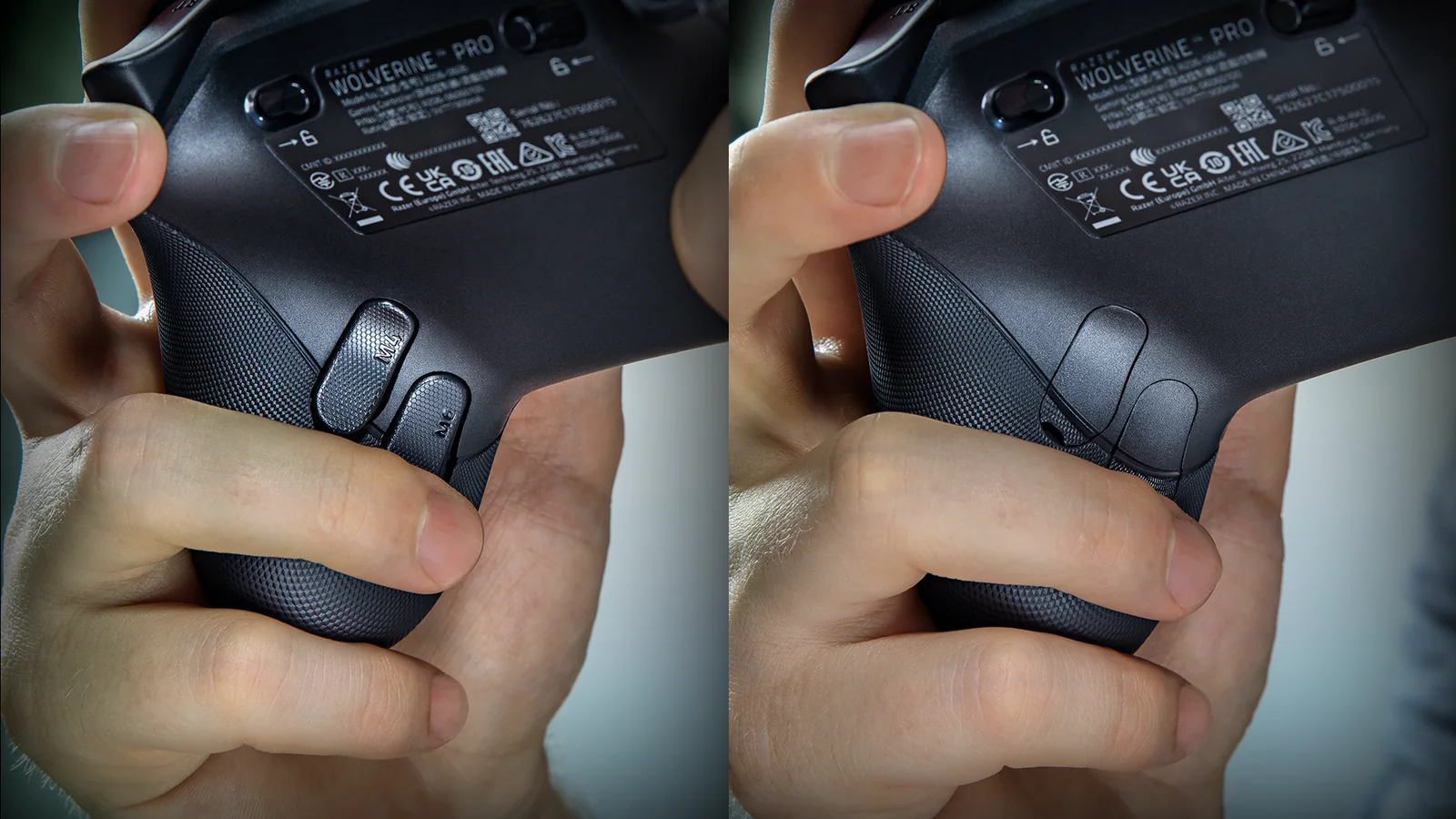
Razer has also redesigned the four rear inputs. They now attach magnetically and can be removed individually without tools, allowing players to use all four, only selected buttons or none at all. Two additional claw-grip bumpers remain on the top of the controller, bringing the total to six mappable multifunction inputs beyond the standard Xbox layout.
Trigger customization has also been expanded through Razer Pro HyperTriggers. Players can configure the triggers from a short 1.3mm actuation intended for fast inputs to a full 8.2mm analog pull for games such as racers where progressive throttle and braking matter. The controller retains an eight-way floating D-pad and uses PBT mecha-tactile face buttons designed to provide mouse-like actuation while resisting wear from oils and sweat.
On PC, the Wolverine V4 Pro supports Razer HyperPolling at up to 8,000Hz through its HyperSpeed wireless connection, with Razer advertising latency below 2 milliseconds. The higher polling mode is PC-specific; Xbox operation remains limited to the console’s lower polling rate. Native Steam support is also included, making the controller usable across Xbox-focused and broader PC gaming libraries without requiring a separate compatibility layer.
Physical customization extends beyond the buttons and sticks. The Wolverine V4 Pro introduces a removable magnetic faceplate that can be swapped without tools, opening the door to alternative designs and replacements. Textured TPU grips cover the handles, while haptic rumble returns to provide conventional vibration feedback during gameplay.
Razer’s cheaper Wolverine V4 Tournament Edition keeps several of the core upgrades while removing the wireless and more extensive modular features. It uses the same capacitive thumbstick technology and adjustable HyperTriggers, but its rear buttons are fixed rather than magnetically removable. The Tournament Edition is wired and positioned as the lower-cost option for players who prioritize latency and competitive features over wireless operation.
The Wolverine V4 Pro succeeds the V3 Pro without radically changing the familiar asymmetrical Xbox-style layout. Instead, Razer has concentrated on the components competitive players interact with most frequently, particularly the thumbsticks, rear controls and polling system. The ability to physically remove unused rear buttons is also a practical change for players who find traditional four-paddle arrangements crowded.
Razer lists the Wolverine V4 Pro at $199.99 in the United States, while the Tournament Edition costs $99.99. Availability varies by region, with Razer selling the controllers through its own store, Razer retail locations and authorized sellers. With the V4 generation, the company is positioning capacitive stick sensing and much deeper physical customization as the main differentiators for its latest premium Xbox and PC controllers.
