


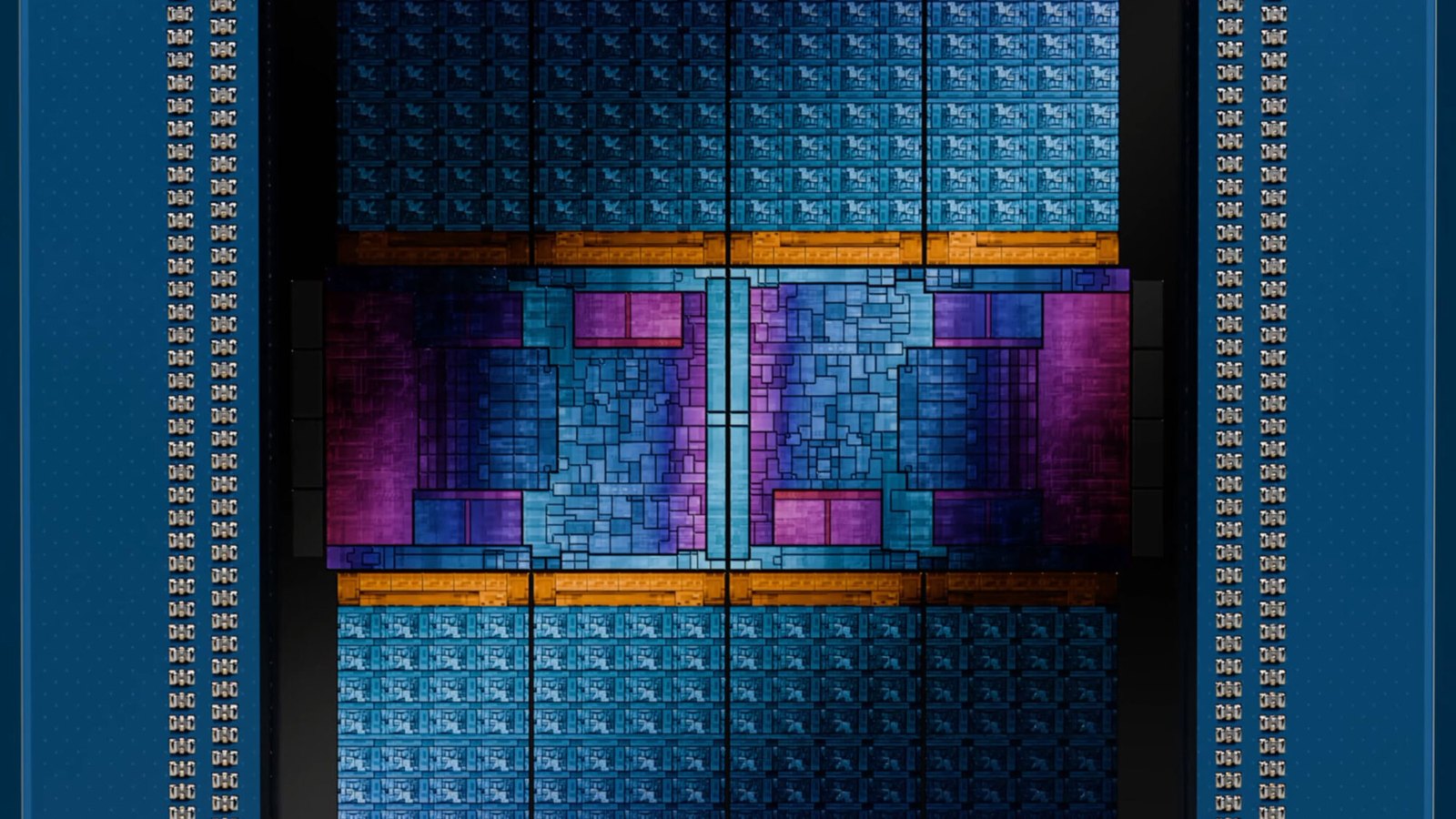
AMD’s Zen 6c architecture has demonstrated a 16.5% single-core performance advantage over Zen 5 in an early Geekbench 7 comparison. The results involve AMD’s 256-core EPYC 9996 server processor and a Ryzen 7 9700X configured to run at approximately the same clock speed, providing an initial indication of the architectural improvements that could influence future desktop Ryzen CPUs.
The comparison emerged after hardware enthusiast HXL (@9550pro) shared a Geekbench 7 result for the EPYC 9996. Another enthusiast, three twenty six (@326powah), subsequently tested a Ryzen 7 9700X at a fixed 4.1 GHz to establish a more comparable Zen 5 baseline.
The EPYC 9996 recorded 2,847 points in Geekbench 7’s single-core benchmark, while the clock-matched Ryzen 7 9700X scored 2,444 points in the comparison published on October 23, 2026. That places the Zen 6c processor approximately 16.5% ahead in overall single-core performance.
Both processors were tested using Geekbench 7.1.0 on Linux, although their underlying hardware and operating system configurations differed. The EPYC system used Ubuntu 26.04 LTS, while the Ryzen 7 9700X ran CachyOS with DDR5-6000 CL34 memory and a 2,000 MHz Infinity Fabric clock.
The EPYC 9996 itself is part of AMD’s sixth-generation EPYC 9006 Venice family. It features 256 cores, 512 threads, and 1,024 MB of L3 cache, with a maximum boost frequency of 4.1 GHz. The processor uses the denser Zen 6c implementation rather than the standard Zen 6 cores expected in future desktop processors.
Individual Geekbench workloads showed even larger differences between the architectures. The Zen 6c processor outperformed the Ryzen 7 9700X across all 15 single-core subtests, with some results exceeding a 20% advantage.
Among the strongest results were the HTML5 Browser, Photo Editor, Structure from Motion, and Video Player tests. The HTML5 Browser workload showed an improvement of approximately 25.7%, while File Compression and Clang exhibited smaller gains of approximately 8.2% and 8.6%, respectively.
These variations matter because different workloads respond differently to cache capacity, memory latency, branch prediction, and other architectural characteristics. The results therefore cannot be reduced to a single universal instructions-per-clock improvement.
An earlier comparison between the EPYC 9996 and a Zen 5-based EPYC 4545P also suggested an architectural advantage. The older processor achieved 3,064 single-core points while operating near 5.45 GHz, compared with the EPYC 9996’s 2,847 points at approximately 4.1 GHz.
Normalizing those scores by frequency produces an estimated performance-per-clock improvement of roughly 23% to 24%. However, the processors were running at significantly different frequencies and used different platforms, making that estimate less reliable than a direct clock-matched comparison.
The Ryzen 7 9700X comparison provides a more controlled reference point, but it still does not establish a confirmed Zen 6 IPC uplift. The EPYC 9996 benefits from a substantially larger cache configuration, while differences in memory subsystems, firmware, and operating environments may influence the results.
Geekbench 7 also uses a collection of relatively short synthetic workloads rather than sustained gaming benchmarks. The reported tests used AVX2 instructions, meaning they do not directly establish the performance advantages of the processors’ wider AVX-512 execution capabilities.
For desktop PC enthusiasts, the findings are relevant because Zen 6 represents AMD’s next major CPU architecture beyond the Zen 5 designs used in current Ryzen processors.
However, Zen 6c is optimized for higher core density in server applications. Its performance characteristics may not translate directly to standard Zen 6 desktop chips, which could feature different clock speeds, cache arrangements, and power configurations.
The results also provide no direct indication of how much faster future Ryzen processors will be in games. Gaming performance depends on additional factors, including cache latency, memory performance, boost behavior, and the demands of individual game engines.
AMD has officially introduced the EPYC 9006 Venice platform, including its 256-core flagship, but has not confirmed that the Geekbench results represent a general architectural IPC improvement over Zen 5.
The early measurements nevertheless provide a useful performance reference for Zen 6c. More controlled testing, particularly with standard Zen 6 desktop processors and real gaming workloads, will be needed to determine how much of the apparent single-threaded advantage reaches future consumer CPUs.
