


An experimental Nintendo Switch 2 emulator called Eglantine is now publicly available, with its developers reporting that Mario Kart World can run at decent or full speed on certain PC configurations. The open-source project also supports running Splatoon Raiders, although performance remains inconsistent and significant graphical problems have yet to be resolved.
Eglantine is based on the existing Nintendo Switch emulator Eden, incorporating experimental Switch 2 support introduced in late October 2026. Developed in C++ and derived from work associated with Eden, Yuzu and Sudachi, the project targets Windows, Linux and macOS.
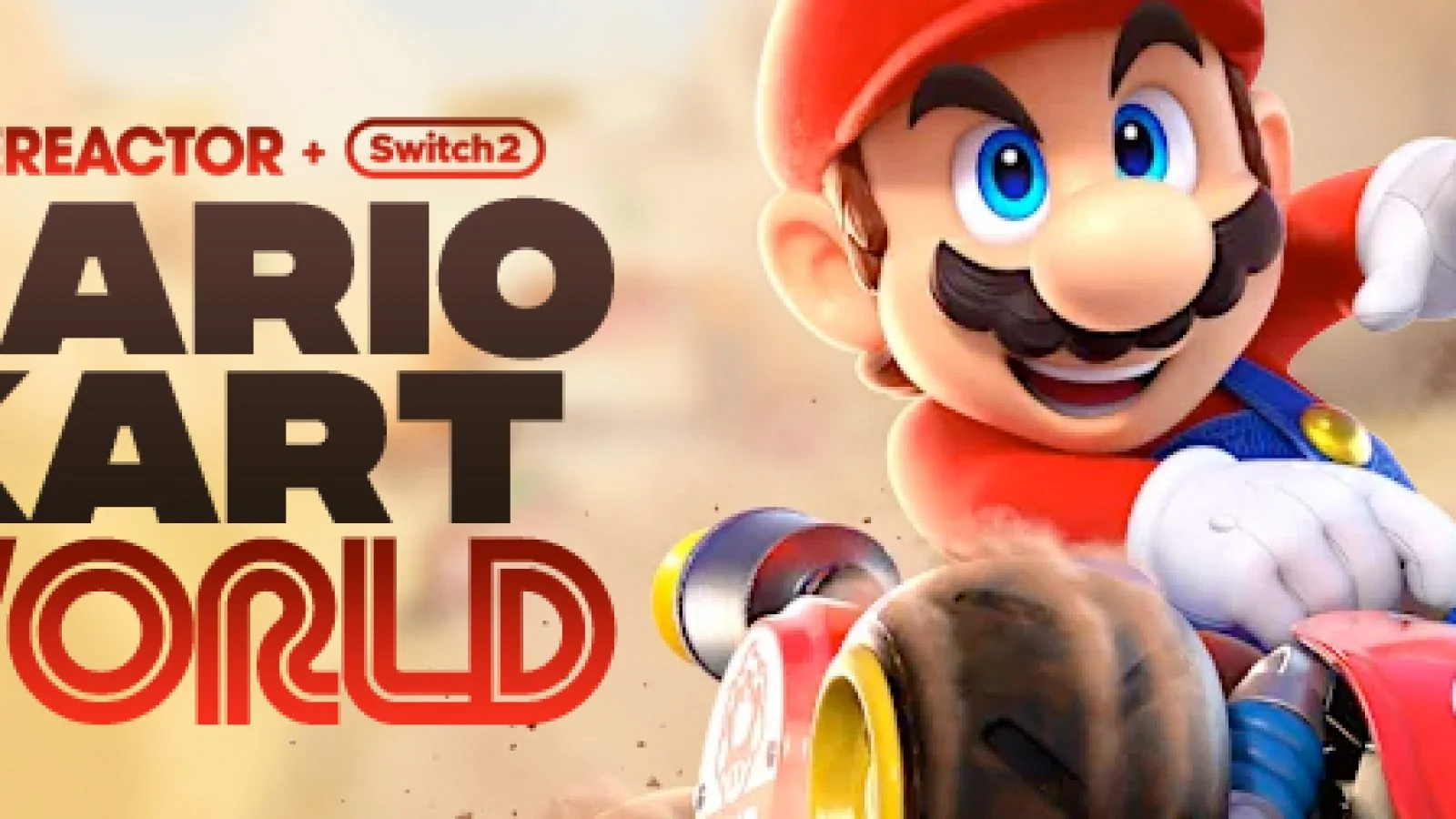
The emulator’s public GitHub repository identifies Mario Kart World as one of its first supported Switch 2 titles. According to the project’s documentation, the game can achieve decent or full-speed performance depending on the computer’s specifications and configuration. However, the developers have not published standardized benchmarks establishing what hardware is necessary to achieve those results.
Splatoon Raiders is also listed as running through the emulator, but with variable performance. Demonstrations of both games have appeared online, showing that the software has progressed beyond simply detecting or launching Switch 2 titles.
The development follows earlier Switch 2 emulation experiments on iPhone and PC, which demonstrated Mario Kart World running through a private nxnative fork on an iPhone 18 Pro and Splatoon Raiders reaching character selection on a PC emulator.
Eglantine represents a further development because its experimental implementation and source code are publicly accessible rather than limited to private demonstrations.
The underlying Switch 2 support originated from experimental Eden work by developer Takoroka on October 29. That initial implementation was presented as an early foundation requiring substantial additional fixes. Subsequent community development has produced Eglantine and other experimental forks aimed at improving compatibility and graphics rendering.
One example is Eglantine-MKW, a separate fork focused specifically on Mario Kart World version 1.8.0. A testing release published on October 30 introduced changes intended to reduce shader stuttering, prevent video memory exhaustion and improve application shutdown behavior.
Its developers describe a fix for texture corruption followed by crashes after several minutes of gameplay. The implementation adjusts texture-cache limits according to available graphics memory and uses BC3 texture recompression for Switch 2 games on graphics cards with less than 12GB of VRAM. The changes particularly target problems encountered on 8GB graphics cards.
These improvements illustrate the technical challenges facing early Switch 2 emulation. Graphics rendering remains incomplete, and users can encounter missing visual elements, corrupted textures, inconsistent frame delivery and crashes. A game running at full speed in one configuration does not establish that it will behave correctly on other hardware.
Eglantine’s developers have also not released a comprehensive compatibility list. Consequently, support for Mario Kart World and Splatoon Raiders should not be interpreted as evidence that the wider Switch 2 library is playable.
The emergence of Eglantine follows a period of rapid experimentation with Nintendo’s newer console, including Nintendo Switch emulation on iPhone, iPad and Mac through nxnative, which uses Apple’s Metal graphics technology on supported devices.
Unlike those earlier Switch-focused developments, Eglantine specifically incorporates experimental support for Switch 2 software on conventional PC platforms.
For PC gamers interested in console emulation, the project’s immediate significance is that publicly accessible code can now execute at least some Switch 2 games, with developers actively addressing rendering and memory-management issues. Nevertheless, the software remains an experimental development project rather than a mature emulator suitable for reliable everyday gaming.
