


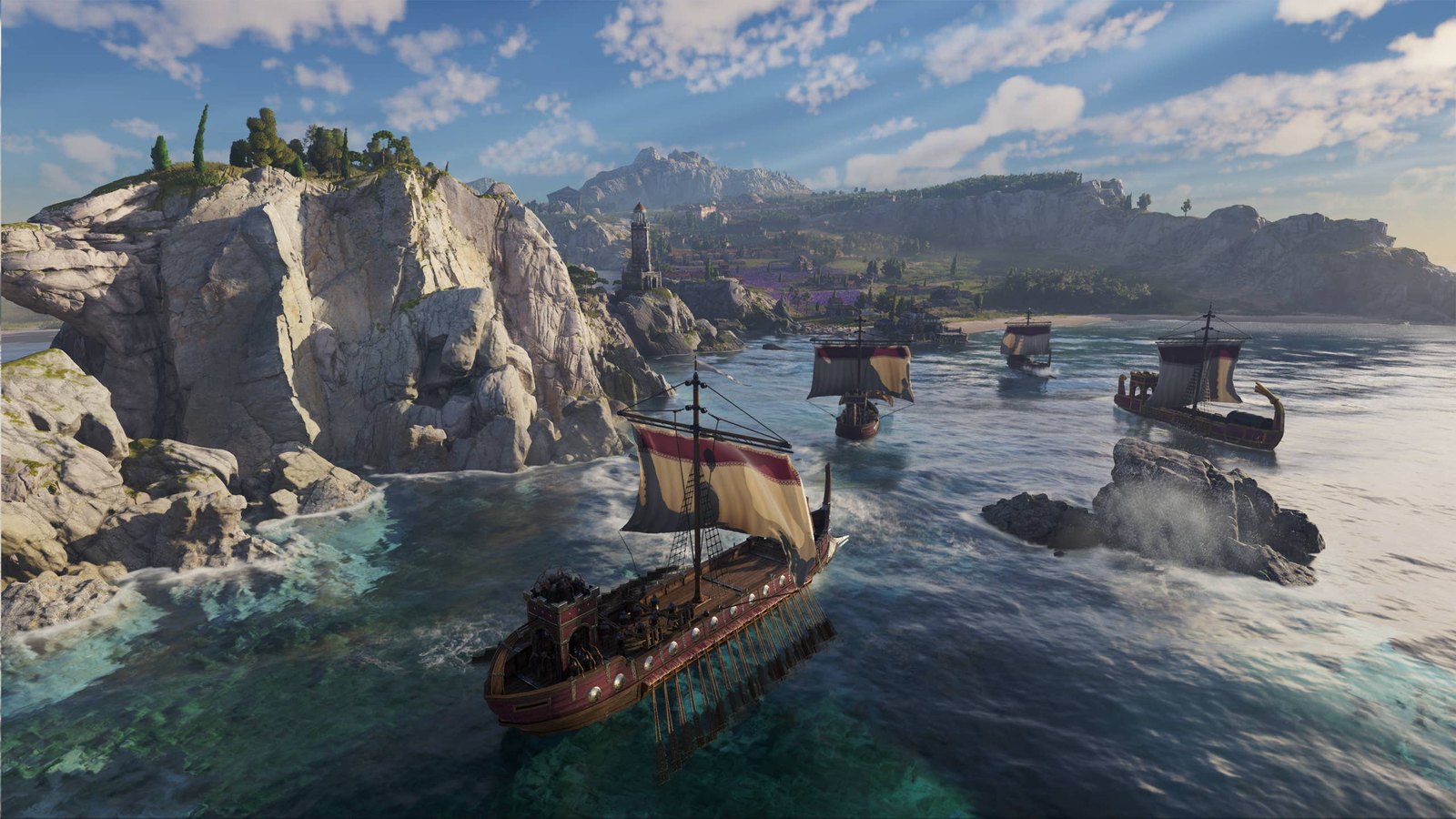
Anno 117: Pax Romana has received substantial PC graphics upgrades since its November 2025 launch, adding NVIDIA DLSS 4.5, AMD FSR 4 upscaling and frame generation support across GeForce, Radeon and Intel graphics cards. The improvements arrive ahead of the Erwachen des Deltas (Dawn of the Delta) expansion, scheduled for November 5, 2026, and address several technical limitations present when the strategy game originally launched.
A new technical assessment published by ComputerBase on November 3 examines the updated graphics features, ray tracing implementation and GPU performance. The testing highlights how Ubisoft Mainz has expanded the game’s rendering options, particularly with the introduction of frame generation technologies that were entirely absent at launch.
One of the biggest changes is native DLSS 4.5 support, replacing the original DLSS 4 implementation. AMD’s FSR upscaling has also been upgraded from version 3.1.5 to FSR 4.0.3, introducing AMD’s AI-based upscaling directly into the game. Radeon users can access the newer FSR 4.1 implementation through AMD’s driver software.
Frame generation is another major addition. Anno 117 now supports NVIDIA DLSS Multi Frame Generation at up to 6x, AMD FSR Frame Generation 4.0 and Intel XeSS Frame Generation. Previously, none of these technologies was available in the PC version.
For GeForce RTX 50-series owners, DLSS Multi Frame Generation can generate up to five additional frames between traditionally rendered frames. This increases the displayed frame rate, although generated frames do not provide the same responsiveness improvements as increasing the underlying rendered frame rate.
AMD users also benefit from FSR Frame Generation 4.0, including the frame pacing improvements introduced with Adrenalin 26.10.1. Intel’s XeSS Frame Generation provides another option, expanding the available technologies beyond NVIDIA and AMD.
The update also introduces latency-reduction features from all three major GPU manufacturers. NVIDIA Reflex, AMD Anti-Lag 2 and Intel Xe Low Latency (XeLL) are now supported, whereas the original release offered none of them.
Ray tracing has received a separate improvement through the addition of NVIDIA DLSS Ray Reconstruction. This technology replaces conventional ray tracing denoising with AI-assisted image reconstruction, potentially improving the quality and stability of ray-traced lighting and reflections.
ComputerBase identifies an important limitation in the current implementation. Anno 117 uses the older DLSS Ray Reconstruction Preset D rather than the newer Preset F. Players can switch to the updated model through the NVIDIA app, but the latest reconstruction model is not the game’s default.
AMD’s competing FSR Ray Regeneration technology remains unsupported. NVIDIA DLSS Dynamic Multi Frame Generation is also absent, despite support for fixed Multi Frame Generation modes up to 6x. DLSS 5 Neural Rendering and NVIDIA Reflex 2 are not included either.
These limitations mean that the game’s expanded graphics settings do not provide identical capabilities across all GPU vendors.
ComputerBase’s updated GPU testing also provides practical performance guidance for players targeting different resolutions. Its assessment identifies several graphics cards capable of reaching a 45 FPS threshold without ray tracing while using DLSS or FSR upscaling.
At 2560 × 1440, suitable cards include the GeForce RTX 5060, RTX 4060 Ti, Radeon RX 9060 XT and RX 7700 XT. For 3440 × 1440 ultrawide gaming, the tested threshold moves to cards such as the RTX 5060 Ti, RTX 4070, RX 9060 XT and RX 7800 XT.
At 3840 × 2160, the listed options include the RTX 5070, RTX 4070 Super, RX 9070 GRE and RX 7900 XT. These figures represent the publication’s particular benchmark conditions and should not be interpreted as guaranteed performance across every settlement or graphics configuration.
The updated results are particularly relevant because Anno 117 uses ray-traced global illumination and reflections. Those effects increase rendering demands, making upscaling and frame generation potentially useful for maintaining smoother presentation at higher resolutions.
The distinction between conventional GPU rendering performance and frame-generated output remains important when comparing graphics cards. Recent GeForce and Radeon benchmark comparisons have similarly highlighted how different rendering workloads can change the relative performance of competing GPUs.
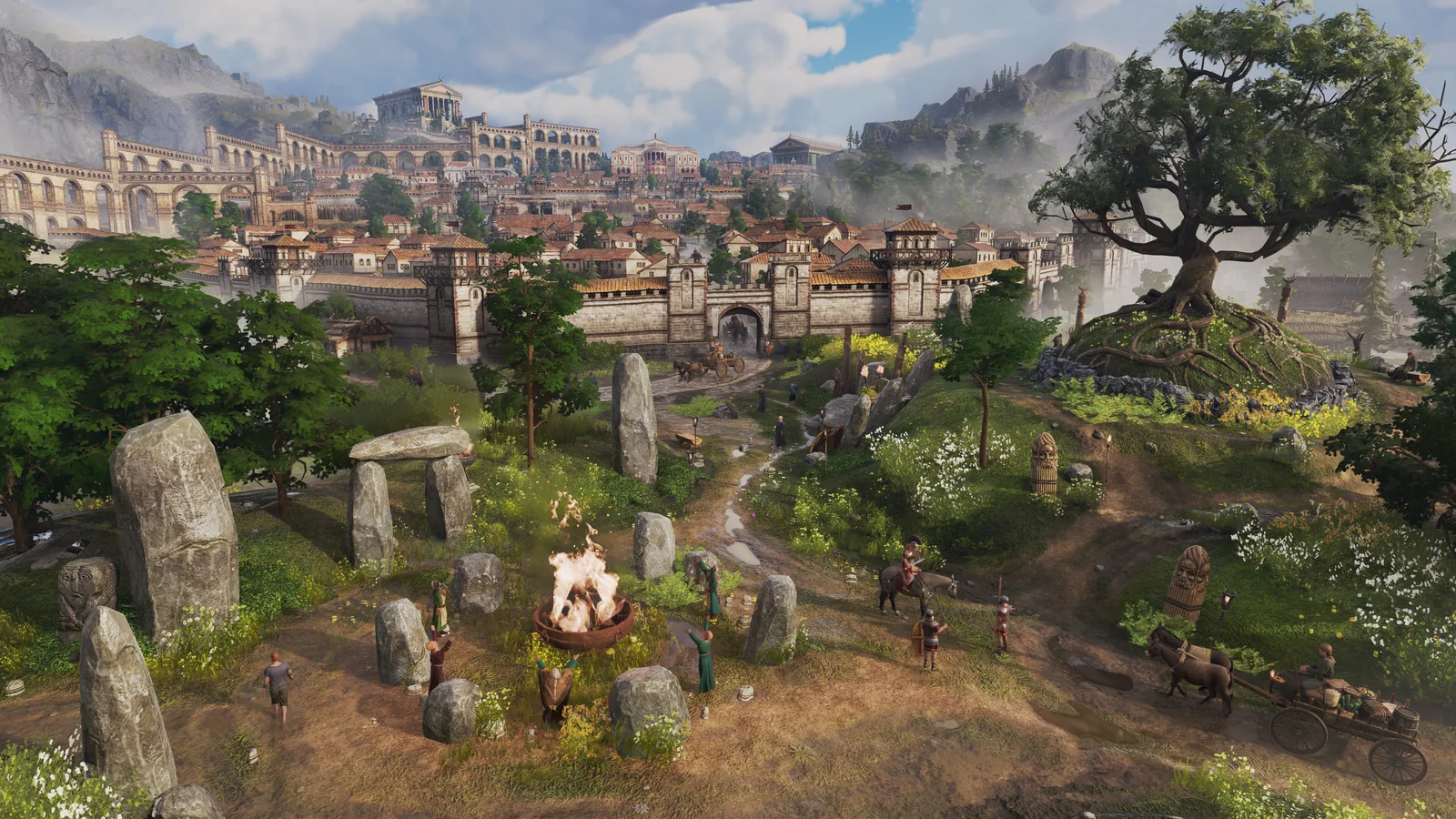
Beyond graphics technologies, Ubisoft Mainz has continued improving the game’s visual presentation. ComputerBase notes that resource production areas, which previously lacked visible workers, now feature animated inhabitants performing tasks. The change adds activity to settlements without fundamentally altering the game’s rendering approach.
Anno 117 also retains native support for 21:9 ultrawide displays, HDR, multiple graphics presets and an integrated benchmark. However, some configuration conveniences remain missing, including an in-game FPS counter, VRAM usage display and dynamic resolution scaling.
The technical improvements accompany Dawn of the Delta, the final and largest expansion in Anno 117’s first-year content pass. While the expansion adds new gameplay content, the graphics updates are part of the broader evolution of the PC version rather than features exclusive to DLC purchasers.
For PC players returning to Anno 117, the most consequential changes are the availability of frame generation across all three major GPU ecosystems, newer AI upscaling technologies and additional ray tracing reconstruction options. ComputerBase’s updated testing also provides a clearer reference for selecting graphics settings based on GPU performance and target resolution.
