


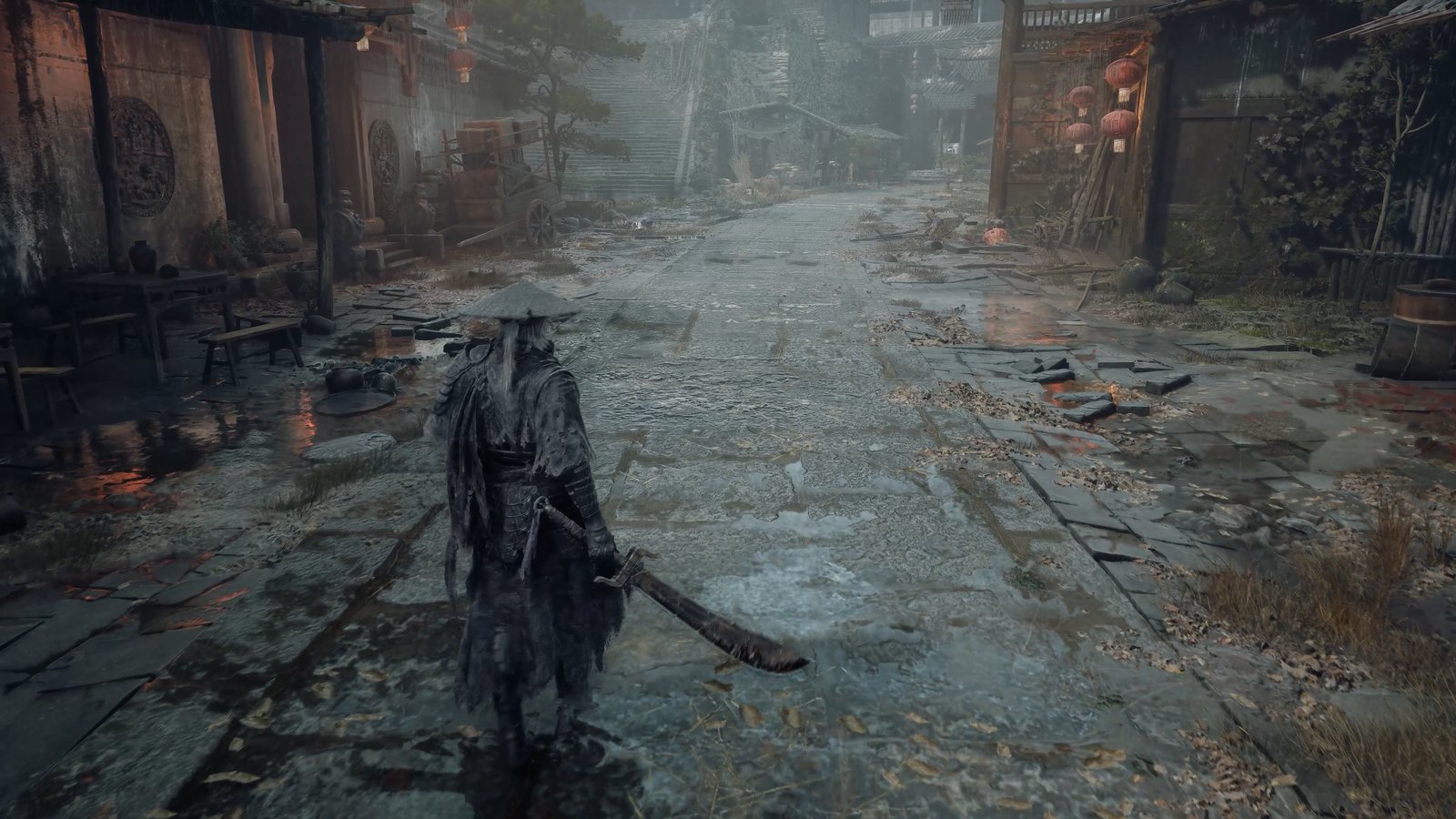
Phantom Blade Zero’s first detailed PC GPU benchmarks reveal an unusual performance pattern, with AMD Radeon graphics cards outperforming their typical NVIDIA GeForce competitors in rasterization while GeForce GPUs suffer surprisingly small performance losses from ray tracing and path tracing. The results also highlight several technical issues with the Unreal Engine 5.7-powered action game, including unexpected rendering behavior and incomplete GPU testing.
German hardware publication ComputerBase published its independent benchmark analysis on October 28, testing Phantom Blade Zero across multiple Radeon and GeForce graphics cards. The testing found that conventional rendering performance was unusually demanding, particularly on NVIDIA hardware, while enabling more advanced lighting effects produced smaller performance penalties than expected.
The rasterization results are particularly favorable to AMD. At 2560 × 1440 with the Ultra preset and Performance-mode upscaling, the Radeon RX 7900 XTX averaged 105.7 FPS, narrowly outperforming the GeForce RTX 4090 at 105.1 FPS. NVIDIA’s newer RTX 5090 remained ahead at 117.9 FPS, while the RTX 5080 achieved 92.3 FPS.
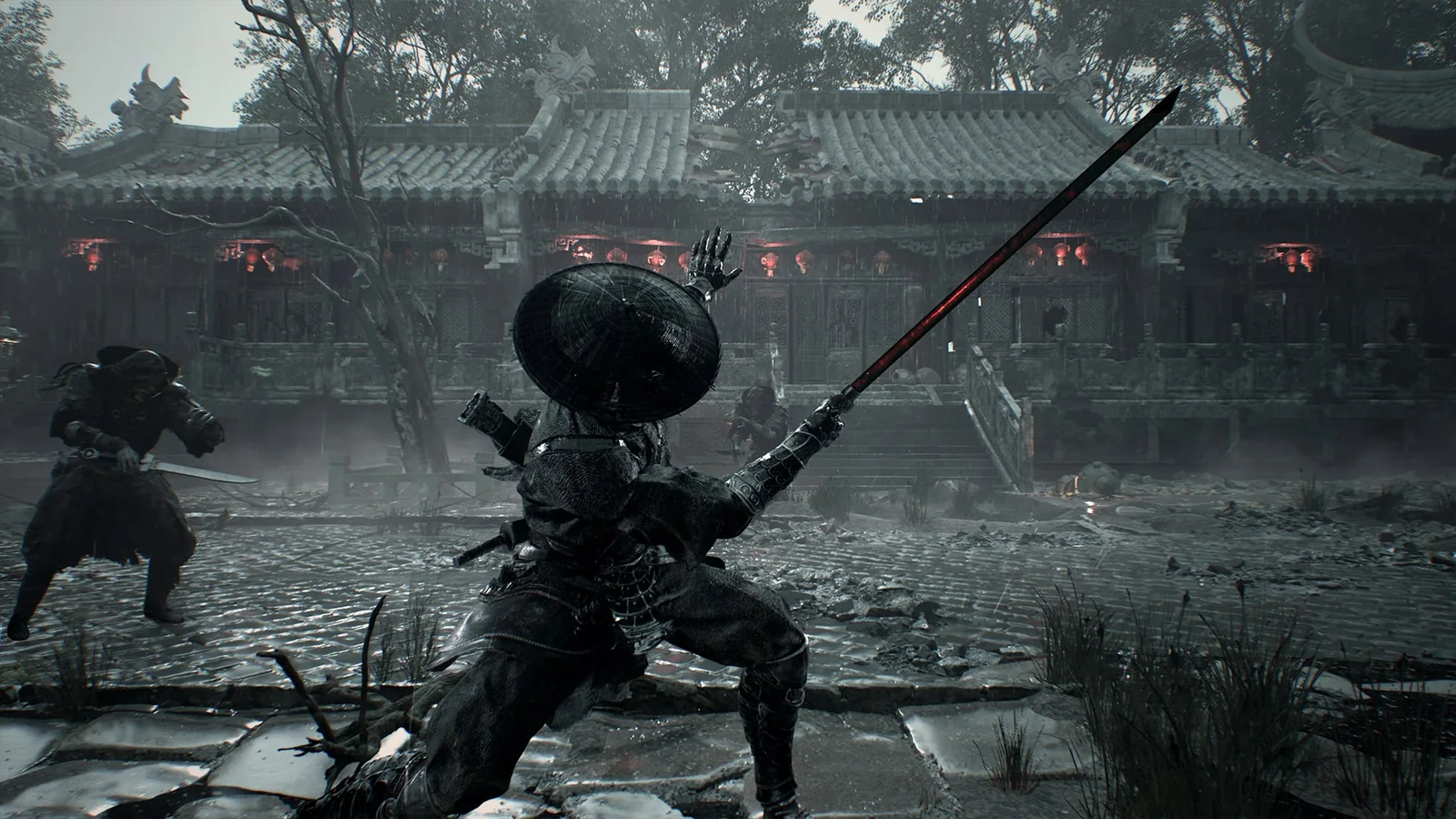
Further down the GPU lineup, the Radeon RX 9070 GRE averaged 86.6 FPS compared with 68.8 FPS on the RTX 5070. That represents an approximately 26% advantage for AMD’s card, despite the RTX 5070 generally outperforming the RX 9070 GRE in ComputerBase’s wider benchmark comparisons.
At 4K, the Radeon RX 7900 XTX delivered 70.5 FPS, compared with 66.4 FPS for the RTX 5080. The RTX 5090 led the tested GPUs with 91.5 FPS, followed by the RTX 4090 at 78.6 FPS.
These results were obtained using the Ultra graphics preset with DLSS, FSR or XeSS Performance upscaling, depending on the GPU manufacturer. They should not be interpreted as native-resolution performance figures.
The results differ from the performance distribution seen in Modern Warfare 4's Radeon and GeForce benchmarks, where AMD’s relative strengths were particularly apparent in ray-traced workloads.
Enabling hardware ray tracing changes the competitive picture in Phantom Blade Zero. ComputerBase measured only a 3% performance reduction on the RTX 5070 at 1440p and approximately 4% on the RTX 4070. The Radeon RX 7800 XT, meanwhile, lost around 30% of its rasterization performance, while the RX 9070 GRE experienced a 29% reduction.
The RTX 5090 averaged 115.4 FPS at 1440p with ray tracing enabled, compared with 117.9 FPS without it. The RTX 5080 similarly dropped from 92.3 FPS to 89.6 FPS. These unusually small differences led ComputerBase to suggest that NVIDIA’s baseline rasterization performance may be lower than expected, rather than concluding that the ray-tracing implementation is exceptionally efficient.
Path tracing produced another unexpected result. With DLSS Ray Reconstruction enabled, the RTX 5070 Ti averaged 47.9 FPS at 4K, compared with 57 FPS using conventional hardware ray tracing. That represents a performance reduction of approximately 16%, considerably smaller than the additional cost typically associated with full path tracing.
The RTX 4080 Super displayed a similar 16% reduction. ComputerBase also found that comparing path tracing against ray tracing with DLSS Ray Reconstruction enabled reduced the measured difference to approximately 5% in one comparison.
These results do not establish that path tracing is inexpensive to run. Instead, they suggest that Phantom Blade Zero has an unusual rendering-performance profile in which its baseline workload is already exceptionally demanding.
The game supports NVIDIA DLSS 4.5, AMD FSR Upscaling 4.1 and Intel XeSS 2.0, alongside their respective frame-generation technologies. DLSS Ray Reconstruction is supported, but AMD’s FSR Ray Regeneration is absent.
ComputerBase’s testing indicates that an RTX 5070 or RTX 4070 can reach approximately 60 FPS at 1440p with Ultra settings and Performance-mode upscaling without hardware ray tracing. For 4K, its tested results place the RTX 5070 Ti and RTX 4080 around the 60 FPS threshold, alongside the Radeon RX 7900 XT in its broader performance guidance.
Path tracing increases the hardware requirements. Under ComputerBase’s tested settings, the RTX 5070 reached 61.9 FPS at 1440p, while the RTX 5090 and RTX 4090 were the only tested cards to exceed 60 FPS at 4K with path tracing enabled.
The investigation also uncovered an unusual NVIDIA Reflex issue. ComputerBase found that Reflex did not function as expected unless frame generation was enabled. In its RTX 5070 Ti latency measurements, enabling DLSS frame generation reduced measured latency compared with running without frame generation, contrary to the behavior typically expected when introducing generated frames.
The publication was unable to complete all planned benchmarks after its Steam review key was deactivated shortly before testing concluded. ComputerBase stated that the publisher and developer had disabled access, leaving the publication unable to launch the game or continue its measurements.
Consequently, results for the Radeon RX 9070 and RX 9070 XT are absent from the completed GPU charts. ComputerBase also could not finish its planned FSR Frame Generation testing. The missing results should not be interpreted as evidence of poor performance on either GPU.
The benchmarks used an AMD Ryzen 7 9800X3D processor, 48 GB of DDR5-6000 memory, Windows 11 25H2, NVIDIA GeForce driver 621.01 and AMD Adrenalin 26.10.1. Testing took place in a demanding 20-second sequence at Pangzhen Bridge Overlook, featuring rainfall, dense vegetation and volumetric fog. ComputerBase noted that most gameplay runs somewhat faster than this particular sequence.
Phantom Blade Zero also requires an initial shader compilation process lasting several minutes, although subsequent loading times were comparatively short on the test system. ComputerBase measured approximately 20 seconds to reach the main menu and nine seconds to load its benchmark sequence.
The findings add a more detailed technical picture to the game’s early reviews highlighting its combat and technical shortcomings. They also demonstrate why GPU performance should be evaluated separately across rasterization, ray tracing and path tracing rather than relying on a single graphics preset.
For PC players, the most significant takeaway is that Radeon hardware performs unusually well in conventional rendering, while GeForce GPUs retain a substantial advantage when advanced ray-tracing effects are enabled. The incomplete RX 9070 and RX 9070 XT testing leaves an important gap in comparisons between AMD’s latest graphics cards and their NVIDIA competitors.
