


Bandai Card Games has officially launched Digimon Alysion on November 25, 2026, across 183 countries and regions. The free-to-play digital adaptation of the Digimon Card Game is available through the App Store and Google Play, with optional in-app purchases.
The mobile game retains the strategic mechanics of the physical trading card game, allowing players to build decks, Digivolve their Digimon and compete against opponents in real-time battles. Players must break through their opponent’s security cards before delivering a finishing attack.
Digimon Alysion also features an original story set within a virtual world called LACUNA. The narrative follows Kanata Hondo as she encounters new characters, rivals and Digimon. Tutorials integrated into the game introduce card mechanics and battle strategies to players unfamiliar with the physical trading card game.
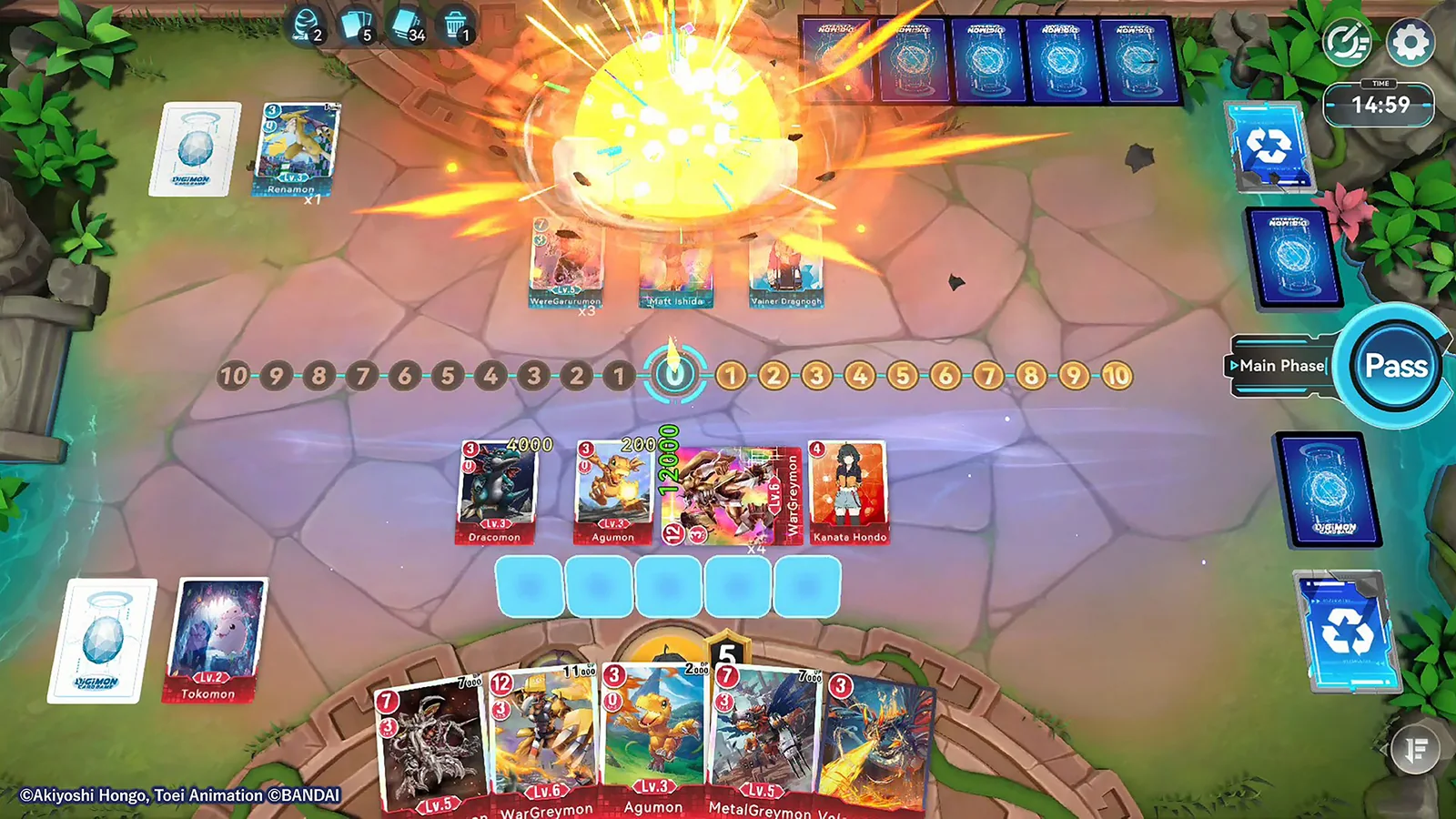
Players can collect digital versions of existing Digimon cards alongside exclusive additions designed for Alysion. The collection system includes shiny cards, alternate artwork and animated premium variants. A complimentary booster pack is available daily, while a separate breeding mechanic allows players to raise Digimon and complete a Digidex containing more than 100 entries.
Bandai confirmed that Digimon Alysion surpassed 450,000 pre-registrations ahead of release. To celebrate the milestone, all players will receive 40 booster pack tickets, representing a total of 240 cards, alongside Gemmon, MetalGarurumon, WarGreymon, Omnimon, an alternate-art Agumon and an SEC Decryption Ticket.
The rewards are accessible through the in-game mailbox and must be claimed within 30 days. Additional incentives are available through introductory login bonuses and beginner missions.
Ranked matchmaking and a limited-time Battle Carnival event are scheduled to begin on November 26. Participants can earn booster pack tickets through event participation, including matches they lose, while accumulating victories unlocks additional coins and an exclusive title.
The game supports English, Japanese, Korean, Simplified Chinese and Traditional Chinese interfaces, although Traditional Chinese is not supported for card text. Platform availability varies in certain regions.
