


2K and Firaxis Games have revealed the next major phase of Sid Meier’s Civilization VII, announcing a free update called Arc of Tomorrow alongside the game’s first paid expansion, Earthrise. Both are scheduled for 2027, with Arc of Tomorrow adding a new fourth Age that extends campaigns beyond the Modern Age and Earthrise expanding Civilization VII’s systems around space exploration and environmental management.
The announcements were made during PAX West as part of Civilization’s 35th anniversary celebrations. Arc of Tomorrow will introduce the Atomic Age, covering roughly the 1950s through the 2050s and extending the game’s playable historical timeline into the near future. Firaxis says the new Age will bring its own civilizations, leaders, buildings, units, visuals, music, technology and civic trees, narrative events, Triumphs and social policies, rather than simply extending the existing Modern Age.
Several new mechanics are also planned for the Atomic Age. Nuclear warfare will receive expanded offensive and defensive options, including what Firaxis describes as a new approach to mutually assured destruction, while players will gain additional ways to manage increasingly large empires. Settlements will be able to receive independence and become City-States, providing another way to address empire size and loyalty as campaigns progress.
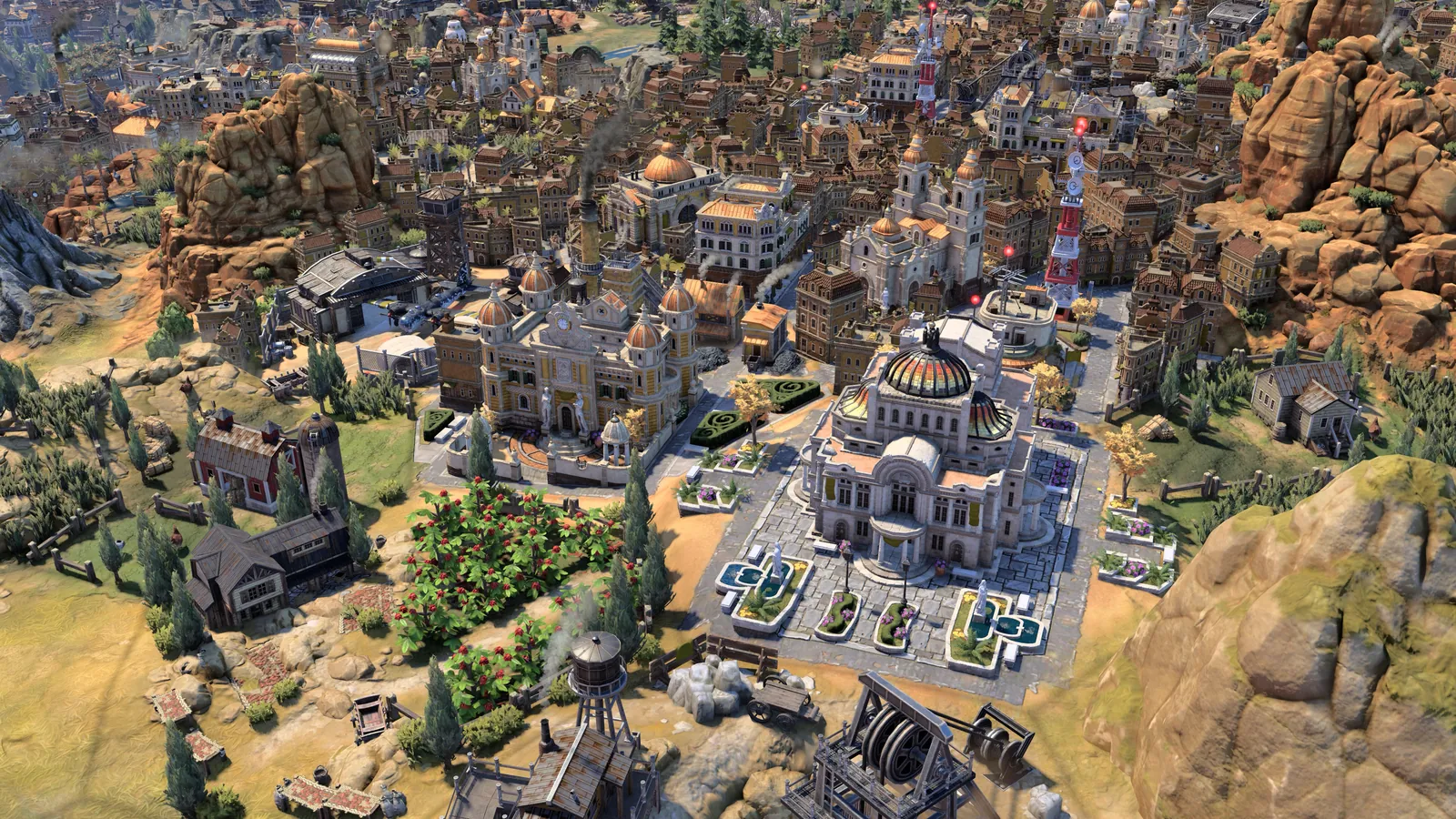
Arc of Tomorrow will also introduce Great Works of Film and a new manufactured goods system. Film Crews will search for locations suited to different genres, with the resulting films providing benefits based on their quality, while manufactured goods will allow players to combine commodities using recipes to produce more powerful resources such as Enriched Uranium. Gandhi is also confirmed to return as a leader alongside a new roster of civilizations designed specifically for the Atomic Age.
Civilization VII: Earthrise will launch later in 2027 as the game’s first paid expansion. Its focus stretches across an entire campaign rather than being restricted to the new Atomic Age, gradually developing humanity’s understanding of space before eventually allowing civilizations to establish space agencies and launch missions throughout the solar system. During the Antiquity and Exploration Ages, players will chart celestial bodies and develop their understanding of Earth’s position in the solar system, while the Modern Age introduces early orbital missions around Earth and the Moon.
Those systems expand further during the Atomic Age, when established space agencies can send missions throughout the solar system and discover planetary features and resources that affect a civilization back on Earth. Earthrise will also add environmental systems involving terrain alteration, civil engineering and natural disasters. Firaxis says rising global temperatures can create increasingly serious challenges, but players will have tools to combat the effects and can potentially reverse global warming while developing bonuses tied to specific biomes.
Before either 2027 release arrives, Civilization VII is getting Update 1.5.0 later in September. The update will introduce the long-requested True Start Location: Earth map, placing civilizations in locations representative of where they originated while still varying elements such as natural wonder placement between games. Firaxis is also updating Terra Incognita and Shuffle map generation, improving resource generation and loading, adding diplomacy changes and making further interface improvements, including a new tile ruler intended to help with city planning.
Neither Arc of Tomorrow nor Earthrise currently has an exact release date beyond their respective 2027 windows, and 2K says more information about the expansion will be shared in the coming months. Arc of Tomorrow will be free for all Civilization VII owners, while Earthrise will require the base game and be sold separately as paid post-launch content.
