

Close Menu
    Facebook X (Twitter) Instagram
    Facebook X (Twitter) Instagram
    TechtroduceTechtroduce
    Subscribe
    • NEWS
    • GUIDES
    • COMPARISONS
    • REVIEWS
    TechtroduceTechtroduce
    Home » DLSS 5 Forced Into 50+ Games From Pong to Duke Nukem
    NEWS Updated:October 7, 2026

    DLSS 5 Forced Into 50+ Games From Pong to Duke Nukem

    Abyan KhanBy Abyan KhanOctober 7, 2026Updated:October 7, 2026No Comments4 Mins Read
    Facebook Twitter Pinterest LinkedIn Tumblr Email
    Official NVIDIA DLSS 5 comparison image showing a ramen chef with enhanced lighting and material detail
    Share
    Facebook Twitter LinkedIn Pinterest Email

    An enthusiast has forced Nvidia’s DLSS 5 neural rendering into more than 50 games that were never designed to support it, ranging from a DOS version of Pong and the original Duke Nukem to The Witcher 3 and Marvel’s Spider-Man. Valery Kryzhanovsky documented more than 100 recordings from the experiment, testing how the technology behaves when deprived of the engine data and developer tuning Nvidia normally expects. His conclusion is that the underlying technology can produce striking images, but the forced implementation remains highly inconsistent in motion.

    DLSS 5 officially debuted in NBA 2K27 in September as Nvidia’s 3D-Guided Neural Rendering technology. In a supported game, it receives information from the engine about objects, materials, lighting and motion, while developers can control where and how strongly the model changes the final image. Kryzhanovsky’s experiments deliberately remove much of that context, effectively stress-testing what the model does when it is applied to games it was never built to understand.

    For older 2D games, Kryzhanovsky used DOSBox together with dgVoodoo, ReShade and RenoDX to place DLSS 5 into the output pipeline. The original 1991 Duke Nukem is one of the more unusual examples, with the neural model adding perceived depth, materials and lighting to the game’s simple 16-color sprites. Depending on the strength and number of processing passes, surfaces can begin to look embossed or three-dimensional, although stronger settings quickly produce distorted and unpredictable imagery.
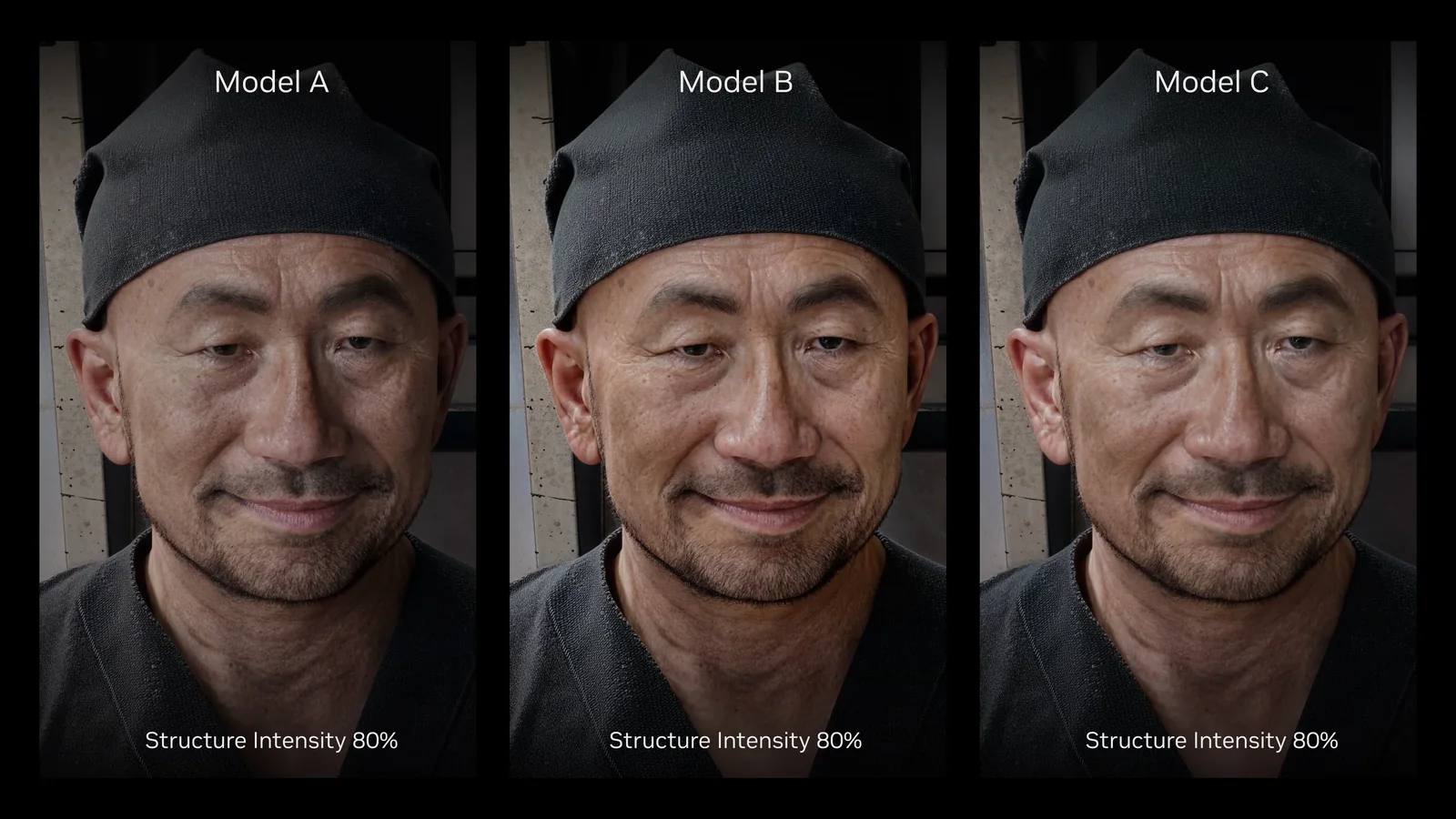
    Official NVIDIA DLSS 5 image showing three neural rendering model variations applied to the same character

    Pong pushes that experiment even further because there is almost no visual information for the neural model to interpret. Rather than simply sharpening the minimalist scene, DLSS 5 attempts to infer more elaborate visual structure from what is essentially a collection of basic shapes. The result illustrates both the model’s ability to generate additional visual information and the danger of asking it to interpret imagery far outside the type of modern 3D scene it was designed around.

    Kryzhanovsky found some of the most convincing results in games with largely static scenes. Heroes of Might and Magic, for example, produced comparatively consistent transformed imagery because the model had fewer rapid changes between frames to contend with. Once characters, cameras and environments begin moving, temporal inconsistency becomes much more obvious because this unofficial implementation lacks the motion information and developer controls used by proper DLSS 5 integrations.

    The tests also exposed more serious problems in 3D games. Applying the model at different stages of the rendering pipeline could alter the apparent geometry of faces and objects, while details sometimes changed between consecutive frames. Kryzhanovsky found this especially noticeable while experimenting with RBDOOM-3-BFG, demonstrating why simply injecting neural rendering after the fact is fundamentally different from integrating it into a game engine.

    That distinction is important when comparing the experiment with projects such as a GTA IV mod that adds native DLSS, FSR and HDR support. Traditional DLSS Super Resolution integrations rely on data such as motion vectors to reconstruct an image over time. DLSS 5 goes further by using generative neural rendering to alter lighting and material appearance, making the lack of accurate scene information considerably more consequential when the technology is forced into unsupported software.

    Nvidia’s official implementation in NBA 2K27 is much more controlled. The company says DLSS 5 uses the rendered frame alongside engine data while allowing developers to select models, adjust structure and tone, and mask specific characters, objects or portions of a scene. Nvidia also says the technology is designed to preserve underlying geometry and maintain temporal consistency when integrated correctly, two areas where Kryzhanovsky’s unsupported experiments frequently break down.

    The 50-plus-game test therefore should not be read as a benchmark of how properly implemented DLSS 5 will behave. Instead, it provides an unusual look at what the neural model attempts to reconstruct when stripped of the supporting information normally supplied by a modern engine. The results range from surprisingly coherent reinterpretations of old artwork to severe visual instability, showing both the capabilities of Nvidia’s new rendering approach and why developer-guided integration matters.

    Share. Facebook Twitter Pinterest LinkedIn Tumblr Email
    Abyan Khan
    • Instagram
    • LinkedIn

    Abyan Khan is a dedicated writer and tech enthusiast currently pursuing a Bachelor’s degree in Information Technology. With over 3 years of professional writing experience, he specializes in crafting clear, engaging, and informative content across a range of topics, particularly in the tech and gaming industries. Abyan combines his academic knowledge with real-world insights to deliver articles that are both well-researched and reader-friendly.

    Related Posts

    Valve Says Steam for Linux Still Doesn’t Support Arm PCs

    October 7, 2026

    Call of Duty: WWII Is Free on PlayStation Store in Some Regions

    October 7, 2026

    Escape from Tarkov 1.2.0.0 Adds PvE Prestige and AI Rework

    October 7, 2026
    Leave A Reply Cancel Reply

    Google Techtroduce

    See more Techtroduce stories on Google.

    Add us on Google

    • Valve Says Steam for Linux Still Doesn’t Support Arm PCsOctober 7, 2026
      Valve says standard Steam for Linux remains unsupported on third-party Arm hardware, despite its separate Arm64 work for Steam Frame.
    • Call of Duty: WWII Is Free on PlayStation Store in Some RegionsOctober 7, 2026
      Call of Duty: WWII can currently be claimed free on PlayStation Store in the UK and several other regions, though Sony has not announced a promotion.
    • Escape from Tarkov 1.2.0.0 Adds PvE Prestige and AI ReworkOctober 7, 2026
      Escape from Tarkov update 1.2.0.0 adds six PvE Prestige levels, reworked PMC bots, EXFIL Brothers, map changes and quality-of-life improvements.
    TRENDING NOW

    Battlefield Fans Should ‘Temper Their Expectations’, Claims Ex-DICE Developer

    Persona 4 Revival Leak Hints Pre-Orders May Be Coming

    Metal Gear Solid Delta Expands With Fox Hunt Online Survival Mode

    Fortnite Mega Man Cup Has Mega Buster Reward Issue

    Facebook Instagram YouTube
    © 2026 Techtroduce. All Rights Reserved | Cookies Policy | Privacy Policy | Contact Us | About Us | Corrections Policy

    Type above and press Enter to search. Press Esc to cancel.

    Manage Consent
    To provide the best experiences, we use technologies like cookies to store and/or access device information. Consenting to these technologies will allow us to process data such as browsing behavior or unique IDs on this site. Not consenting or withdrawing consent, may adversely affect certain features and functions.
    Functional Always active
    The technical storage or access is strictly necessary for the legitimate purpose of enabling the use of a specific service explicitly requested by the subscriber or user, or for the sole purpose of carrying out the transmission of a communication over an electronic communications network.
    Preferences
    The technical storage or access is necessary for the legitimate purpose of storing preferences that are not requested by the subscriber or user.
    Statistics
    The technical storage or access that is used exclusively for statistical purposes. The technical storage or access that is used exclusively for anonymous statistical purposes. Without a subpoena, voluntary compliance on the part of your Internet Service Provider, or additional records from a third party, information stored or retrieved for this purpose alone cannot usually be used to identify you.
    Marketing
    The technical storage or access is required to create user profiles to send advertising, or to track the user on a website or across several websites for similar marketing purposes.
    • Manage options
    • Manage services
    • Manage {vendor_count} vendors
    • Read more about these purposes
    View preferences
    • {title}
    • {title}
    • {title}