


Goverlay 2.0 has officially launched, bringing a redesigned interface and expanded graphics configuration options to Linux gamers. Developer Benjamim Gois confirmed the release on GitHub on November 24, introducing new upscaling integrations, benchmark analysis tools and improvements to individual game configurations.
The open-source application provides a graphical interface for managing Linux gaming utilities such as MangoHud, OptiScaler and vkBasalt. Version 2.0 introduces redesigned MangoHud configuration tabs and a modular installation system that allows users to download only the components they intend to use.
One of the most significant additions is DLSS-NR integration with automatic detection of AMD RDNA 3 and RDNA 4 graphics hardware. The application also supports HelixSR, including an integrated compilation process that reduces the need for manual setup. These community-developed implementations should not be confused with official NVIDIA DLSS support on Radeon graphics cards.
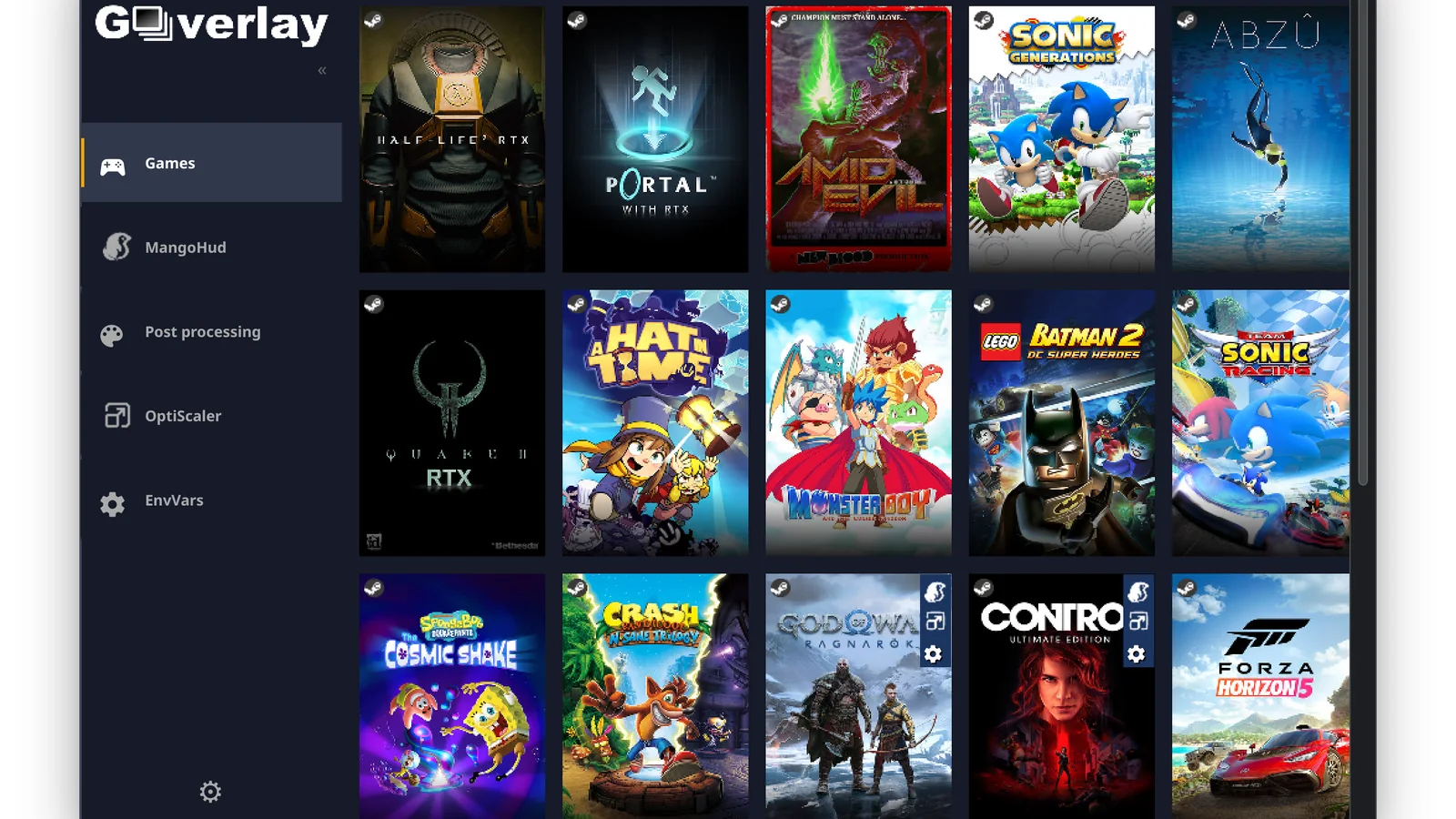
OptiScaler receives several improvements, including the ability to import custom FSR 4 builds and access official nightly releases. The update also resolves an issue where upscaling configurations could carry over between different games and improves executable detection to prevent OptiScaler from being injected into game launchers.
The expanded FSR configuration options arrive alongside continued improvements to Linux graphics drivers, including the recent AMD FSR 4.1 performance regression fix in Mesa 26.3.1.
Goverlay 2.0 introduces PasPlot, a native viewer for MangoHud benchmark logs. Users can organize recorded performance data by game and examine key metrics without manually processing CSV files through external applications.
The integrated PasCube benchmarking environment also receives updated visuals and expanded hardware analysis, including comparisons across Linux distributions, graphics drivers and kernel versions.
Other graphics-related changes include MAKO 5.0 integration, fixes for AMD Fluid Motion Frames configurations and corrected Lossless Scaling Vulkan downloads. The application also integrates vkNemu, an open-source implementation inspired by AMD Radeon Chill.
Proton configuration has been expanded with additional GE-Proton environment variables, DualSense haptic feedback settings, controller input options and revised low-latency configurations for Proton-CachyOS. Bottles integration is now available when applying game configurations, while launch arguments have been moved into a dedicated interface.
The release additionally addresses compatibility problems affecting Flatpak installations and Bazzite systems. ARM64 packaging has been expanded to include DEB, RPM and AppImage builds through the project’s release and nightly build workflows.
Goverlay 2.0 is available through the project’s official GitHub repository.
