
Close Menu
    Facebook X (Twitter) Instagram
    Facebook X (Twitter) Instagram
    TechtroduceTechtroduce
    Subscribe
    • NEWS
    • GUIDES
    • COMPARISONS
    • REVIEWS
    TechtroduceTechtroduce
    Home » AMD Radeon HD 2000 and 3000 Get Linux Video Playback Fix
    NEWS Updated:November 14, 2026

    AMD Radeon HD 2000 and 3000 Get Linux Video Playback Fix

    Abyan KhanBy Abyan KhanNovember 14, 2026Updated:November 14, 2026No Comments4 Mins Read
    Facebook Twitter Pinterest LinkedIn Tumblr Email
    Share
    Facebook Twitter LinkedIn Pinterest Email

    AMD’s nearly 20-year-old Radeon HD 2000 and HD 3000 graphics cards are receiving a Linux driver fix for corrupted hardware-accelerated video playback. The patch addresses a memory-handling problem in the GPUs’ Unified Video Decoder (UVD) and has been included in AMD’s development patch series targeting Linux kernel 7.5.

    The fix was developed by open-source contributor Ted Bullock, who investigated video corruption on an older Apple iMac equipped with an RV610-based Radeon GPU. Bullock submitted his findings and proposed changes to the Linux kernel mailing list on October 29, 2026. AMD graphics maintainer Alex Deucher confirmed that the patch had been applied on November 2.

    The change subsequently appeared in AMD’s November 12 graphics driver pull request for Linux 7.5, bringing a potential solution to a problem affecting graphics hardware originally introduced during the late 2000s.
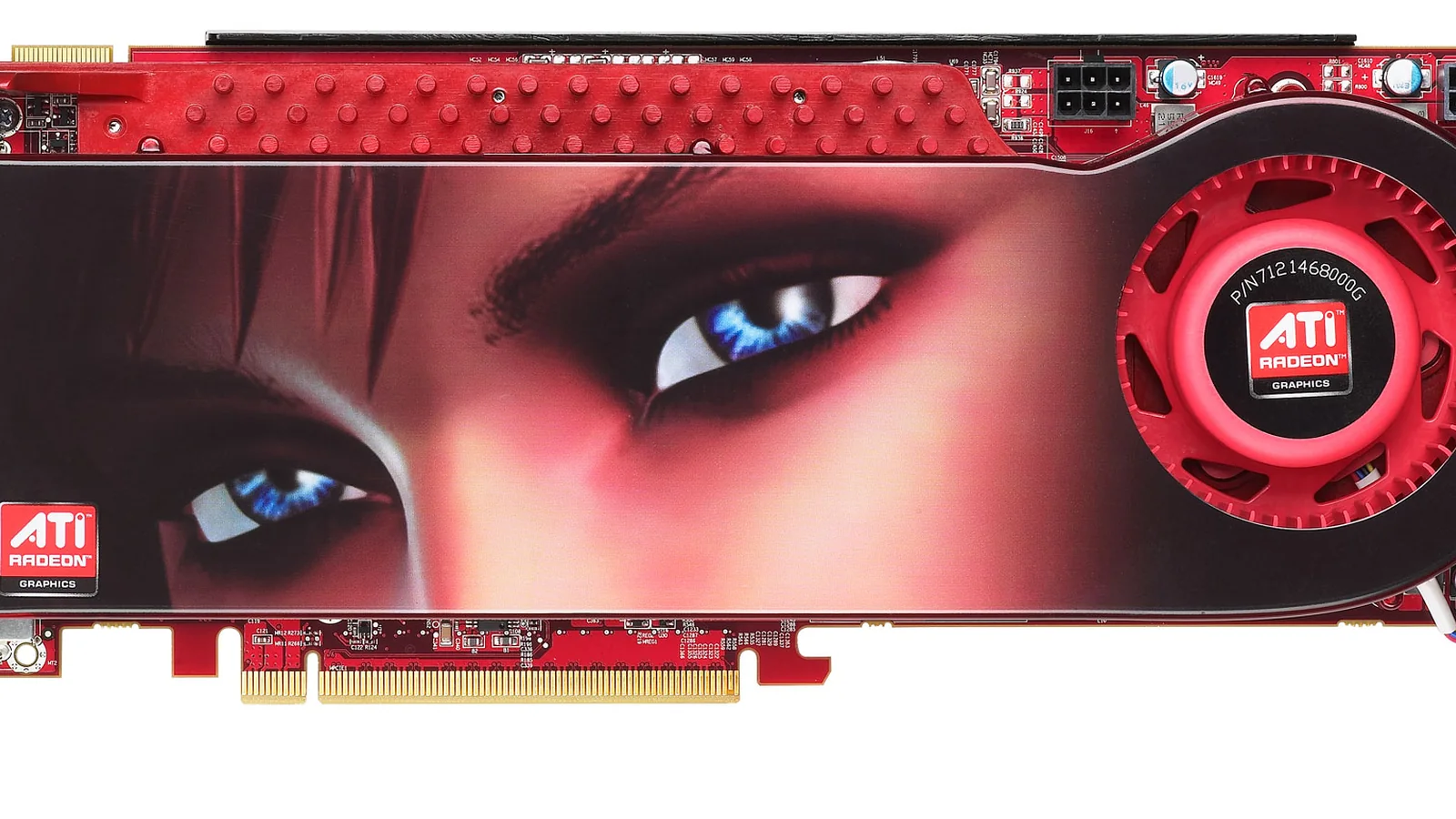
    Official ATI Radeon HD 3870 X2 reference graphics card with red PCB, Radeon cooling shroud and distinctive blue-eye

    Bullock traced the corruption to how the Linux Radeon driver handled video decoding buffers when the GPU was simultaneously performing graphics operations.

    His investigation focused on an iMac7,1 containing an RV610/M74 graphics processor with PCI device ID 1002:94c8. The system experienced corrupted video frames when the UVD hardware read compressed video data from system memory while the graphics processor was rendering.

    Bullock discovered that moving the video decoding input into dedicated video memory eliminated the corruption. Disabling graphics rendering also prevented the problem, helping establish a connection between GPU activity and the decoder’s access to system memory.

    The resulting patch changes how the Radeon kernel driver handles UVD memory placement on affected graphics processors. Instead of allowing the relevant decoding buffers to reside in system memory, the updated logic directs them into video RAM (VRAM).

    The Linux driver already applies similar memory restrictions to certain older graphics configurations, including AGP cards and integrated GPUs. Bullock’s modification extends that handling to additional Radeon processors.

    Specifically, the patch covers five GPU families: RV610, RV620, RV630, RV635 and RV670. These processors belong to AMD’s R600-era architecture and share the legacy video decoding path targeted by the change.

    However, the fix has not been individually verified across every supported GPU family. Bullock confirmed successful testing on his Debian system but acknowledged that additional hardware testing would be needed to establish whether the same behavior affects all five processors.

    Another notable aspect of the development is Bullock’s use of OpenAI Codex during the investigation. In his original kernel submission, he explicitly stated that the AI coding tool assisted with diagnosing the problem, testing and preparing the patch.

    The submission provides a documented example of AI-assisted development contributing to maintenance of legacy consumer graphics hardware. The patch itself is relatively small, modifying a single Radeon driver source file with seven additions and two deletions.

    AMD’s acceptance of the change also demonstrates that older graphics architectures can continue receiving community-driven fixes through Linux’s open-source driver ecosystem, despite being far beyond their original commercial support periods.

    For Linux users maintaining older gaming PCs or retro hardware, the update is particularly relevant to video playback using the affected Radeon GPUs. It addresses a specific decoding corruption issue rather than introducing new graphics capabilities, gaming optimizations or improved frame rates.

    The change is also separate from newer Radeon software problems, such as the AMD Adrenalin 26.11.1 SSD write issue, which affected modern Radeon hardware on Windows.

    Importantly, the legacy UVD correction is not yet available as a standard update in stable Linux kernel releases. Its inclusion in AMD’s Linux 7.5 development pull request means the patch is progressing toward a future kernel release, subject to the normal integration process.

    Owners of affected Radeon HD 2000 and HD 3000 systems will therefore need to wait for a kernel containing the change or obtain a compatible patched kernel to benefit from the correction. The available testing confirms the fix on Bullock’s RV610-based system, while its effectiveness across the remaining targeted graphics processors still requires verification.

    Share. Facebook Twitter Pinterest LinkedIn Tumblr Email
    Abyan Khan
    • Instagram
    • LinkedIn

    Abyan Khan is a dedicated writer and tech enthusiast currently pursuing a Bachelor’s degree in Information Technology. With over 3 years of professional writing experience, he specializes in crafting clear, engaging, and informative content across a range of topics, particularly in the tech and gaming industries. Abyan combines his academic knowledge with real-world insights to deliver articles that are both well-researched and reader-friendly.

    Related Posts

    SteamVR 2.19.3 and SteamOS 0.5.9 Add VR Streaming Features

    November 14, 2026

    GTA 6 Twitch Drops Campaign Reveals Badges and Emotes

    November 14, 2026

    SteamOS 3.10 Preview Adds AMD HDMI 2.1 and NVIDIA Improvements

    November 14, 2026
    Leave A Reply Cancel Reply

    Google Techtroduce

    See more Techtroduce stories on Google.

    Add us on Google

    • AMD Radeon HD 2000 and 3000 Get Linux Video Playback FixNovember 14, 2026
      A Linux 7.5 patch addresses corrupted video playback on older AMD Radeon HD 2000 and 3000 GPUs after an AI-assisted driver investigation.
    • SteamVR 2.19.3 and SteamOS 0.5.9 Add VR Streaming FeaturesNovember 14, 2026
      Valve releases SteamVR 2.19.3 and SteamOS 0.5.9 betas with Steam Frame chroma-key passthrough, Linux VR fixes and improved Steam Link streaming.
    • GTA 6 Twitch Drops Campaign Reveals Badges and EmotesNovember 14, 2026
      GTA 6's Twitch Drops campaign runs November 18–30, offering exclusive badges and emotes for watching streams and subscribing.
    TRENDING NOW

    GTA 6 Map Display Reveals Southwind, Pelican Valley and More

    Rockstar Announces GTA 6 Pre-Orders Begin June 25, 2026

    Concord Reportedly Cost A Whopping $400M To Develop

    PS5 and Xbox Sales Jump Over 30% After GTA VI Extended Look

    Facebook Instagram YouTube
    © 2026 Techtroduce. All Rights Reserved | Cookies Policy | Privacy Policy | Contact Us | About Us | Corrections Policy

    Type above and press Enter to search. Press Esc to cancel.

    Manage Consent
    To provide the best experiences, we use technologies like cookies to store and/or access device information. Consenting to these technologies will allow us to process data such as browsing behavior or unique IDs on this site. Not consenting or withdrawing consent, may adversely affect certain features and functions.
    Functional Always active
    The technical storage or access is strictly necessary for the legitimate purpose of enabling the use of a specific service explicitly requested by the subscriber or user, or for the sole purpose of carrying out the transmission of a communication over an electronic communications network.
    Preferences
    The technical storage or access is necessary for the legitimate purpose of storing preferences that are not requested by the subscriber or user.
    Statistics
    The technical storage or access that is used exclusively for statistical purposes. The technical storage or access that is used exclusively for anonymous statistical purposes. Without a subpoena, voluntary compliance on the part of your Internet Service Provider, or additional records from a third party, information stored or retrieved for this purpose alone cannot usually be used to identify you.
    Marketing
    The technical storage or access is required to create user profiles to send advertising, or to track the user on a website or across several websites for similar marketing purposes.
    • Manage options
    • Manage services
    • Manage {vendor_count} vendors
    • Read more about these purposes
    View preferences
    • {title}
    • {title}
    • {title}