


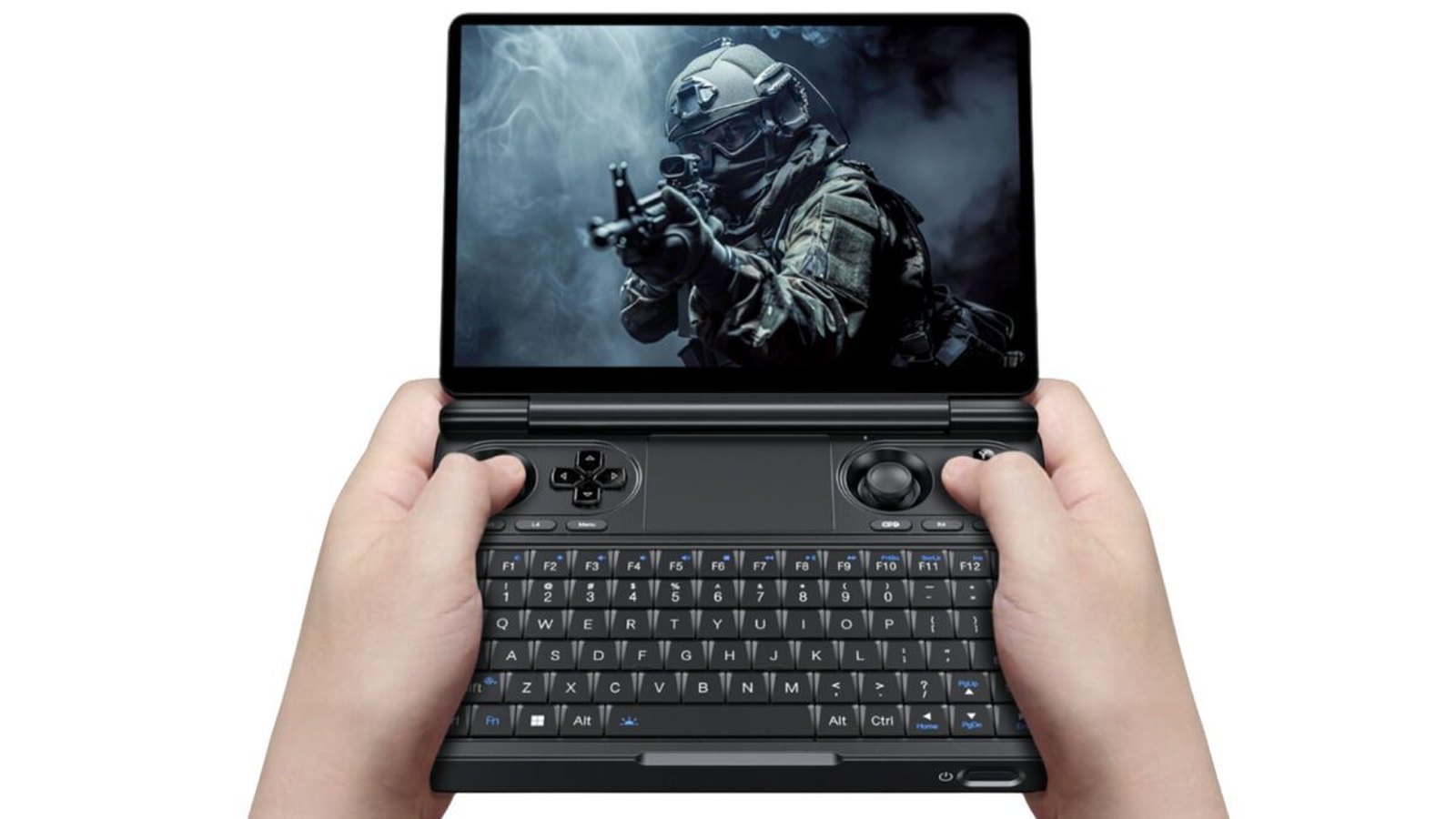
GPD has published the full specifications for its WIN Mini Ultra gaming handheld, confirming an Intel Arc G3 Extreme processor, Arc B390 integrated graphics, an 8-inch 120Hz display and up to 64GB of LPDDR5X memory. The new Windows gaming PC also features dual 80Gbps USB4 ports, PCIe 5.0 storage support and a larger battery than its predecessor. Pricing and an exact retail release date remain unannounced.
The official product page provides a detailed look at the hardware following earlier teasers in October 2026. The specifications establish several substantial changes from the WIN Mini 2025, including a larger screen, upgraded connectivity and a redesigned cooling system.
At the center of the WIN Mini Ultra is Intel’s Panther Lake-based Arc G3 Extreme processor, featuring 14 CPU cores and 14 threads. Its hybrid configuration combines two performance cores, eight efficiency cores and four low-power efficiency cores. The performance cores can reach 4.7GHz, while the efficiency and low-power cores boost to 3.4GHz and 3.1GHz, respectively.
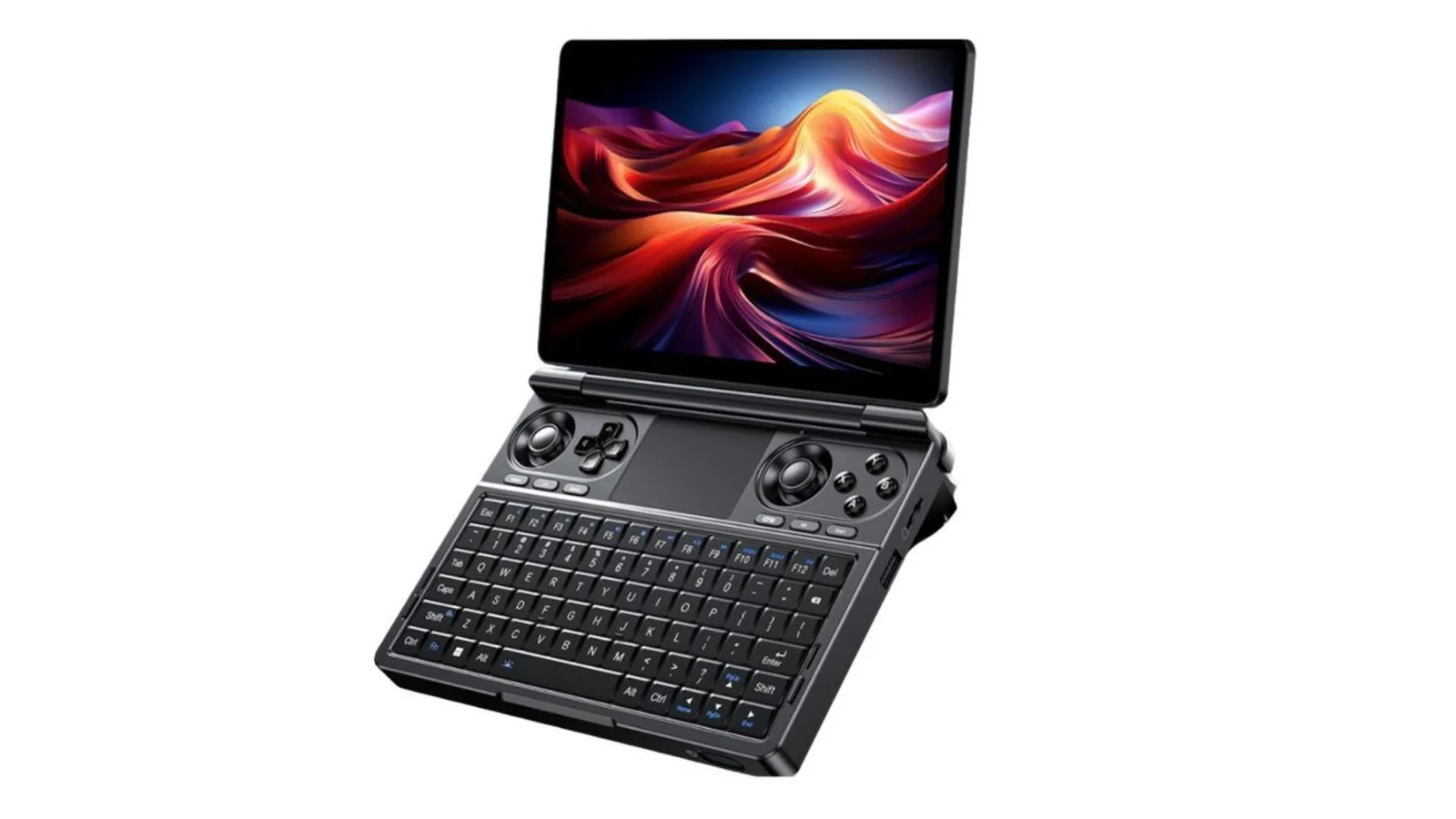
Graphics are handled by the integrated Intel Arc B390 GPU, which features 12 Xe3 cores, 96 execution units and a maximum frequency of 2.3GHz. The GPU supports hardware-accelerated ray tracing, DirectX 12 Ultimate and Intel’s XeSS upscaling and frame-generation technologies.
GPD lists a configurable processor power range of 15W to 45W. To manage temperatures within the compact chassis, the company has equipped the device with a dual-fan cooling system and four heat pipes.
The manufacturer also provides preliminary gaming performance figures. In its internal Cyberpunk 2077 testing at 1920 × 1200 resolution, high settings and a 35W power limit, the WIN Mini Ultra reportedly averaged 45 FPS with native rendering, 64 FPS using XeSS upscaling and 161 FPS with XeSS and 4× frame generation.
These results come from GPD’s own testing rather than independent benchmarks. The frame-generation figure includes generated frames and should not be interpreted as equivalent to 161 FPS of native rendering performance. Actual results will depend on game settings, drivers, thermal conditions and power configuration.
The WIN Mini Ultra replaces the previous model’s 7-inch, 1920 × 1080 screen with an 8-inch LTPS IPS panel featuring a 1920 × 1200 resolution and a 16:10 aspect ratio. The display supports a 120Hz refresh rate, variable refresh rates between 48Hz and 120Hz, VESA Adaptive-Sync and AMD FreeSync.
Additional display specifications include 10-point touch support, an anti-glare coating, native landscape orientation and up to 575 nits of brightness. The variable refresh rate capability allows the screen to adjust its refresh timing to match fluctuating game frame rates, potentially reducing visible tearing during gameplay.
Memory configurations include 32GB and 64GB of dual-channel LPDDR5X operating at 8533 MT/s. The handheld also features a full-size M.2 2280 storage slot supporting PCIe 5.0 x4 SSDs, although GPD specifies that factory-installed drives use PCIe 4.0.
Storage configurations range from 512GB to 4TB, depending on the selected model. A microSD Express card reader provides additional expansion, with GPD advertising theoretical transfer speeds approaching 985MB/s and backward compatibility with conventional UHS-I microSD cards.
Connectivity represents another major change from the WIN Mini 2025. The Ultra includes two USB4 Version 2.0 ports, each supporting up to 80Gbps bandwidth, DisplayPort 2.1 output and USB Power Delivery 3.1. The previous model offered a single 40Gbps USB4 connection.
Both USB4 ports support GPD’s optional G1 and G2 external graphics docks, allowing the handheld to connect to additional GPU hardware when used at a desk. Other connections include a 10Gbps USB-A port, a 3.5mm audio jack, Wi-Fi 6E and Bluetooth connectivity.
The device retains the clamshell design associated with the WIN Mini series, combining integrated gaming controls with a physical QWERTY keyboard and precision touchpad. Its redesigned controls include capacitive analog sticks with an advertised 8000Hz sampling rate, Hall-effect triggers, programmable rear buttons and a six-axis motion sensor.
GPD has increased battery capacity from 44.24Wh in the WIN Mini 2025 to 56.01Wh in the new model, an increase of approximately 26.6%. The company claims around three hours of heavy use, six to eight hours of moderate use and up to 14 hours of light use, although these estimates have not been independently verified. A 100W USB-C charger is included.
The additional hardware comes with a noticeable portability trade-off. The WIN Mini Ultra measures 182.5 × 133 × 30mm and weighs 845g, compared with 172 × 109 × 27mm and 555g for the WIN Mini 2025. That makes the new handheld approximately 290g heavier.
The larger footprint accommodates the expanded display, bigger battery and upgraded cooling hardware, but also makes the Ultra considerably less compact than the previous generation.
The WIN Mini Ultra will ship with Windows 11 Home, giving it access to conventional Windows PC games and applications. Its new Arc graphics architecture also introduces another Intel-based option in a handheld market where AMD Ryzen processors have been widely used.
For PC gaming enthusiasts, the combination of Arc B390 graphics, fast LPDDR5X memory and a 120Hz VRR screen is particularly relevant as developers continue adopting technologies such as frame generation and AI-assisted rendering. However, the handheld’s sustained gaming performance, thermal behavior and battery endurance remain to be established through independent testing.
GPD has not confirmed the WIN Mini Ultra’s final pricing, exact sales launch date or regional availability. Those details will be important when comparing the device against existing Windows gaming handhelds, particularly given its larger size and extensive hardware upgrades.
