


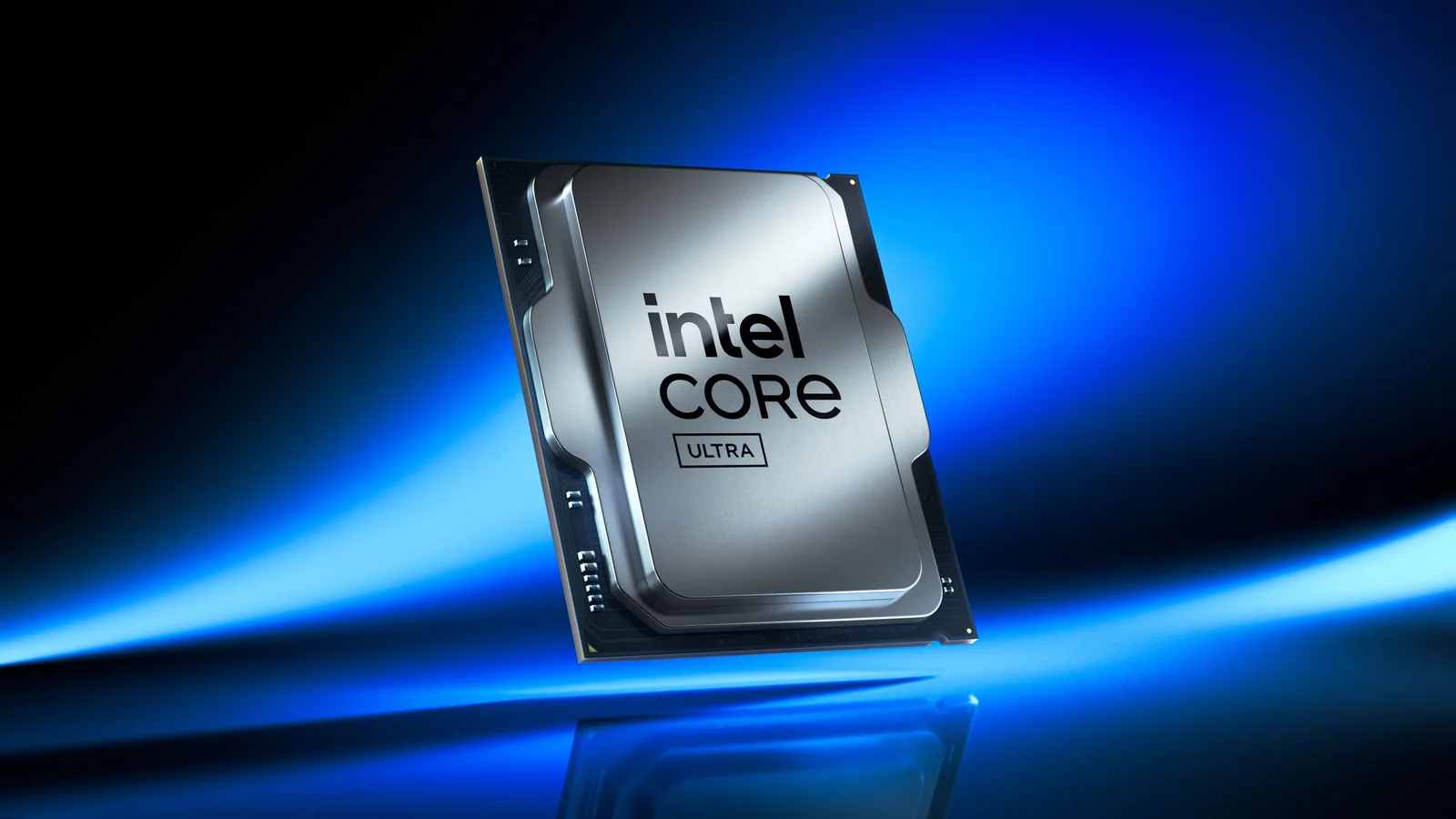
Intel’s upcoming Nova Lake-H mobile processors have appeared in preliminary documentation for Advantech’s ASR-A505 single-board computer, revealing a 16-core configuration with a maximum clock speed of 4.8 GHz and a 25W thermal design power (TDP). The specifications provide an early look at Intel’s next-generation Core Ultra Series 4 mobile platform, although the exact processor model remains unidentified.
The information comes from Advantech’s ASR-A505 product documentation, which identifies the processor family as Intel Core Ultra Series 4, codenamed Nova Lake-H. The ASR-A505 is a 4-inch single-board computer designed for autonomous mobile robots and industrial applications rather than conventional consumer laptops.
According to the preliminary specifications, the processor features 16 CPU cores, a maximum frequency of 4.8 GHz, a 2.0 GHz P-core base clock and 18 MB of last-level cache. Advantech lists a 25W TDP, while information in the accompanying block diagram suggests a configurable power range of 15W to 25W.
The documented 25W figure does not establish the processor’s maximum power consumption under boost conditions. Higher temporary power limits could apply, but those details have not been confirmed.
One unusual detail is the listed CPU configuration. Advantech describes the processor as having eight performance cores, four efficiency cores and four low-power efficiency cores, giving it an 8P+4E+4LPE arrangement.
That differs from earlier leaks describing a 16-core Nova Lake-H configuration with four performance cores, eight efficiency cores and four low-power efficiency cores. The previously rumored configuration has been associated with a Core Ultra 9 4970H processor, although Intel has not confirmed that model.
The discrepancy raises questions about the accuracy of Advantech’s preliminary documentation. The manufacturer may have reversed the performance-core and efficiency-core counts, but there is currently insufficient evidence to establish which configuration is correct. The 8P+4E+4LPE arrangement should therefore be treated as provisional rather than a confirmed final specification.
The ASR-A505 documentation also identifies Intel Arc integrated graphics with a maximum frequency of 2.3 GHz. However, it does not specify the GPU architecture or number of graphics cores, preventing meaningful conclusions about gaming performance.
For memory, the board supports dual-channel DDR5-8000 using CSODIMM modules, with a maximum capacity of 128 GB. These specifications describe the industrial board’s supported configuration and do not necessarily establish the memory capabilities of every future Nova Lake-H laptop.
The mobile processor information emerges alongside a separate 28-core Nova Lake-S desktop engineering sample listed in OpenBenchmarking records with a reported frequency of 5.2 GHz. The desktop and mobile discoveries concern different processor configurations, and their reported clock speeds cannot be used to establish relative performance.
Hardware manufacturers are also preparing for the desktop platform, including SilverStone’s HELA 1350Rz power supply with three EPS CPU power connectors intended to accommodate Nova Lake-S systems.
For gamers and PC enthusiasts, the Nova Lake-H listing offers an early indication of the core configurations, clock speeds and memory support that could become relevant to future Intel-powered laptops. However, the ASR-A505 is an industrial platform, and its specifications do not confirm which configurations will appear in gaming laptops.
Intel has not publicly confirmed the specific Nova Lake-H processor identified in Advantech’s documentation. Official model specifications, gaming benchmarks, laptop availability and final power limits remain unannounced.
