


Moore Threads is preparing to unveil its next-generation Lushan desktop graphics card, with a company product manager claiming it could feature the largest VRAM capacity ever offered on a consumer GPU. The Chinese graphics chipmaker has released a promotional teaser ahead of its MUSA Developer Conference (MDC 2026), scheduled for December 29–30 in Beijing, although the card’s actual memory capacity remains undisclosed.
The VRAM claim reportedly originated from a November 18 social media post by AIR_FORCE, a product manager associated with Moore Threads’ MTT S80 graphics card. The post suggested that the upcoming GPU would deliver substantially improved performance and potentially establish a new consumer graphics memory record. Moore Threads subsequently published an official conference teaser featuring a partially concealed graphics card between two mountain peaks, reinforcing expectations that Lushan will be presented at the event.
The teaser itself does not reveal a memory specification, and the record claim has not been independently validated against shipping hardware.
For comparison, NVIDIA’s GeForce RTX 5090 features 32GB of GDDR7 memory, making it a prominent reference point among high-end consumer gaming graphics cards. If Lushan exceeds that capacity, it would introduce an unusually large memory configuration to the consumer GPU market.
Moore Threads previously disclosed plans to quadruple GPU memory capacity relative to its earlier generation. Its MTT S80 gaming graphics card carries 16GB of GDDR6 memory, meaning a fourfold increase would suggest a potential 64GB configuration. However, that figure remains an inference from the company’s earlier targets rather than a confirmed specification for the upcoming card.
The distinction matters because memory capacity alone does not establish gaming performance. A graphics card with more VRAM can accommodate larger textures, complex scenes and memory-intensive workloads, but actual frame rates also depend on processing power, memory bandwidth, driver optimization and game compatibility.
Lushan’s unusually large proposed memory pool could also appeal to users running local AI models, which can require substantial GPU memory to hold model weights and associated data. That potential use case would extend the card’s relevance beyond conventional gaming, although Moore Threads has not demonstrated how its upcoming consumer GPU performs in those workloads.
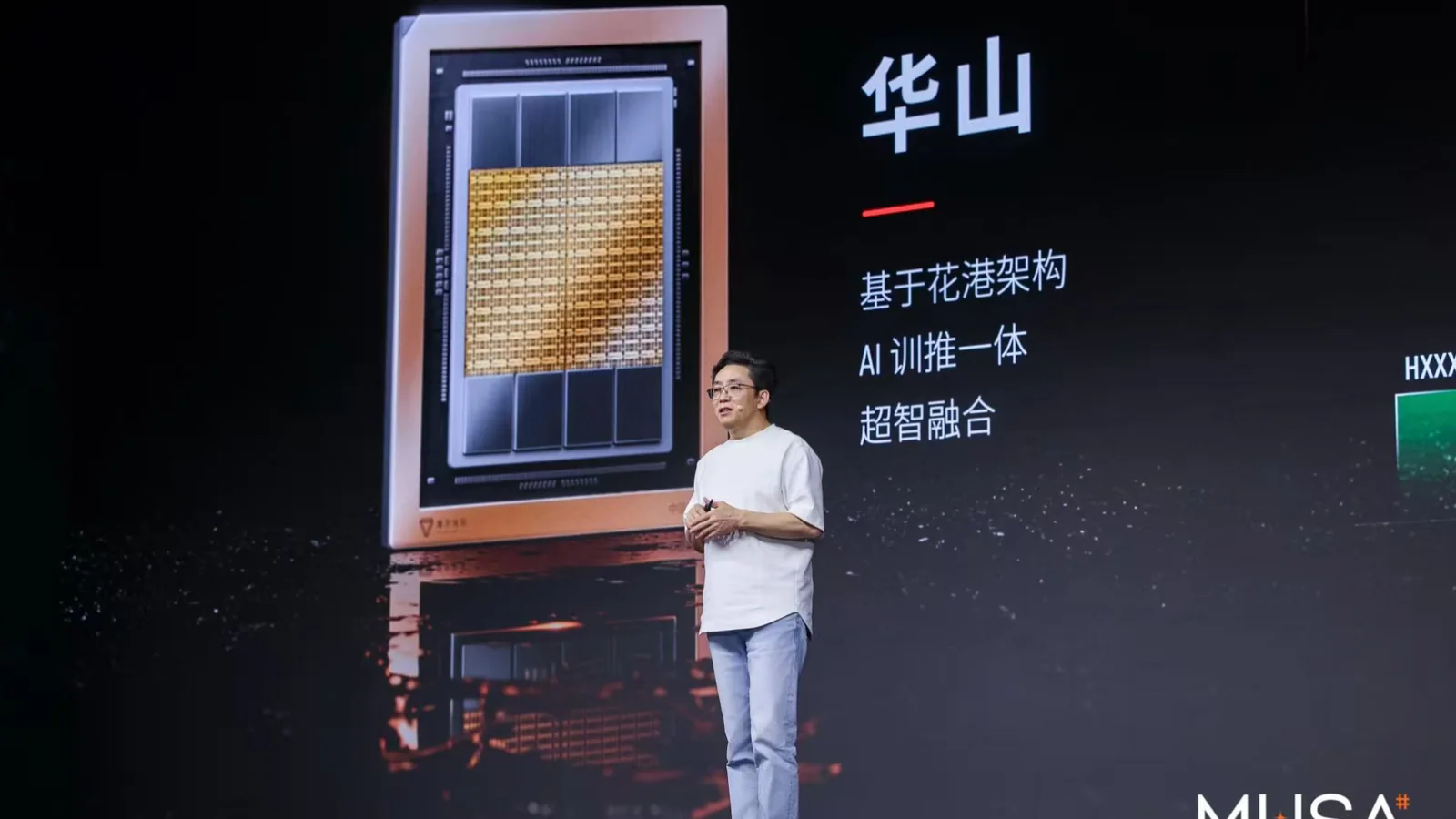
The Lushan processor was first introduced during Moore Threads’ December 2025 developer conference alongside its next-generation Huagang GPU architecture. At that event, the company outlined major improvements over its previous graphics hardware, including a claimed 15-fold increase in AAA gaming rendering performance, a 50-fold improvement in ray-tracing performance and a 64-fold increase in AI computing performance.
Those figures represent Moore Threads’ own architectural performance targets, not independently verified gaming benchmarks. They also compare the upcoming architecture against the company’s earlier products rather than competing NVIDIA, AMD or Intel GPUs.
The company reiterated those ambitions during its September 2026 financial results briefing, confirming that Lushan was intended to improve gaming and graphics rendering capabilities. Moore Threads has also emphasized hardware-accelerated ray tracing as an important feature of its next-generation graphics technology.
For PC enthusiasts, the combination of substantially increased memory capacity and expanded graphics features makes Lushan an interesting potential addition to the desktop GPU market. However, the company’s existing MTT S80 provides a reminder that competitive hardware specifications must be supported by mature drivers and software compatibility.
The MTT S80 launched with 16GB of VRAM, but Moore Threads has spent subsequent years improving its Windows graphics drivers and game support. Whether Lushan can deliver a meaningful competitive alternative will depend on demonstrated gaming performance, supported graphics APIs, driver quality and pricing rather than memory capacity alone.
Large VRAM configurations are also becoming relevant to a wider range of PC hardware designs, including AMD's rumored Siren Halo APU with dedicated GDDR7 memory. While the architectures differ, both developments reflect growing interest in how graphics memory is provisioned for demanding consumer workloads.
Moore Threads has not announced Lushan’s final VRAM capacity, memory technology, memory bandwidth, power consumption or retail pricing. The company also has not confirmed when a finished consumer graphics card will become commercially available.
MDC 2026 takes place at the Zhongguancun International Innovation Center in Beijing on December 29–30. The event is expected to provide further information about Lushan, including whether the proposed consumer VRAM record translates into a commercially available product.
