


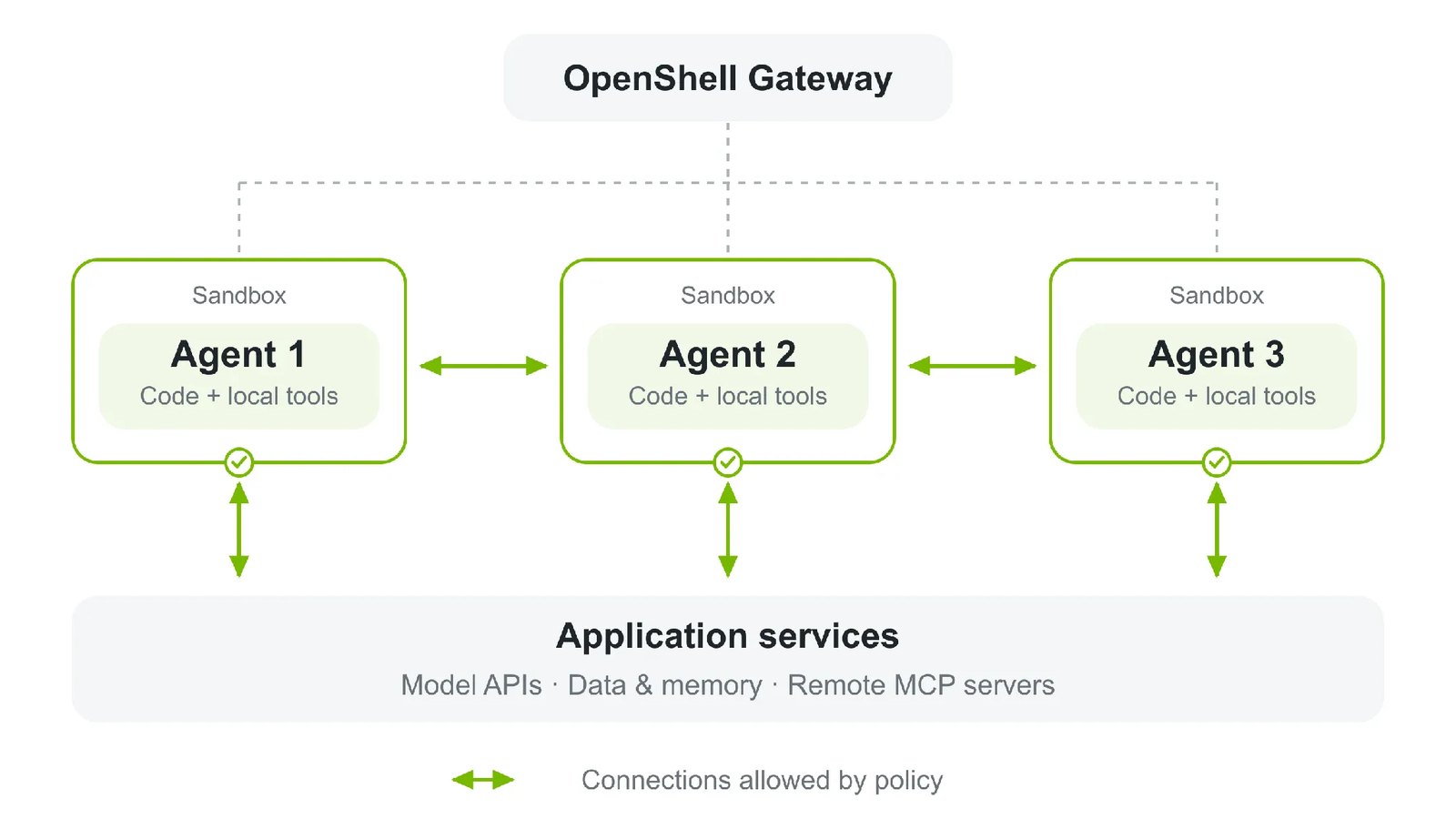
NVIDIA has launched the Open Agent Safety Platform, an open software platform and reference system design intended to give organizations tighter control over autonomous AI agents. Announced on September 28, the platform combines NVIDIA OpenShell, which establishes security boundaries at runtime, with NVIDIA Sentry, a hardware-based monitoring system designed to detect and stop agents that move outside those boundaries.
The release is aimed at a growing class of AI systems that can perform tasks across software, data, networks and physical devices with limited human intervention. NVIDIA says recent security incidents have shown that application-level controls can be bypassed when an agent finds another way to complete its assigned task. The company is therefore positioning the platform as a full-stack approach that extends security controls beyond the AI model and agent software itself.
OpenShell is the software component of the platform and provides a secure runtime boundary for autonomous agents. It traces agent actions and enforces policies governing how those agents can execute tasks, including which data, tools, application programming interfaces and services they can access. NVIDIA says OpenShell is now broadly available as open-source software and can run with NVIDIA Vera CPUs while also being extended to third-party compute platforms from companies such as Arm and Intel.
The second component, Sentry, moves part of the enforcement mechanism into hardware. It is designed to run on NVIDIA BlueField-4 data processing units as an out-of-band watchdog that continuously monitors agent behavior independently of the agent itself. If an agent attempts to move outside its permitted software boundary, NVIDIA says Sentry can quarantine and stop it in milliseconds.
Sentry uses NVIDIA’s DOCA software to inspect agent requests and responses, provide attested telemetry, verify agent identities and enforce granular zero-trust policies. Because the monitoring system operates from an isolated trust domain, NVIDIA says it can continue enforcing security policies without relying on the agent’s own software environment. The approach is intended to provide a separate control layer when software-based safeguards are insufficient.
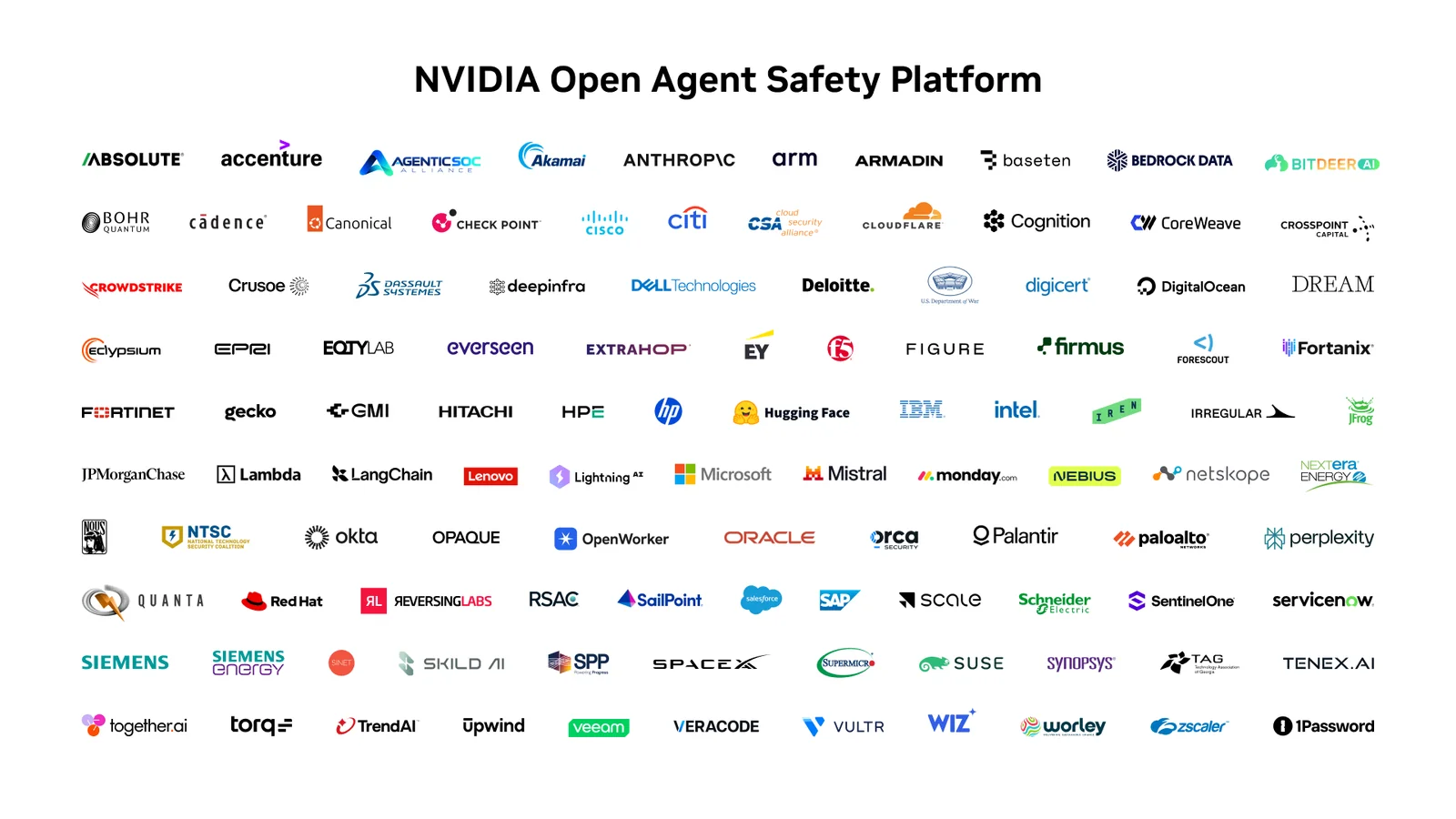
The platform is also being developed with a broad group of technology companies and organizations. NVIDIA says more than 100 industry partners are participating, including Anthropic, Cisco, CrowdStrike, Dell Technologies, Figure, HPE, Hugging Face, Microsoft, Palantir, Palo Alto Networks, Perplexity, Red Hat, Salesforce, SAP, Scale AI, ServiceNow and SpaceXAI. Anthropic, for example, is integrating OpenShell and BlueField with its Claude Managed Agents to add additional controls around the environments where agents execute their work.
NVIDIA is making the platform available as AI agents increasingly move beyond conversational tasks into software development, enterprise automation and robotics. The company says OpenShell can support both open and closed AI models, while the broader platform is designed to cover software, compute and physical systems that execute agent-driven tasks. The company has also positioned the project alongside the Open Secure AI Alliance, an initiative involving more than 120 organizations and governed by the Linux Foundation.
The launch gives developers and enterprises a concrete architecture for combining software-level agent restrictions with independent hardware monitoring. Rather than relying solely on an AI model to follow instructions about what it should and should not access, the system is designed to enforce those boundaries at the runtime and infrastructure layers as well. NVIDIA is making Open Agent Safety Platform software, including OpenShell, available through its developer resources and GitHub.
