



Sonic Team head Takashi Iizuka has explained why Fortnite uses an android version of Sonic rather than the regular character: Sega does not want the real Sonic wielding guns. Speaking in a new interview with IGN, Iizuka said Epic Games first approached Sega about bringing Sonic to Fortnite more than a couple of years ago. The collaboration presented an immediate problem because Fortnite requires playable characters to use its shared arsenal and items.
Iizuka said Sonic is a character who “will never hold a gun,” making a conventional Fortnite crossover difficult to approve. Instead of abandoning the idea, Sega and Epic created Android Sonic, an artificial version of the character that could participate fully in Fortnite’s shooter gameplay without changing the rules Sega applies to Sonic himself. That distinction allowed the Fortnite version to pick up firearms while keeping the main Sonic character separate from those actions.
The android approach also helped solve other design problems created by placing Sonic inside Fortnite. Epic needed the character to use the same weapons, items and animations as the rest of the roster, which meant his body shape had to remain broadly compatible with Fortnite’s standard character proportions. Iizuka said Sega worked with Epic to make the android version still feel recognizably like Sonic while meeting those gameplay requirements.
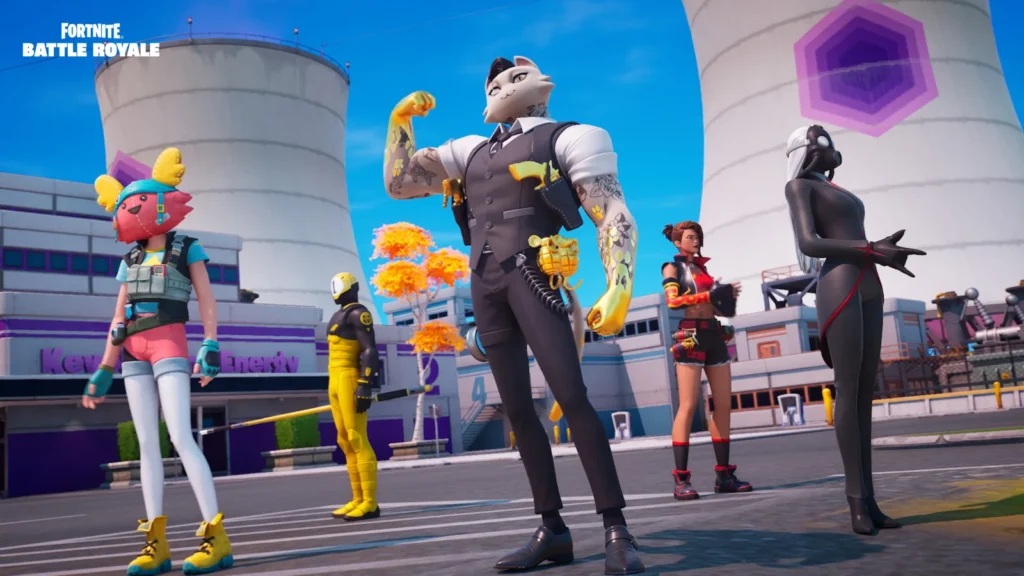
That explains one of the most obvious differences between Fortnite’s Sonic and his traditional design: his unusually tall proportions. A conventionally proportioned Sonic would have been difficult to fit around Fortnite’s existing weapon handling and character animations, so Android Sonic was redesigned with a body closer to the game’s normal player models. The result preserves familiar Sonic visual elements while adapting the character to mechanics that were never designed around his original shape.
Fortnite’s version also avoids having to reproduce every rule associated with the real Sonic. Because Android Sonic is a separate character, he can move at Fortnite’s standard pace rather than constantly outrunning the rest of the lobby, and he can interact normally with movement systems and items. The distinction gives Epic more freedom to integrate the crossover without making Sonic mechanically incompatible with the rest of the game.
According to Iizuka, the discussions began well before the crossover actually appeared. Epic approached Sega more than two years before Android Sonic ultimately became playable, showing that the collaboration required considerably more planning than simply producing a cosmetic skin. The comments provide rare first-hand context on how licensing restrictions and character rules can shape the design of major Fortnite crossovers.
Sonic arrived as one of the headline gaming collaborations in Fortnite Chapter 7 Season 4: Override, which launched in August 2026. The season also introduced a Green Hill Zone-inspired location and a wider lineup of gaming characters and mechanics. Android versions of Shadow and Knuckles also appear within the crossover, extending the same artificial-character concept beyond Sonic.
The explanation is particularly notable because Sonic’s relationship with firearms has long been treated differently from Shadow’s. Shadow the Hedgehog famously used guns in his 2005 standalone game, while Sonic Team has consistently maintained a different tone and set of boundaries around Sonic himself. Android Sonic effectively gives Sega a way to preserve that distinction while still allowing its mascot to participate in a game where firearms are central to normal play.
The collaboration also demonstrates how Epic adapts licensed characters when their original designs conflict with Fortnite’s systems. Character proportions, weapon compatibility and animation requirements can all affect whether a crossover works mechanically, even when the licensing agreement itself is in place. In Sonic’s case, changing the identity of the playable character became the solution to both a creative restriction and a technical design problem.
Iizuka’s comments provide the clearest explanation yet for why Fortnite’s Sonic looks and behaves differently from the canonical version. Epic did not simply redesign Sonic for aesthetic reasons; Sega needed a version of the character that could use Fortnite’s weapons without establishing that the real Sonic had begun doing the same. Android Sonic was the compromise that let the crossover happen while preserving Sega’s rules for the character.
