


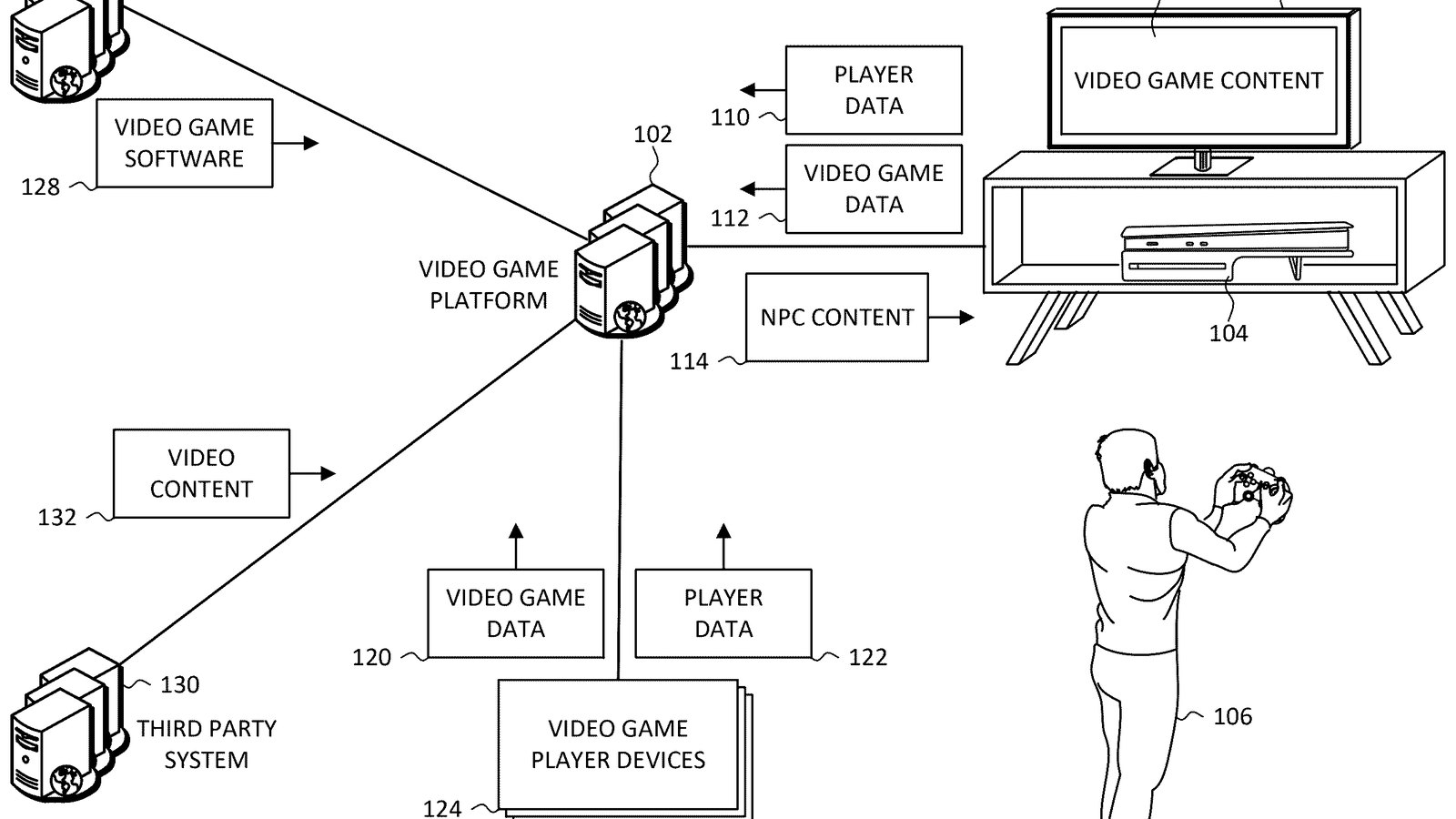
Sony Interactive Entertainment has published a patent application describing an AI system that could use player gameplay data to change how NPCs and bosses behave. The filing, titled “AI-Adapted Non-Player Character for Video Game System,” outlines a machine-learning model that receives data from encounters between players and computer-controlled characters, then generates new NPC content based on those interactions. The application was filed on March 31, 2025 and published in the United States on October 1, 2026 as US20260295429A1.
The system would gather detailed information about how both the player and an NPC behave during an encounter. Examples in the patent include attack accuracy, weapons used, damage dealt and received, critical hits, survival time, healing-item usage and the timing or frequency of particular attacks. It also considers movement and defensive behavior such as dodging, blocking, parrying, positioning, retreating and using environmental objects for cover or traps.
Boss encounters could provide even more information for the model. Sony’s filing discusses recording whether a player wins or loses, how long the encounter lasts, the number of attempts required before succeeding and which attacks a boss uses. It can also account for how effectively the player avoids, blocks or counters those attacks, potentially giving the system a detailed picture of the player’s strengths and weaknesses.
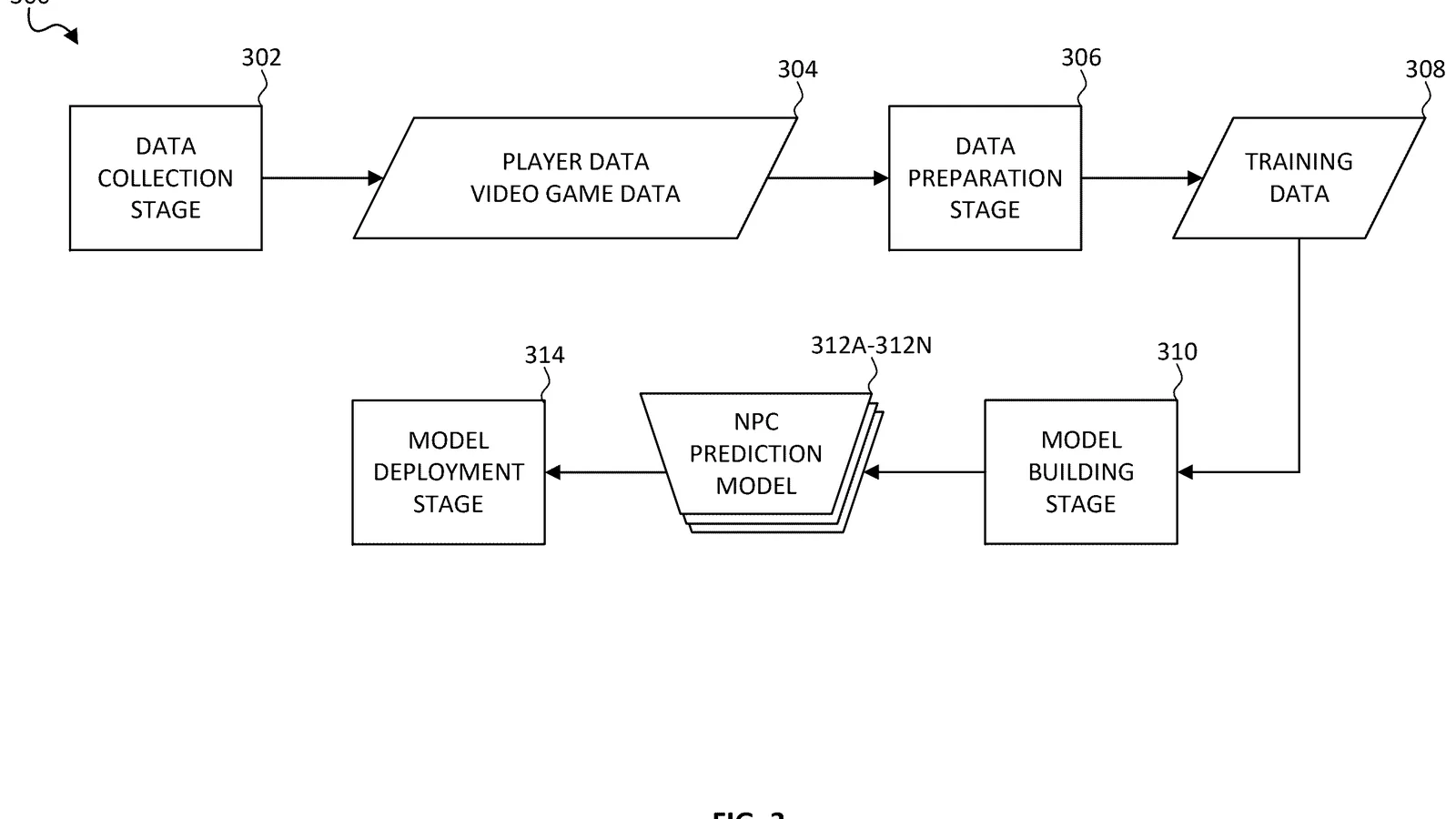
That data can then become input for a machine-learning model tasked with generating new NPC content. The patent describes possible changes to movement patterns, combat strategies, dialogue, appearance and social behavior. An NPC could theoretically respond differently depending on factors such as a player’s aggression or reputation, choosing to fight, flee or negotiate rather than following the same predetermined behavior every time.
Sony also describes changing the actual role assigned to a non-player character. Examples include turning characters into allies, enemies, merchants or quest providers, spawning reinforcement NPCs to replace defeated enemies and even promoting a character into a boss role. Generated changes could be incorporated into an updated version of a game or inserted while the game is already running, depending on how the system is implemented.
The patent does not establish a simple one-to-one relationship where repeatedly performing a particular action immediately teaches an enemy how to counter it. Instead, gameplay information such as parry success rates, weapon choices and repeated boss attempts can form part of the model’s input, with the model then generating altered NPC content. Data may also come from encounters involving other players or from multiple gaming devices rather than exclusively from the individual currently playing.
Sony frames the technology partly as a way to create NPCs that react more naturally while reducing the amount of manually scripted behavior developers need to build. If implemented, the approach could allow enemies or bosses to become less predictable across repeated encounters, while friendly or neutral characters could also change their behavior based on how players interact with the game world.
The company has been exploring several AI-related concepts through patent filings. Another recent Sony application describes an AI system capable of diagnosing device faults and generating repair code, illustrating how broadly the company is investigating machine-learning applications. Microsoft has similarly patented systems affecting gameplay presentation, including a context-aware in-game advertising system designed around natural breaks in play.
As with any patent application, there is no guarantee Sony will turn the concept into a commercial PlayStation feature or use it in a released game. Companies routinely protect ideas that never progress beyond research or experimentation, and the filing does not identify a specific PlayStation title, developer or launch plan. It should therefore be viewed as evidence of technology Sony is exploring rather than confirmation that adaptive AI bosses are coming to an upcoming game.
If the system does eventually reach production, its most significant effect could be making NPC behavior less static across different players and repeated playthroughs. The patent gives Sony broad scope to adapt combat, dialogue, character roles and other behavior from accumulated gameplay data, potentially allowing games to respond more dynamically to how people actually play rather than relying entirely on behavior authored before release.
