


Stellar Blade developer Shift Up has clarified its approach to generative AI following criticism of an AI-generated promotional music video for Stellar Blade: Blood Rain. CEO Kim Hyung-tae says the studio has adopted a development philosophy called “Handmade from start to finish,” requiring human creators to establish the artistic foundation and complete the final production work while allowing AI to assist with intermediate tasks.
Kim discussed the approach during G-CON 2026, held alongside G-STAR in South Korea, in a November 19 discussion with Resident Evil creator and Unbound CEO Shinji Mikami. The conversation, documented by Korean gaming publication Inven, addressed the growing role of generative AI in game development and the importance of maintaining human creative control.
The clarification follows controversy surrounding an AI-generated promotional music video for Stellar Blade: Blood Rain, released in July 2026. The video featured Evie, the protagonist of the upcoming project, and prompted criticism from players concerned about Shift Up’s increasing reliance on generative AI.
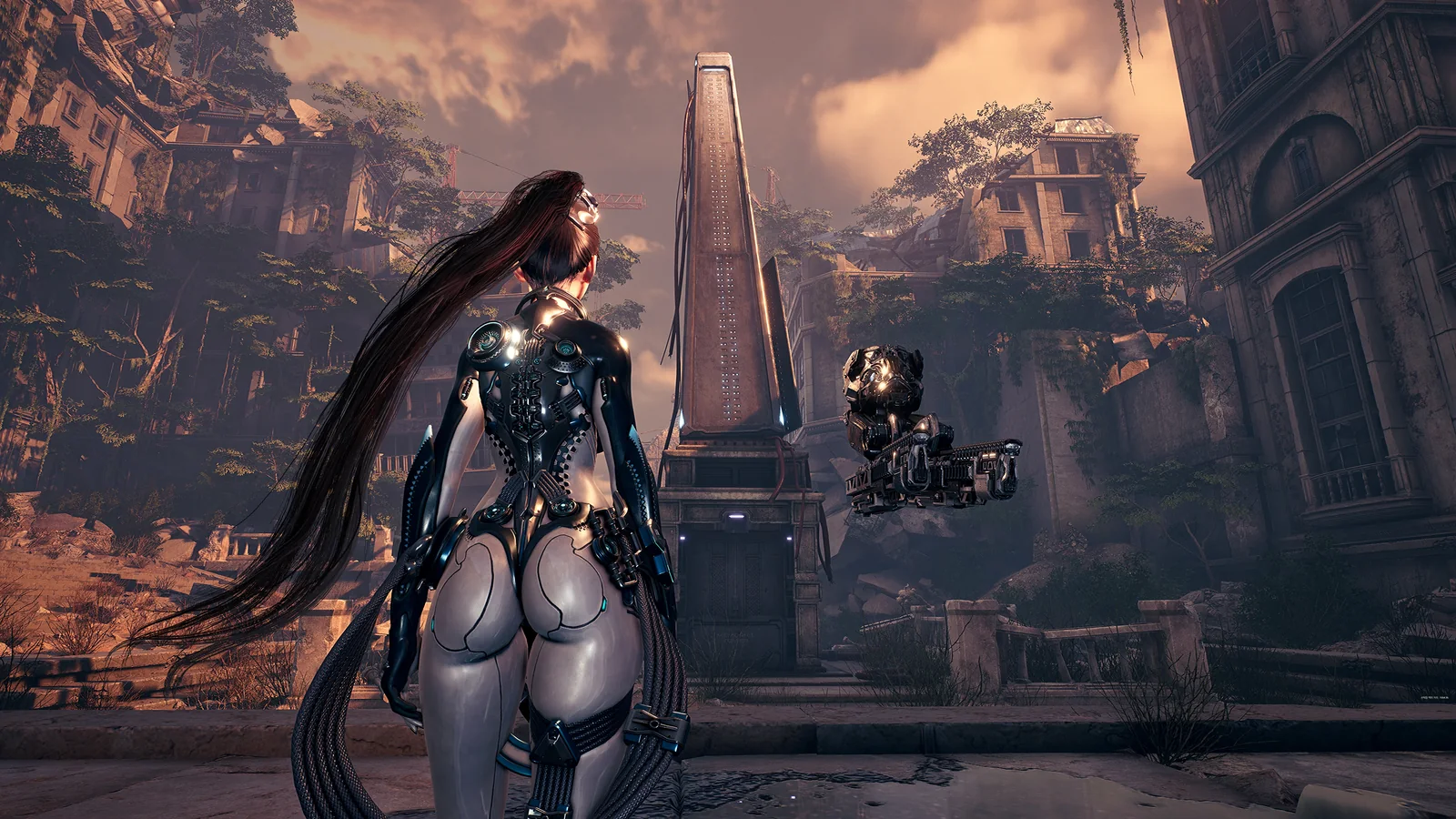
Kim acknowledged that the backlash taught the company important lessons about how audiences respond to AI-generated material, particularly when the finished product lacks recognizable human craftsmanship.
Under Shift Up’s stated approach, human artists remain responsible for creating the initial concepts and refining the final assets. AI can assist with tasks between those stages, including lighting experiments, texture weathering, retopology, and polygon optimization.
Kim explained that AI-assisted retopology can reduce the time spent optimizing 3D models, allowing artists to concentrate on detailed modeling and environmental textures. The studio also uses AI in programming, code reviews, debugging, and quality assurance.
Another application involves early character and monster concepts. Artists begin with hand-drawn sketches, which can be transformed into photorealistic previews using AI. Promising visual elements are then incorporated into revised sketches before further iterations.
This approach allows developers to evaluate visual ideas without building complete 3D models for every early concept. However, Kim emphasized that the underlying designs and final creative decisions remain in human hands.
The CEO also rejected the idea that Shift Up intends to use AI primarily to produce content faster or in greater quantities. Instead, he described the technology as a supporting tool for improving the quality of finished games.
Kim argued that excessive reliance on generative AI risks producing visually and creatively similar games. He specifically ruled out delegating story writing to AI, expressing concern that generated dialogue and narrative text often retain recognizable stylistic patterns.
The discussion comes as generative AI adoption continues to divide game developers. A recent GDC survey on generative AI in game development found that 40% of industry professionals use the technology at work, while 55% believe it negatively affects the industry.
Mikami expressed a more cautious perspective during the same conversation. Although he acknowledged that AI can improve development workflows and reduce the cost of evaluating ideas, he also raised concerns about its long-term implications for employment in the games industry.
At Unbound, Mikami described using AI to convert two-dimensional artwork into preliminary 3D previews. This enables developers to assess how designs might appear in a game environment before committing resources to conventional modeling.
He nevertheless emphasized that core creative development remains largely human-driven. After visiting Shift Up’s offices, Mikami said he had personally observed artists producing the studio’s work, reinforcing Kim’s distinction between AI-assisted development and AI-generated final content.
Kim also discussed Shift Up’s wider creative direction, including the development of highly detailed urban environments and more believable crowds. He acknowledged the difficulty of creating densely populated settings that remain convincing during gameplay.
For players concerned about AI-generated assets in future Shift Up games, the company’s position is now more clearly defined. Generative AI will remain part of its development pipeline, but Kim says the creative foundation, storytelling, and final artistic execution will continue to be controlled by human developers.
The comments establish Shift Up’s intended development principles rather than independently verifying how every asset in its upcoming projects will be produced. The studio has not announced that it will eliminate generative AI from game development.
