
Close Menu
    Facebook X (Twitter) Instagram
    Facebook X (Twitter) Instagram
    TechtroduceTechtroduce
    Subscribe
    • NEWS
    • GUIDES
    • COMPARISONS
    • REVIEWS
    TechtroduceTechtroduce
    Home » Microsoft Connects Three Mini-PCs via USB4 to Run 235B AI Model
    NEWS Updated:November 24, 2026

    Microsoft Connects Three Mini-PCs via USB4 to Run 235B AI Model

    Abyan KhanBy Abyan KhanNovember 24, 2026Updated:November 24, 2026No Comments3 Mins Read
    Facebook Twitter Pinterest LinkedIn Tumblr Email
    Share
    Facebook Twitter LinkedIn Pinterest Email

    Microsoft is developing a Windows 11 feature that allows multiple USB4-connected computers to combine their memory and GPU computing resources for local AI workloads. The company demonstrated the technology by running a 235-billion-parameter language model across three AMD-powered mini-PCs.

    Announced on November 19 through Microsoft’s official USB Blog, the developer preview introduces Remote Direct Memory Access (RDMA) over USB4. The implementation reduces communication overhead between connected computers without requiring dedicated networking adapters or external network switches.

    Microsoft’s demonstration used three mini-PCs equipped with AMD Ryzen AI Max+ 395 processors, Radeon 8060S integrated graphics and 128GB of unified memory per system. Together, the computers provided 384GB of memory and ran the Qwen3-235B-A22B model with 4-bit quantization at approximately 18.5 tokens per second.
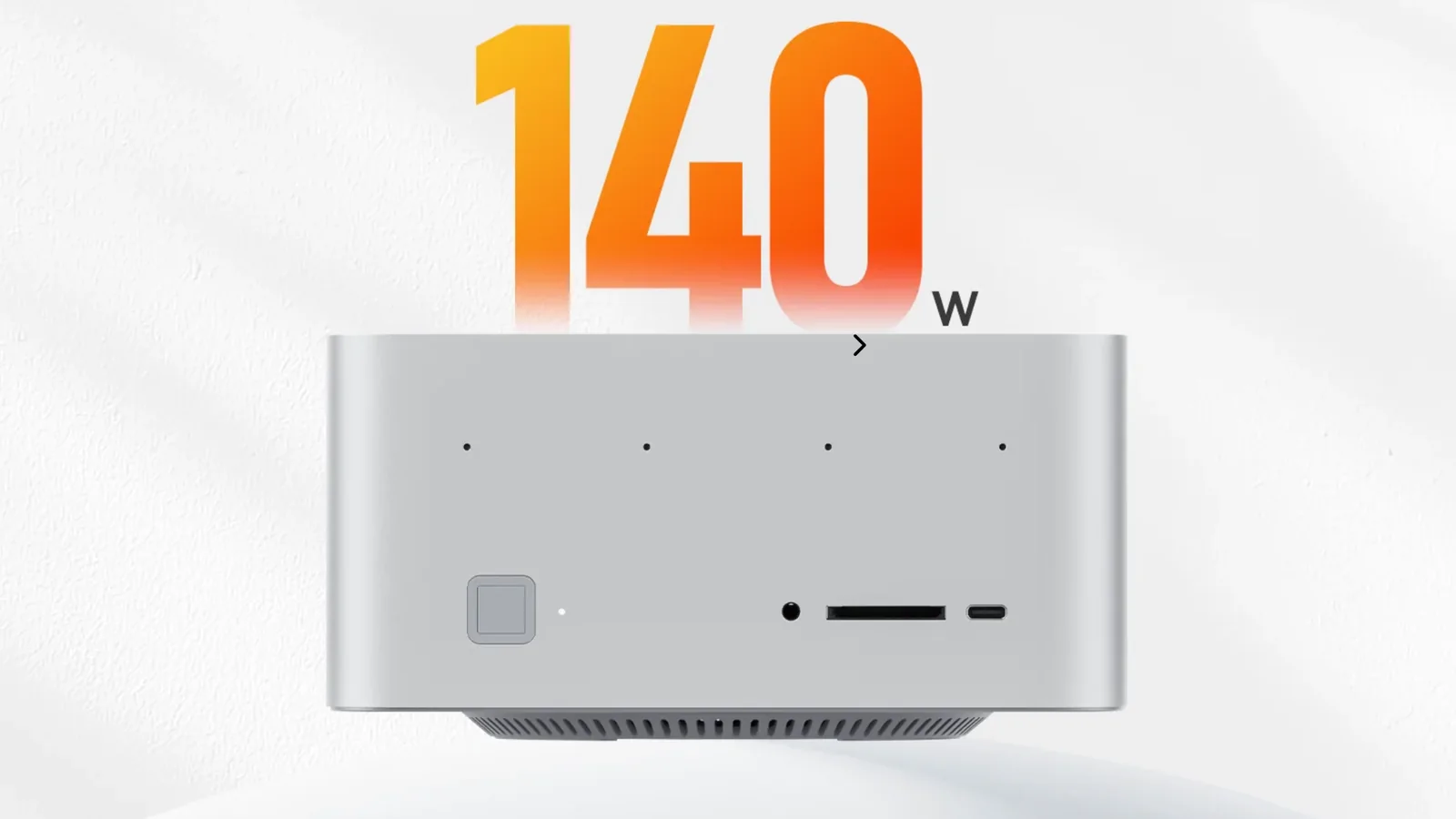
    Beelink GTR9 Pro mini-PC with front-facing silver chassis and visible connectivity

    AMD recorded a higher generation speed of 21.98 tokens per second during its own testing with three computers.

    Windows 11 already supports direct networking between USB4-equipped computers. Microsoft’s RDMA implementation builds upon this functionality by reducing the software processing required to transfer data between systems. Internal testing recorded round-trip latencies of approximately 28 to 50 microseconds for small messages, around one-quarter of the latency measured using conventional UDP communication over the same connection.

    Intel also tested the technology using Core Ultra Series 3 computers equipped with Thunderbolt 4 connectivity and 64GB of memory each. Three systems achieved 49.4 tokens per second while running GPT-OSS-120B, increasing to 54.2 tokens per second with a fourth computer at the same 1,000-token context length. These results are not directly comparable with AMD’s figures because the configurations used different AI models.

    The technology requires compatible software capable of distributing workloads across multiple computers. Microsoft has released an open-source NetworkDirect provider and a modified version of llama.cpp to demonstrate this functionality. Connecting computers does not automatically create a shared memory pool accessible to every Windows application.

    A three-computer configuration requires two compatible USB4 ports per machine and three cables, allowing every computer to communicate directly with the others. Microsoft advises against daisy-chaining systems because of the associated performance penalty.

    The required Windows 11 build has yet to become publicly available. Microsoft plans to release it through the Windows Insider Experimental channel under Future Platforms. The initial implementation will require manual activation, test signing and temporarily disabling Secure Boot, making dedicated test computers preferable.

    Microsoft has not demonstrated any gaming performance improvements through RDMA over USB4, and the technology does not automatically combine GPU resources for conventional games. A wider Windows 11 release has not been confirmed.

    Share. Facebook Twitter Pinterest LinkedIn Tumblr Email
    Abyan Khan
    • Instagram
    • LinkedIn

    Abyan Khan is a dedicated writer and tech enthusiast currently pursuing a Bachelor’s degree in Information Technology. With over 3 years of professional writing experience, he specializes in crafting clear, engaging, and informative content across a range of topics, particularly in the tech and gaming industries. Abyan combines his academic knowledge with real-world insights to deliver articles that are both well-researched and reader-friendly.

    Related Posts

    GTA 6 Credits Reveal The Boondocks Creator as Senior Writer

    November 24, 2026

    Fortnite Scott Pilgrim Crossover Teased by Series Creator

    November 24, 2026

    GTA 6 Hacker Released on Licence After Seven-Year Sentence

    November 24, 2026
    Leave A Reply Cancel Reply

    Google Techtroduce

    See more Techtroduce stories on Google.

    Add us on Google

    • GTA 6 Credits Reveal The Boondocks Creator as Senior WriterNovember 24, 2026
      Rockstar Games confirms The Boondocks creator Aaron McGruder worked as a senior writer on GTA 6's in-game television and radio content.
    • Microsoft Connects Three Mini-PCs via USB4 to Run 235B AI ModelNovember 24, 2026
      Microsoft demonstrates a 235-billion-parameter AI model running across three USB4-connected mini-PCs using upcoming Windows 11 RDMA support.
    • Fortnite Scott Pilgrim Crossover Teased by Series CreatorNovember 24, 2026
      Scott Pilgrim creator Bryan Lee O'Malley has teased a Fortnite crossover featuring Scott and Ramona Flowers, with release details still unconfirmed.
    TRENDING NOW

    Game Stutters Every Few Seconds – The Most Likely Causes and Fastest Tests

    Hawker 800XP Joins Microsoft Flight Simulator 2024 Marketplace

    GTA VI Miami Beach Marketing Campaign Could Begin October 15

    NVIDIA and Google DeepMind Release Open Viral Protein Dataset

    Facebook Instagram YouTube
    © 2026 Techtroduce. All Rights Reserved | Cookies Policy | Privacy Policy | Contact Us | About Us | Corrections Policy

    Type above and press Enter to search. Press Esc to cancel.

    Manage Consent
    To provide the best experiences, we use technologies like cookies to store and/or access device information. Consenting to these technologies will allow us to process data such as browsing behavior or unique IDs on this site. Not consenting or withdrawing consent, may adversely affect certain features and functions.
    Functional Always active
    The technical storage or access is strictly necessary for the legitimate purpose of enabling the use of a specific service explicitly requested by the subscriber or user, or for the sole purpose of carrying out the transmission of a communication over an electronic communications network.
    Preferences
    The technical storage or access is necessary for the legitimate purpose of storing preferences that are not requested by the subscriber or user.
    Statistics
    The technical storage or access that is used exclusively for statistical purposes. The technical storage or access that is used exclusively for anonymous statistical purposes. Without a subpoena, voluntary compliance on the part of your Internet Service Provider, or additional records from a third party, information stored or retrieved for this purpose alone cannot usually be used to identify you.
    Marketing
    The technical storage or access is required to create user profiles to send advertising, or to track the user on a website or across several websites for similar marketing purposes.
    • Manage options
    • Manage services
    • Manage {vendor_count} vendors
    • Read more about these purposes
    View preferences
    • {title}
    • {title}
    • {title}