


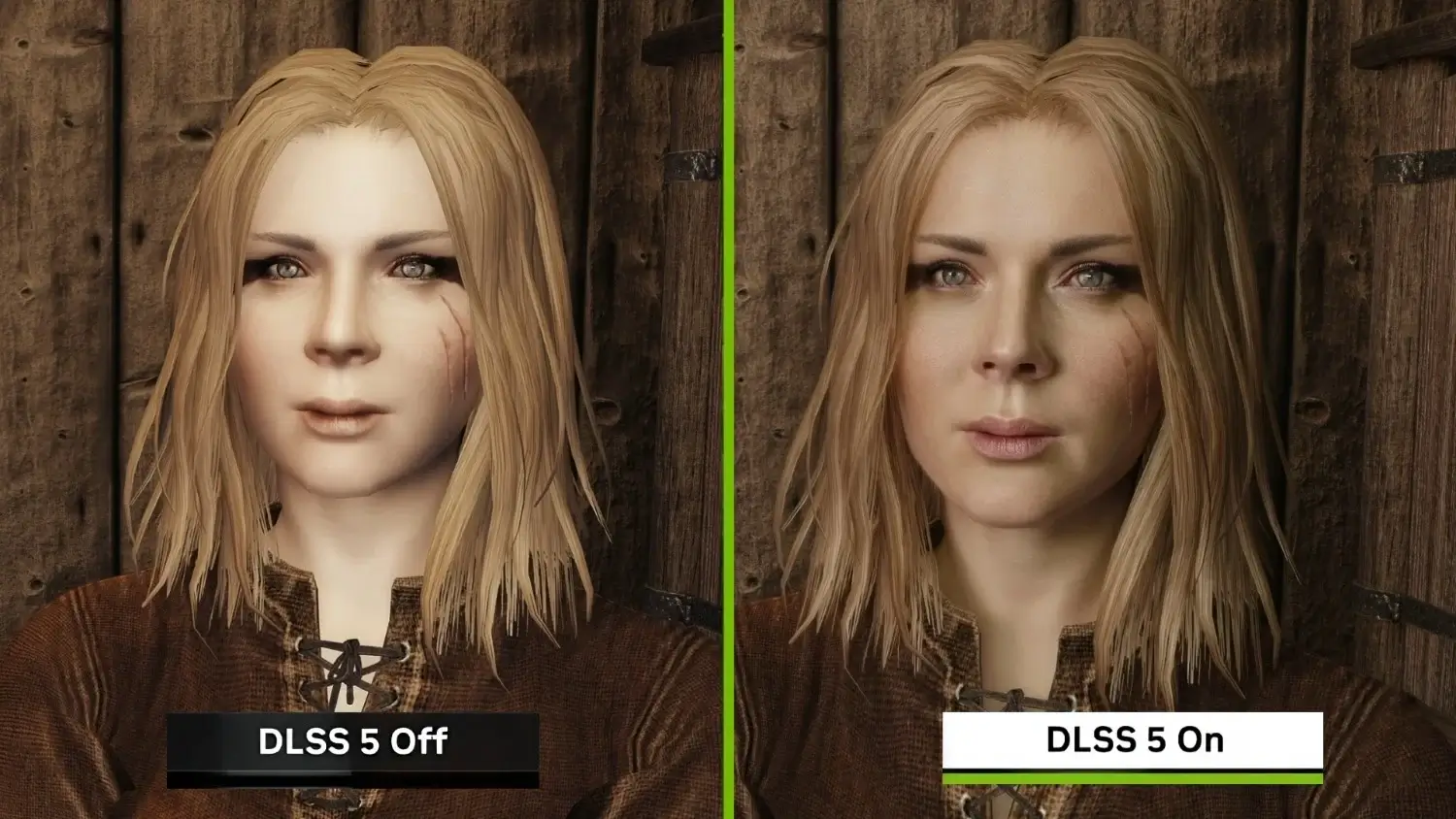
An experimental implementation of NVIDIA’s unreleased DLSS 5 Neural Rendering technology is already running in multiple games after modders extracted a new DLL from NBA 2K27, but the early results come with a severe performance cost.
In one Control test on an RTX 5070 Ti at 4K, performance dropped from 71 FPS to 35 FPS after Neural Rendering was enabled.
That represents a reduction of just over 50%, although the result should not be treated as an indication of how NVIDIA’s finished DLSS 5 implementation will perform.
The test was produced by members of the RenoDX modding community using a 158MB file named nvngx_dlssnr.dll discovered inside the PC early-access build of NBA 2K27.
The file appears to contain NVIDIA’s new Neural Rendering technology, which the company officially announced in March.
Modders initially got the DLL working in Remedy’s Control and applied its effects primarily to character models.
The experiment exposes several adjustable parameters that can alter tone, structure, intensity and other elements of the image.
The resulting visual changes can be substantial.
In Control, the technology can change how protagonist Jesse Faden’s facial features, shadows and skin detail appear depending on the selected settings.
The same experimental implementation has since spread well beyond Control.
Community tests have now appeared in games including Cyberpunk 2077, Skyrim, Grand Theft Auto V, Red Dead Redemption 2, The Last of Us Part II Remastered, Hogwarts Legacy, Black Myth: Wukong, Starfield, Silent Hill 2 and Metal Gear Solid Delta: Snake Eater.
Performance remains one of the biggest problems in the current modded version.
In addition to the RTX 5070 Ti test in Control, a separate Cyberpunk 2077 test on an RTX 5070 showed rasterized performance at 1440p falling from 138 FPS to 68 FPS when Neural Rendering was enabled.
Ray Tracing Ultra performance reportedly dropped from 111 FPS to 55 FPS, while path tracing fell from 71 FPS to 45 FPS.
Other users experimenting with the leaked implementation have reported similarly large frame-rate reductions and increased VRAM consumption.
One test showed GTA V falling from around 90 FPS to 29 FPS while settings were being adjusted.
Those results come with major caveats.
None of these games were designed with official DLSS 5 support, and the RenoDX implementation is effectively forcing the Neural Rendering library into rendering pipelines that were never built around it.
HDR support is also currently problematic in the experimental setup, with some tests being conducted in SDR instead.
Repeatedly changing presets has also been reported to increase VRAM usage, although that may be a bug in the unofficial RenoDX integration rather than DLSS 5 itself.
NVIDIA’s official version is expected to work very differently.
The company says DLSS 5 uses a real-time neural model to enhance lighting and materials while staying anchored to the original rendered scene.
Developers will be able to control how strongly the effect is applied, including its intensity, color grading and which objects or areas are affected.
NVIDIA has also stressed that developers retain artistic control over the technology.
The company announced DLSS 5 in March and said it would launch in fall 2026, initially alongside support from publishers and developers including Bethesda, Capcom, Ubisoft, Warner Bros. Games and others.
The current leaked implementation therefore offers an unusually early look at the technology, but not a reliable benchmark for the final product.
What it does show is that the Neural Rendering runtime is already functional enough for modders to transplant into unsupported games.
For now, the biggest takeaway is the cost: when forced into games through an unofficial modding layer, DLSS 5 can currently halve frame rates or worse.
Whether NVIDIA’s optimized developer integrations can deliver the promised visual improvements without that level of performance loss will become much clearer once DLSS 5 officially launches later this year.
