


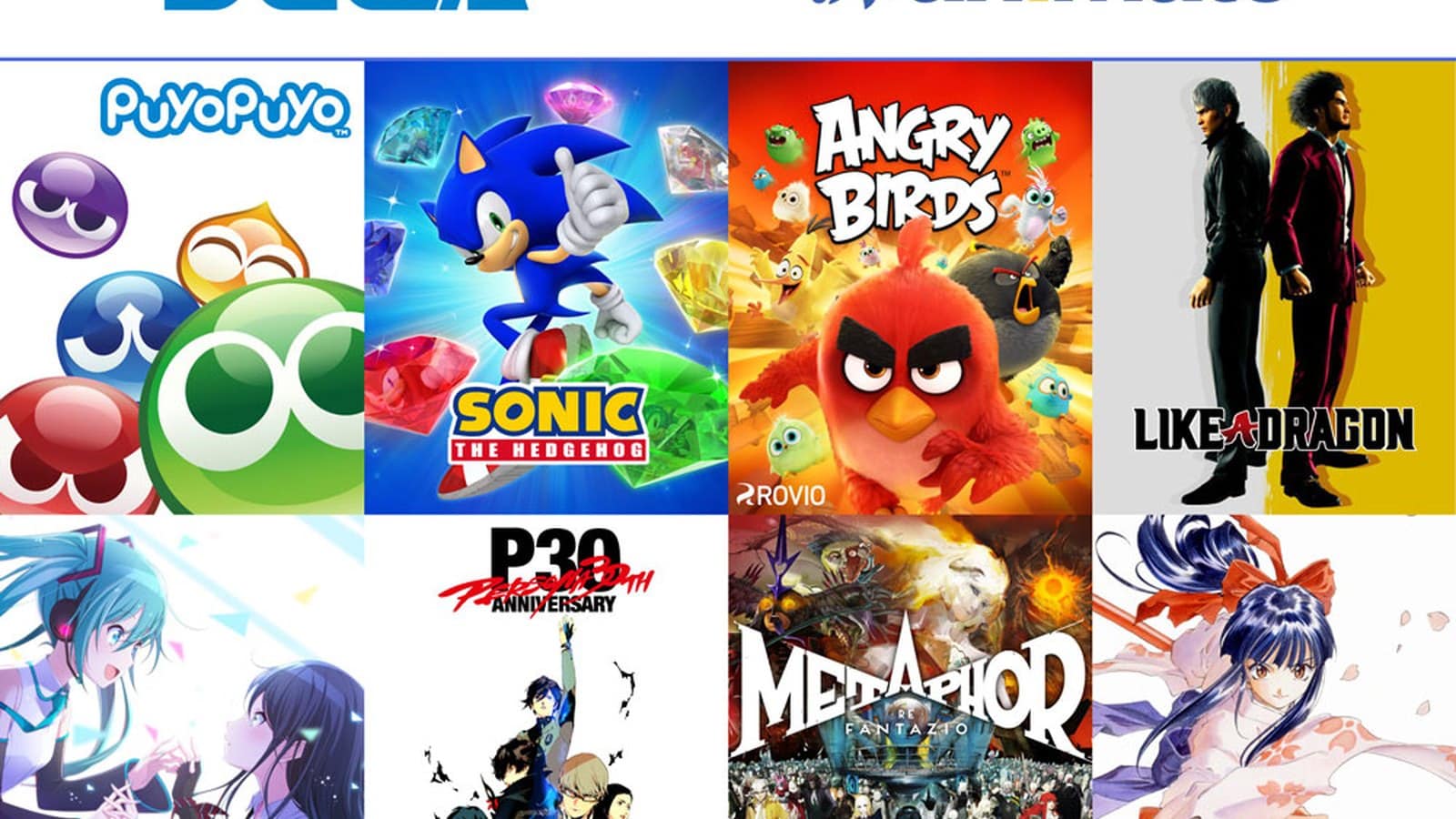
Sega president and COO Shuji Utsumi says the company is seeing a growing group of fans who engage heavily with its franchises despite never actually playing the games themselves. Speaking with Nikkei about Sega’s transmedia strategy, Utsumi said those audiences can discover characters and stories through YouTube, livestreams and merchandise, and in some cases show even higher engagement with an IP than people who play the games.
Utsumi said the trend is appearing across Sega’s portfolio, but highlighted Like a Dragon as one of the clearest examples. According to him, merchandise based on the series has performed particularly well, with women accounting for around 60% to 70% of its customer base. Some of those buyers became familiar with characters such as Kazuma Kiryu and Goro Majima through Sega’s own YouTube content or videos and streams from popular creators rather than by playing a Like a Dragon title themselves.
That does not make Sega view them as less important to the audience surrounding its games. Utsumi said the company still considers people who engage with its game IP without playing the underlying titles to be fans and, in a broader sense, “gamers.” He argued that one of the main advantages of transmedia is that it creates more points through which someone can first become interested in a franchise.

The remarks also underline how Sega is thinking about engagement beyond conventional game sales. Utsumi said the company has encountered cases where people who do not play a particular game demonstrate stronger engagement with the associated IP than those who do. He did not provide a metric for how Sega measures that engagement, so the comment should not be interpreted as a claim that non-players necessarily spend more money than players.
Merchandise appears to be one important part of the strategy. Utsumi referred to his earlier experience working at mobile game company Cybird, where he saw licensed products expand beyond traditional collectibles such as acrylic stands and badges into clothing, cosmetics and limited-edition collaborations. He said that experience helped shape the way he now approaches transmedia at Sega.
The company has already been pursuing that strategy across several of its largest properties. Sonic the Hedgehog has expanded well beyond games through theatrical films, television and consumer products, while Like a Dragon, Persona and other Sega and Atlus franchises increasingly operate as broader entertainment brands. Sega has also publicly described fandom itself as an important force behind Sonic’s growth from a Japanese game character into a global entertainment property.
Utsumi’s comments suggest Sega does not see those expansions merely as advertising intended to funnel everyone back toward buying a game. Instead, someone who follows a franchise through video content, buys merchandise or watches another person play can remain a valuable part of the audience even if they never convert into a traditional game customer. That gives Sega an incentive to develop franchises around multiple kinds of engagement rather than treating the game as the only meaningful product.
Like a Dragon is particularly suited to that approach because of its large cast, long-running storylines and recognizable characters. Watching complete playthroughs or story-focused videos can expose viewers to much of the same narrative material that players experience directly, while merchandise provides another way to maintain interest between releases. Utsumi’s comments indicate Sega is actively tracking that kind of behavior rather than dismissing it as secondary fandom.
The broader takeaway is that Sega’s definition of a successful gaming audience is becoming less tied to direct play. Most fans still interact with its franchises through games, but the company now sees streaming, video, merchandise and other media as legitimate entry points that can create highly engaged audiences of their own. Utsumi said Sega intends to continue strengthening that transmedia approach as it expands its major IP across more forms of entertainment.
