


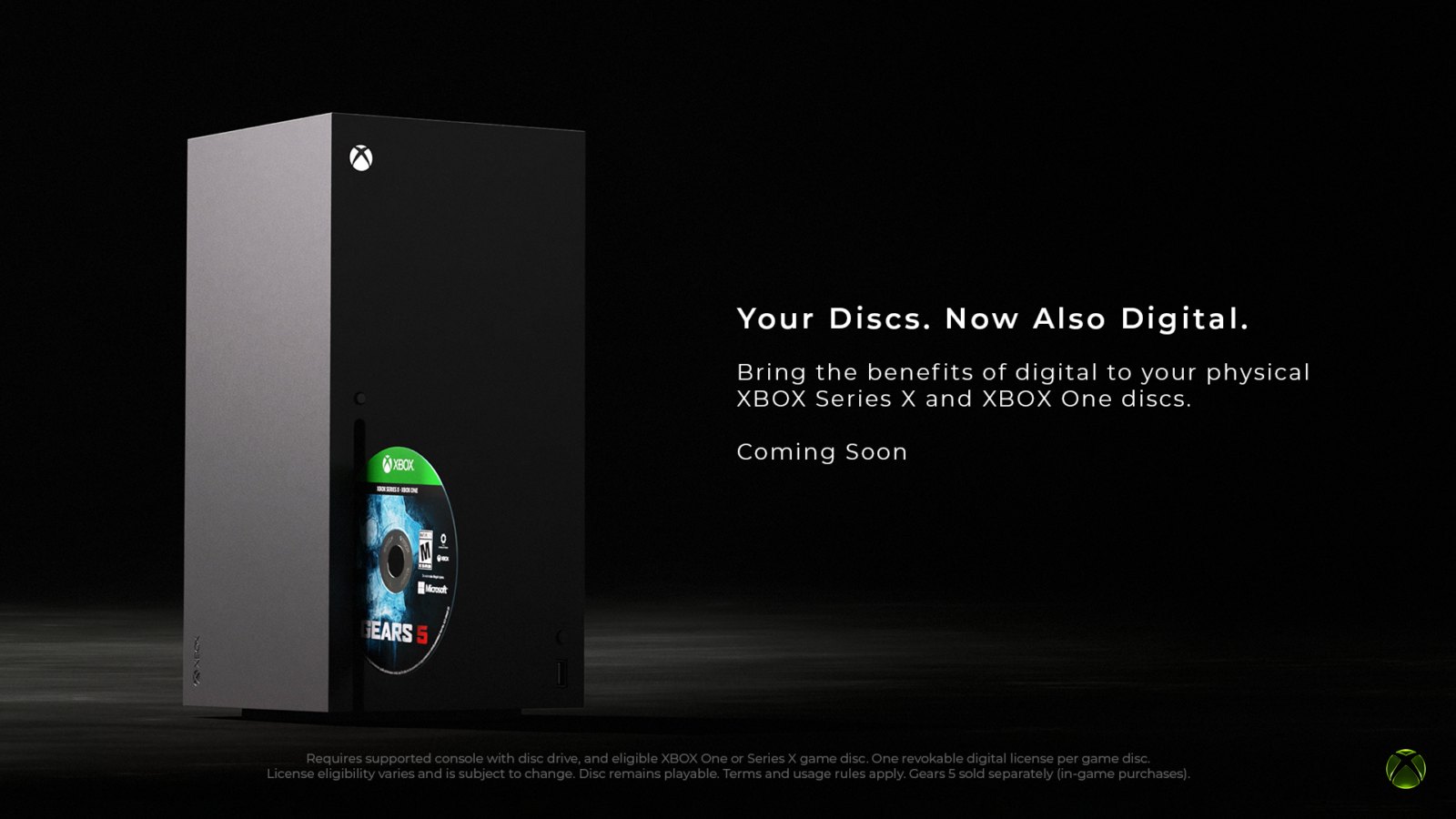
Ubisoft and Square Enix games are currently absent from Xbox’s new disc-to-digital program, with players receiving “digital license unavailable” messages when attempting to claim digital entitlements from supported physical discs. Insider Gaming highlighted the issue on September 8 after users testing the feature documented the same result across titles from both publishers. Neither Ubisoft nor Square Enix has publicly confirmed that it has permanently opted out of the program.
The distinction matters because Xbox has said its disc-to-digital feature will continue expanding over time. Microsoft introduced the system in August and opened testing to Xbox Insiders on August 31, allowing players to insert eligible Xbox One or Xbox Series X discs and claim corresponding digital entitlements. Those licenses can provide access to features such as Xbox Play Anywhere and Xbox Cloud Gaming when the individual game supports them, while the original disc remains usable normally.
Users testing Ubisoft games are instead being shown a message explaining that the title is not participating in digital licensing. Reports indicate the same response appears with Square Enix discs, suggesting neither publisher is currently included in the program’s licensing arrangements. Insider Gaming notes that both companies have yet to comment, so describing their absence as a permanent refusal would go beyond what has actually been confirmed.
The omissions stand out because Microsoft initially said most Xbox One and Xbox Series X disc-based games would support the feature. The company also said it was starting with thousands of titles and planned to add more over time, while acknowledging that not every game would be available when testing began. A community-maintained compatibility database already contains more than 800 confirmed discs, including a significant number of games that are no longer available digitally.
That support has already produced some unusual preservation benefits. Testing has shown that some delisted Xbox games can still receive digital licenses when a qualifying physical copy is inserted, potentially allowing owners to access digital features even when the game itself can no longer be purchased from the Xbox Store. The absence of entire publishers therefore has a wider impact than simply reducing the number of currently supported releases.
Ubisoft and Square Enix are not the only major names reportedly missing. Windows Central’s current review of the program also lists Sega and Bandai Namco among publishers whose games are not yet participating. The publication suggested Microsoft may still be working through licensing and legal arrangements with some companies, but no official explanation has been provided for any individual publisher.
That uncertainty makes the wording around the current situation important. A game displaying “this game is not participating in digital licensing” confirms that it cannot currently receive a digital entitlement through the Insider test, but it does not establish that the publisher has rejected the program indefinitely. Microsoft’s own announcement explicitly says additional titles will be supported over time, leaving room for Ubisoft, Square Enix or other currently absent publishers to join later.
The feature is particularly significant as Xbox plans for hardware increasingly designed around digital access. Microsoft has positioned disc-to-digital as a way of carrying physical libraries forward across its broader ecosystem, while recent industry discussion has also raised questions about whether future Xbox hardware could ship without a built-in optical drive. A reliable way to translate physical ownership into digital access would become substantially more valuable in that scenario.
For now, players with Ubisoft or Square Enix discs should expect the current Insider rollout to reject digital-license requests for those titles. The available evidence shows that both publishers are presently outside the program, but neither has announced a formal or permanent opt-out. Whether their catalogs are added later will depend on future licensing changes or an update from Microsoft and the publishers themselves.
