


Playground Games has shared more details on Fable’s combat, Bowerstone, quest structure and approach to player choice following the game’s Gamescom 2026 showing. Speaking on the Official Xbox Podcast, game director Ralph Fulton explained how the studio is building encounters around large groups of enemies while making Albion’s cities and inhabitants unusually interactive. Fable launches February 23, 2027 for Xbox Series X|S, PC and PlayStation 5.
Combat is designed primarily around one-versus-many encounters rather than repeated duels. Fulton said players will regularly face combinations of enemy types that work together, forcing them to prioritize threats and make use of melee attacks, ranged weapons and magic. Larger one-on-one battles will still exist against certain creatures and other heroes, but Playground considers crowd combat the foundation of the wider system.
The Gamescom combat demo gave players different loadouts and difficulty settings, with spells changing depending on how they are charged and abilities interacting with one another. One example discussed during the podcast involved launching enemies into the air before hitting them with lightning, while ranged attacks can be used to interrupt enemies supporting a larger group. Fulton described the system as accessible at a basic level but designed to open up once players begin experimenting with combinations.
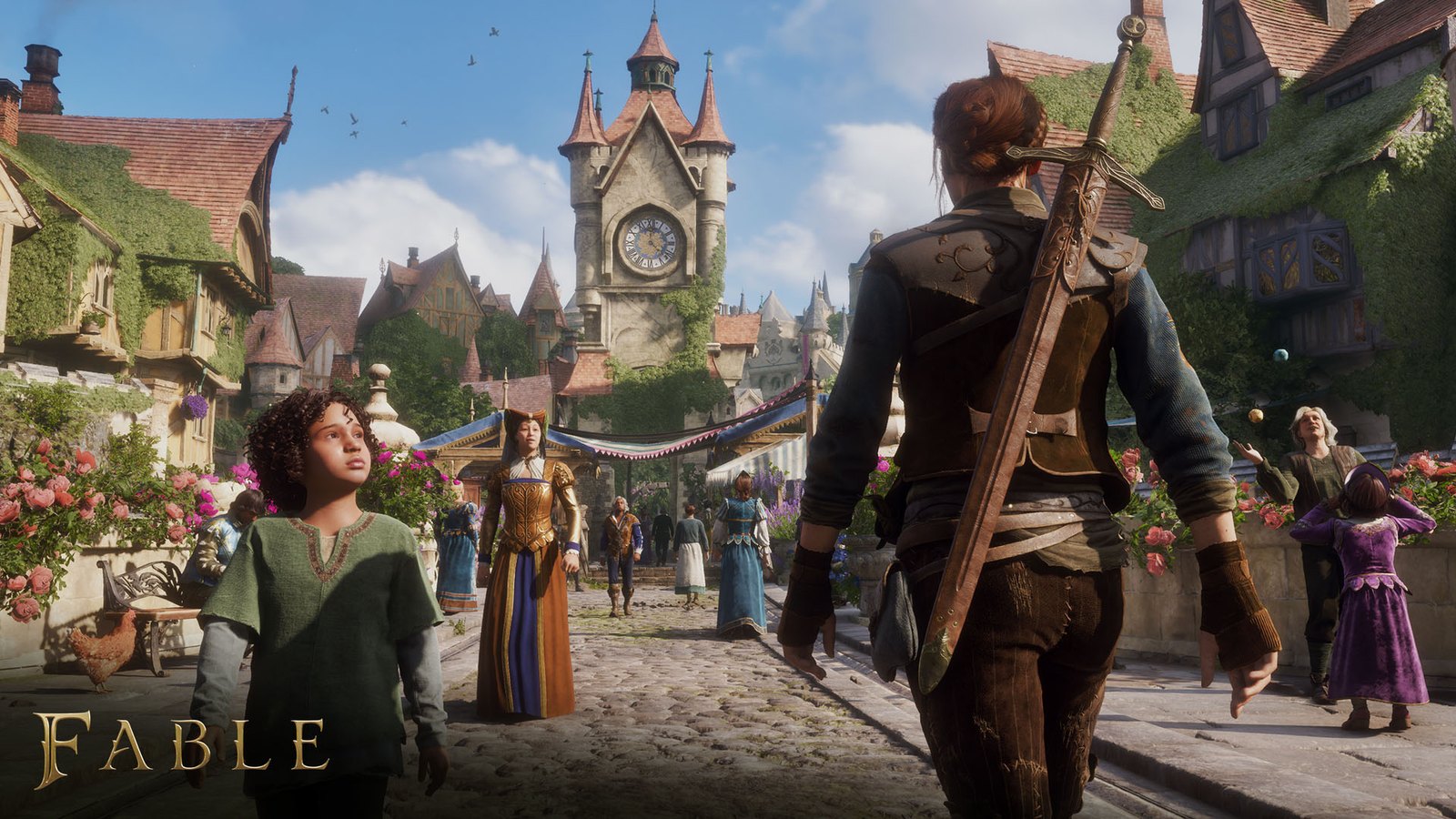
The podcast also expands on the 18-minute Bowerstone quest gameplay released around Gamescom. Bowerstone returns as one of Albion’s most recognizable locations, retaining landmarks such as Fairfax Castle and the old clock tower while being rebuilt as a much denser and more vertical city. Playground says every building can be entered, including houses, shops and properties the player may eventually own.
Those interiors are not simply repeated templates. Fulton said the environment team individually set-dressed spaces to reflect the people living there and their social status, with seamless transitions between streets and interiors rather than separate loading screens. Property ownership also extends across the city, with cheaper districts offering more realistic starting points before players can afford expensive homes in areas such as Bowerstone’s Nobles District.
Fable’s opening section lasts roughly 90 minutes and begins with the protagonist as a child in Briar Hill. After their heroic powers emerge, the village and the protagonist’s grandmother are turned to stone by a mysterious hero named Isabel, sending the player into Albion in search of help. From that point, the game opens up, allowing players either to pursue the main objective immediately or leave the path and explore.
That freedom also feeds into Fable’s broader choice system. Playground says decisions range from small role-playing moments to larger choices with lasting consequences, meaning not every dialogue option is intended to reshape the story. In the Gamescom quest, for example, players can either fetch Humphrey the Golden a drink or throw it over him; the choice affects his immediate opinion of the player but does not radically alter the long-term storyline.
Larger systems operate underneath those smaller interactions. Fable’s Living Population consists of more than 1,000 NPCs, each created individually with a personality, home, job, routine and other traits rather than generated procedurally. Players can befriend, employ, romance, marry or antagonize those characters, while property ownership and wages can directly affect their lives and the local economy.
That creates consequences beyond dialogue choices. Buying a shop can make the player an NPC’s employer, while owning their house can also make the player their landlord, and poor wages can leave residents unable to afford rent. NPCs remember significant actions, including employment, gifts and deaths involving people close to them, allowing reputations and personal relationships to shift over time.
The scale of that simulation helps explain why Playground is treating Fable as more than a straightforward quest-driven RPG. The main story is expected to take around 15 to 20 hours, but the studio has built systems intended to support much longer play through exploration, relationships, property ownership and experimentation with Albion’s population.
Fable launches February 23, 2027 for Xbox Series X|S, PC and PlayStation 5, with Xbox Game Pass availability on day one. Playground Games’ latest comments suggest its interpretation of Albion will lean heavily on flexible combat, dense interactive settlements and smaller player-driven decisions alongside the larger story choices traditionally associated with the series.
