


Riot Games has prohibited teabagging, shooting dead bodies and shooting player pucks at VALORANT Champions Shanghai, with players who break the conduct rules potentially facing disciplinary action. The restriction appears in the tournament’s in-game conduct guidelines and applies specifically to the international championship taking place in Shanghai. It does not represent a general ban on the behavior in ordinary VALORANT matches.
The rule states that players may not shoot dead bodies or player pucks, while teabagging and other inappropriate in-game conduct are also prohibited. Player pucks are the simplified markers that can replace fallen character models depending on spectator or game settings. Riot’s wording does not publicly specify a fixed penalty for each violation, instead leaving breaches subject to disciplinary action.
The restriction is notable because all three behaviors are common forms of competitive taunting in tactical shooters. Shooting an eliminated opponent’s body or repeatedly crouching over it has historically been used to celebrate kills, provoke rivals or add personality to high-pressure matches. At Champions Shanghai, however, those actions will now carry an explicit competitive risk rather than simply being treated as informal trash talk.

Riot has dealt with similar conduct before. During earlier VALORANT Champions Tour competition, tournament administrators have warned teams against shooting bodies and teabagging during official matches, while VCT China has also enforced stricter expectations around player behavior. The Shanghai rules therefore formalize a position Riot has applied in parts of its esports ecosystem previously rather than creating the issue from scratch.
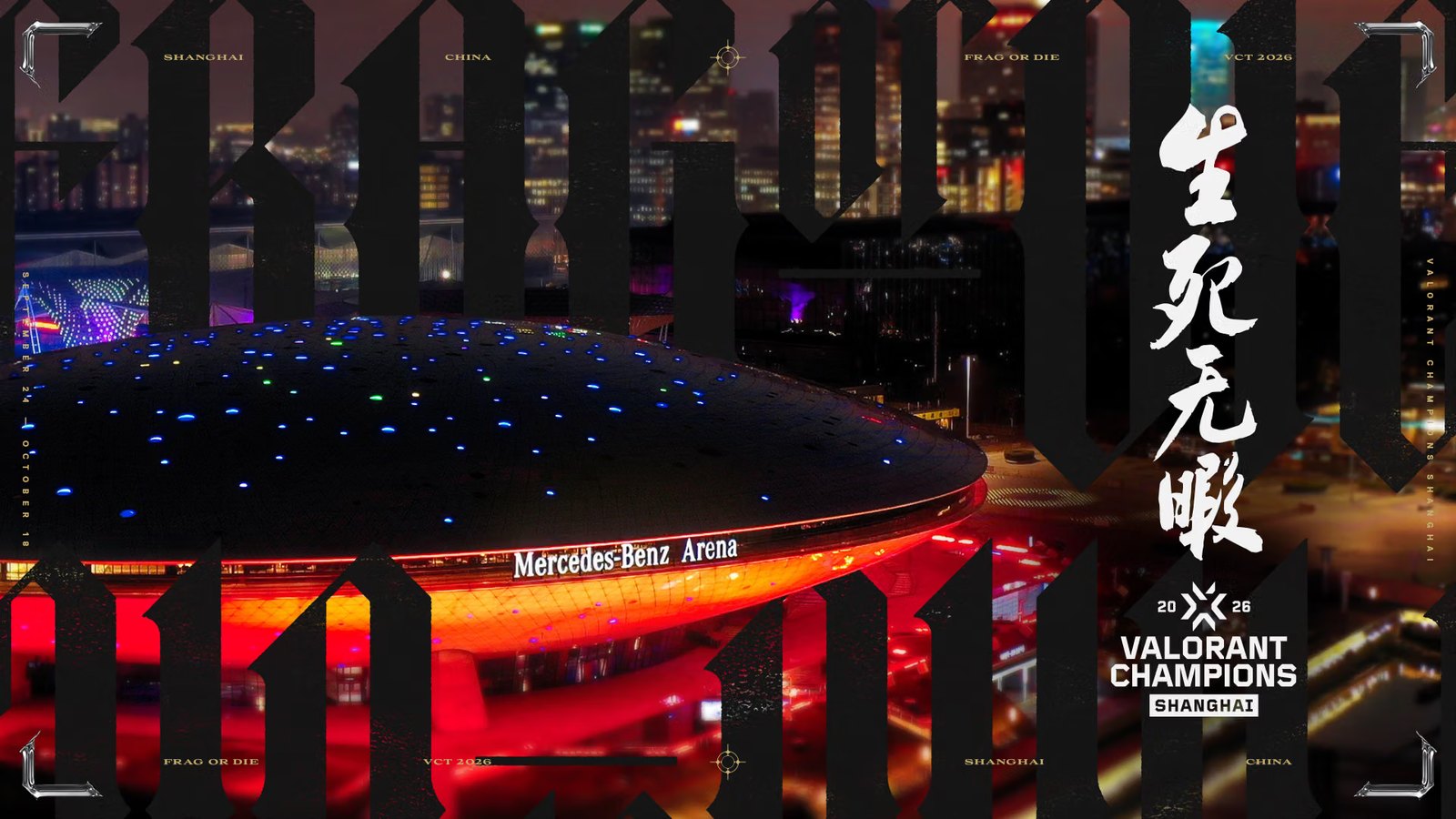
What makes the Champions Shanghai policy more significant is the scale of the tournament. Sixteen teams from VCT Americas, EMEA, Pacific and China will compete from September 24 through October 18 for the 2026 VALORANT world championship. The group stage runs through October 4 before eight teams advance into a double-elimination playoff bracket.
The qualified field includes NRG, G2, LOUD and 100 Thieves from the Americas; Vitality, FUT Esports, Team Liquid and Karmine Corp from EMEA; Paper Rex, Nongshim RedForce, Global Esports and T1 from Pacific; and JD Gaming, Xi Lai Gaming, TYLOO and EDward Gaming from China. With teams from four regions competing in front of an international audience, Riot is applying the conduct restriction at the highest level of its 2026 circuit.
The rule has already generated debate within the VALORANT community because body shooting and teabagging are often treated as relatively harmless competitive banter. Supporters of stricter conduct standards argue that international events benefit from clearly defined behavioral limits, while critics see those actions as part of the personality and rivalry that make esports entertaining. Riot’s rulebook does not attempt to distinguish between playful and hostile intent, meaning players will need to avoid the prohibited actions regardless of context.
The policy also fits into the broader discussion around player behavior in professional esports, where organizers increasingly regulate actions that go beyond mechanical gameplay. Competitive environments can already place significant psychological pressure on players, particularly at major international events, with research into elite esports competition finding substantial mental strain among professional players representing national teams. Riot’s approach in Shanghai places another formal boundary around how competitors can interact with opponents during matches.
Champions Shanghai is the final global event of the 2026 VALORANT Champions Tour season and the most important tournament on Riot’s competitive calendar. The group stage begins September 24, with the tournament concluding on October 18. Players will now enter the event knowing that familiar forms of in-game taunting, including teabagging and shooting eliminated opponents, can lead to disciplinary action.
