


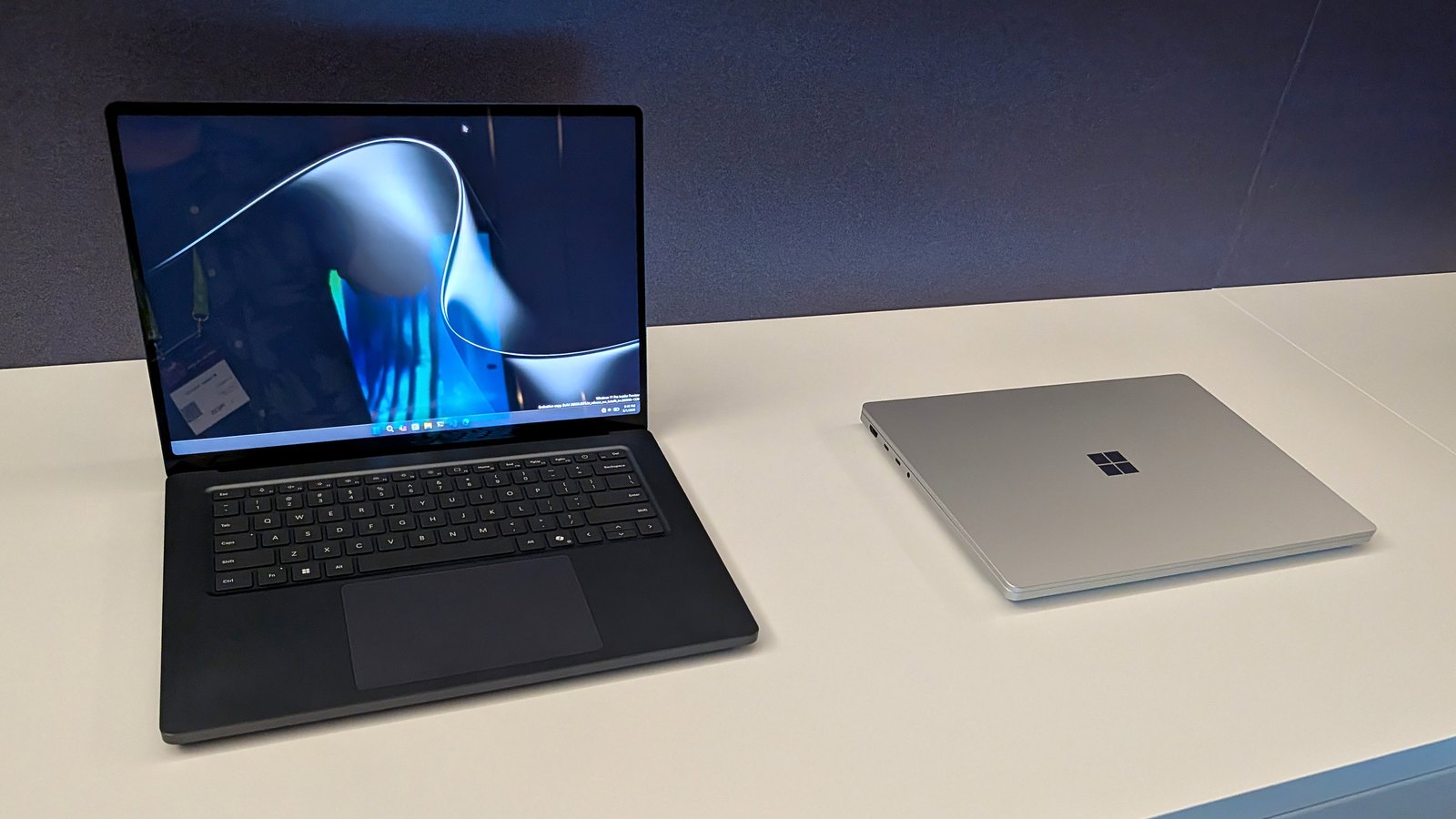
Microsoft has opened preorders for the Surface Laptop Ultra, confirming an October 16 release date and a starting price of $2,599. The new 15-inch laptop is built around NVIDIA’s RTX Spark platform and is Microsoft’s most powerful Surface Laptop to date, combining an Arm-based CPU with Blackwell RTX graphics and unified memory. Higher-end configurations scale to 128GB of memory, placing the system closer to a mobile workstation than a conventional mainstream Surface.
The base $2,599 configuration includes an 18-core CPU, 24GB of unified memory and 512GB of storage. At the other end of the lineup, Microsoft is offering a $5,899.99 configuration with a 20-core CPU, 128GB of unified memory and a 1TB SSD. Because RTX Spark uses a shared memory architecture, that memory pool can be allocated dynamically between CPU and GPU workloads instead of being split into traditional system RAM and dedicated graphics memory.
Surface Laptop Ultra pairs that hardware with a 15-inch PixelSense Ultra touchscreen capable of reaching up to 2,000 nits of peak HDR brightness. Microsoft has also equipped the machine with its largest haptic touchpad yet and a broad selection of ports, including USB-C, USB-A, HDMI, an SD card reader and a 3.5mm audio jack. The laptop is available in Platinum and Nightfall finishes, with Microsoft positioning it primarily toward developers, creators and technical professionals.
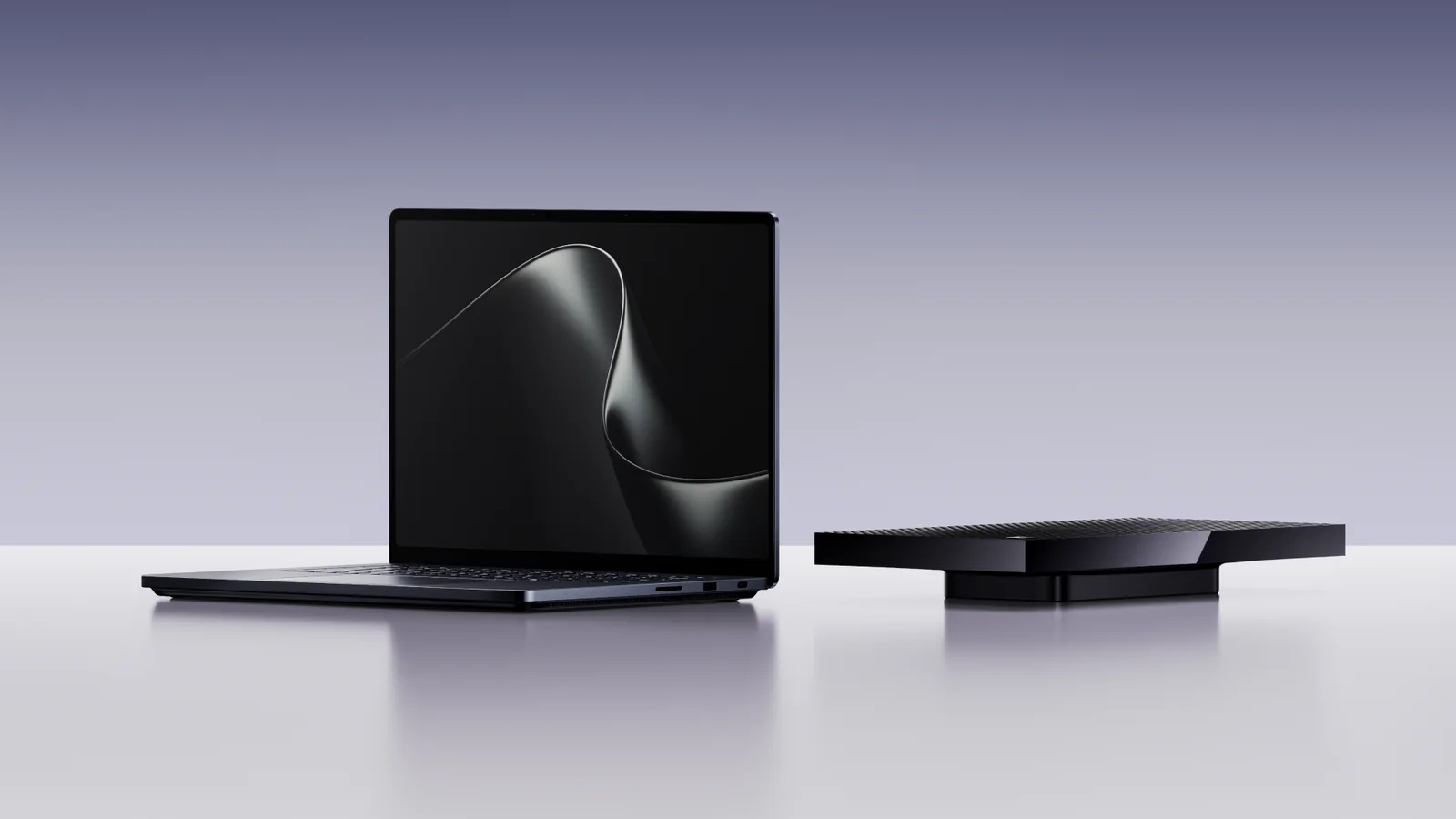
One of the more unusual additions is Microsoft’s new Magnetic Connect charging system. Rather than returning to the older proprietary Surface Connect port, the new design uses a magnetic attachment around one of the laptop’s USB-C connections. The port still supports normal USB-C functions such as data and video output, while the magnetic connector provides the quick-release behavior traditionally associated with dedicated laptop charging ports.
The Surface Laptop Ultra is part of a wider first wave of RTX Spark PCs arriving from multiple manufacturers. MSI has already detailed its own Prestige N16 Flip AI+ with RTX Spark, which starts at €3,449 in Germany and also scales to 128GB of unified memory. NVIDIA says RTX Spark systems from ASUS, Dell, HP, Lenovo, Microsoft Surface and MSI are launching as part of the platform’s initial rollout.
Gaming is not the Surface Laptop Ultra’s primary focus, but Microsoft and NVIDIA are still treating it as an RTX-capable gaming system. RTX Spark supports hardware-accelerated ray tracing, DLSS and NVIDIA Reflex, while Microsoft says the platform already works with hundreds of games. Titles highlighted as compatible with RTX Spark include Alan Wake 2, Naraka: Bladepoint, War Thunder, PRAGMATA and PUBG: Battlegrounds.
Compatibility remains one of the key questions because RTX Spark is based on Arm rather than the x86 architecture used by most existing Windows gaming PCs. Microsoft has spent much of 2026 improving Windows gaming compatibility and performance across different hardware platforms, including work such as Advanced Shader Delivery for NVIDIA RTX and Intel Arc hardware. Even so, buyers should expect game support on Surface Laptop Ultra to depend on a mixture of native Arm applications, Windows translation layers, anti-cheat compatibility and individual game support.
Microsoft originally introduced Surface Laptop Ultra earlier this year as a showcase device for NVIDIA’s new Windows PC platform. The RTX Spark chip combines an Arm CPU with a Blackwell GPU offering full CUDA support and up to one petaflop of AI compute, while Microsoft says the 128GB configuration can run AI models with up to 120 billion parameters locally. That makes the device as much a development and local-AI machine as it is a high-end creative or graphics workstation.
Preorders are now open ahead of shipments beginning October 16. The $2,599 starting price puts Surface Laptop Ultra firmly above Microsoft’s mainstream Surface range, while the nearly $5,900 flagship targets users who need unusually large amounts of unified memory and GPU-accelerated compute in a portable Windows system. For gamers, its importance may ultimately be less about becoming a mainstream gaming laptop and more about showing how far Windows on Arm and NVIDIA’s RTX stack can move into territory previously dominated by traditional x86 PCs.
