



Indie developer Easy Fox has taken out a bank loan to keep its free Steam demo running after generative AI operating costs exceeded $1,000 per day. The studio behind Teach My Little Sister How to Drive says its player count increased roughly twentyfold in a single month, creating unexpected expenses and technical problems that could force it to shut down the demo before the full game’s release.
The four-person development team discussed the situation in an October 10 interview with Japanese publication GameBusiness.jp, conducted by Game*Spark. The developers explained that their growing audience has placed considerable pressure on the cloud AI services responsible for the game’s central mechanics, creating problems that extend beyond the rising costs.
Teach My Little Sister How to Drive is an unconventional driving simulation in which players sit in the passenger seat and teach their younger sister how to drive using spoken instructions. Rather than directly controlling the vehicle, players must communicate with an AI-powered character who interprets their commands, makes driving decisions and responds conversationally.
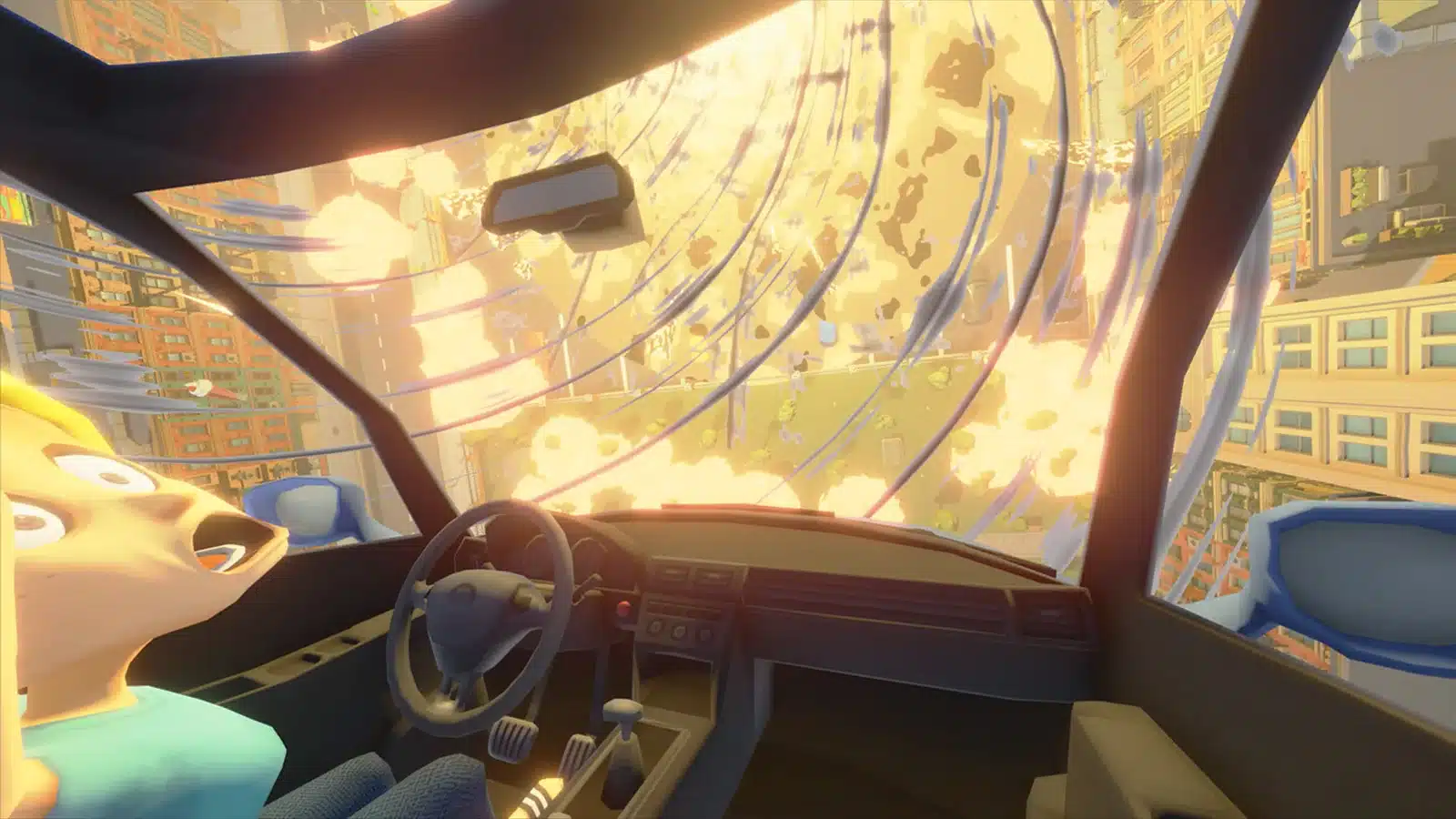
The sister does not always follow instructions correctly. Her unpredictable reactions, arguments and occasional driving mistakes are an intentional part of the experience. The game’s reliance on real-time AI conversations has helped it attract attention through gameplay videos and livestreams, particularly in Japan.
However, those interactions come with recurring operational expenses. Each conversation requires AI processing, meaning the cost of running the game increases as more players use the system.
Easy Fox confirmed that its daily AI expenses have climbed beyond $1,000, an unexpected burden for a small studio offering its demo free of charge. The team initially decided to absorb the costs to keep the game accessible, but eventually approached a bank for financing.
According to the developers, taking on debt was something the team had previously agreed to avoid. The rapid growth in players and associated infrastructure expenses ultimately forced them to reconsider that decision.
The financial pressure is only part of the problem. Easy Fox primarily developed the game’s conversational systems around Google’s Gemini 2.5 Flash, which the studio considers particularly effective at delivering quick responses while maintaining the sister’s intended personality.
As demand increased, the team encountered restrictions on the number of requests it could make to Gemini. The developers said they were unable to obtain an immediate increase in their usage limits because moving to a higher Google Cloud service tier required additional usage that the existing limits prevented.
To keep the demo operational, Easy Fox introduced automatic switching between AI providers, including OpenAI’s Realtime models. However, the fallback models have not consistently reproduced the conversational behavior the developers originally intended.
The studio explained that different AI models interpret the same character instructions differently. Some produce overly helpful responses, while others make the sister excessively talkative or less playful. These differences have affected the experience because the AI character’s personality is central to the gameplay rather than an optional feature.
Supporting multiple languages adds another complication. Easy Fox must adjust its character instructions for different AI models and languages to maintain reasonably consistent interactions across regions.
The developers are also investigating whether more AI processing could be moved directly onto players’ PCs, reducing dependence on expensive cloud services.
In the October 10 interview, Easy Fox revealed that it has already completed development of a supplementary local AI model. The original plan was to use this model alongside Gemini, allowing local processing to handle situations requiring immediate reactions while the cloud model managed more complex conversations and decisions.
That approach could help address delays during driving sequences, where waiting for a response from a remote AI service can interfere with the character’s ability to react to changing road conditions.
Fully offline gameplay presents a more difficult challenge.
Easy Fox estimates that achieving the conversational quality it wants would require a local language model with approximately eight billion parameters. According to the developer, running such a model comfortably would require a GPU with at least 8GB of VRAM.
Running the language model alongside the game’s speech-generation system could push the practical requirement to 12GB of VRAM or more. The studio considers that a significant hardware requirement for a game intended to reach a broad Steam audience.
Smaller models have also been tested, but the team has not yet found one that reliably delivers the required combination of response speed, personality and conversational quality.
The developer’s experience illustrates a challenge facing games built around cloud-based generative AI. Unlike traditional dialogue systems, where most content is prepared before release, live AI conversations can generate additional expenses throughout a game’s lifespan. Moving those systems onto local hardware could reduce server costs but introduce higher GPU requirements for players.
Despite the financial difficulties, Easy Fox intends to release Teach My Little Sister How to Drive as a conventional paid game rather than charging players separately for individual AI conversations.
The studio said it plans to incorporate expected AI operating expenses into the game’s purchase price. Players who spend unusually long periods interacting with the character would not receive additional usage charges under the proposed model, although their activity could reduce the developer’s profitability.
Easy Fox has been gathering usage information from its demo to estimate those expenses, but the recent increase in popularity has made predicting long-term costs more difficult.
The developer also acknowledged that it may have to end the free demo early if operating expenses continue exceeding its available budget. No definite shutdown date has been announced.
The full version of Teach My Little Sister How to Drive is currently scheduled for January 2027 on Steam. Easy Fox says maintaining that release window has become increasingly important because the studio cannot indefinitely sustain its present spending.
The developers are continuing to investigate alternative AI services and local processing options while preparing additional gameplay systems for the full release. These include more complicated driving environments involving ordinary roads, highways and traffic, where traditional game systems will work alongside the AI-controlled character.
For now, the studio’s immediate challenge is balancing player demand against the cost and reliability of the AI technology that makes its game possible.
