


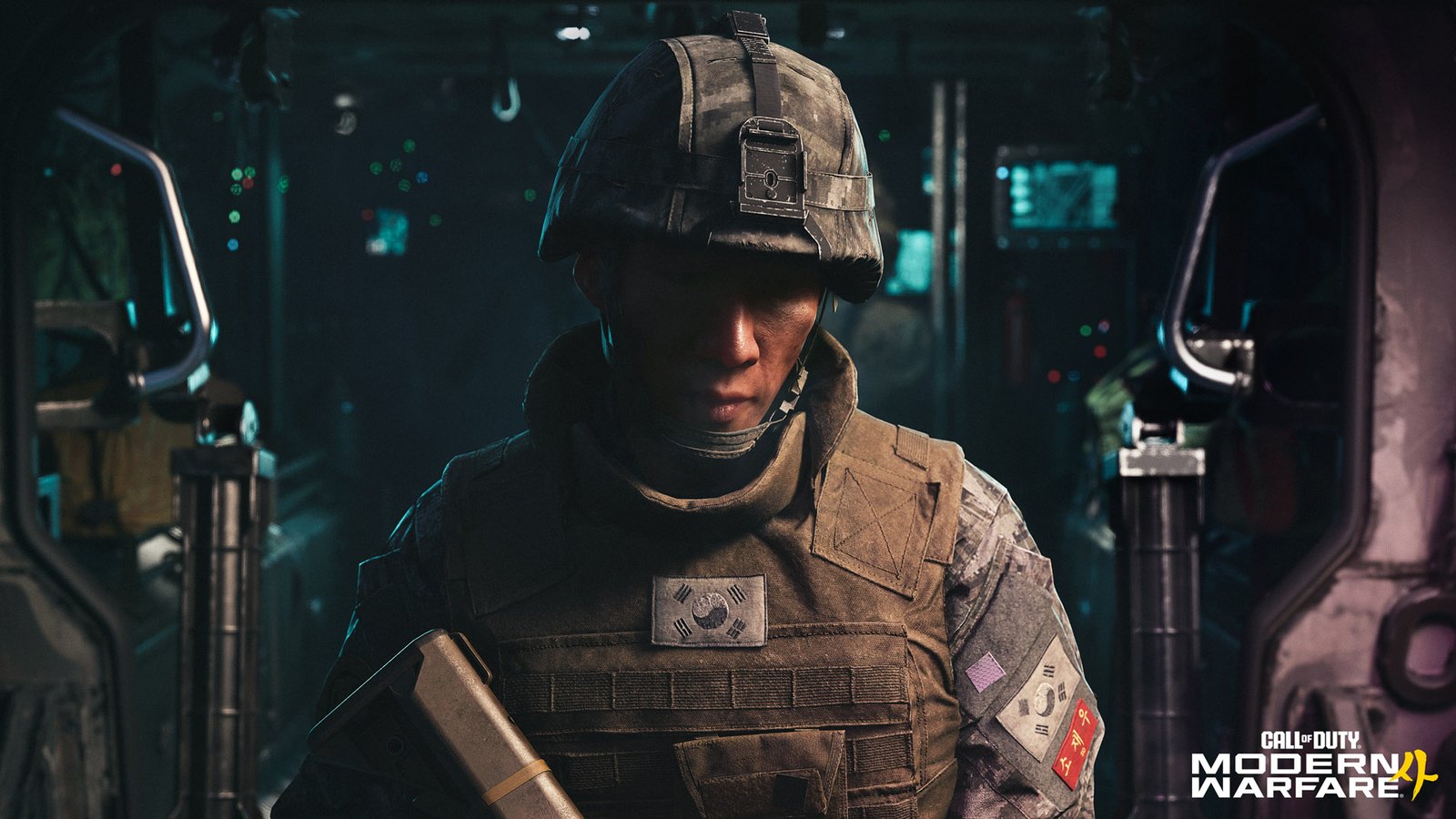
Call of Duty: Modern Warfare 4 delivers strong PC graphics performance across AMD Radeon, Nvidia GeForce and Intel Arc GPUs, but an unusual ray tracing implementation gives AMD’s Radeon RX 9000 series a significant image quality advantage. New independent benchmarks published by ComputerBase on October 19, 2026, reveal that the game supports AMD’s FSR Ray Regeneration while omitting Nvidia’s competing DLSS Ray Reconstruction technology.
The findings come from ComputerBase’s original graphics analysis, which examines GPU performance, ray tracing, upscaling and image quality across multiple resolutions. Although Modern Warfare 4 supports modern graphics technologies from all three major GPU manufacturers, its ray tracing denoising restrictions prevent Nvidia and Intel users from combining certain features that work together on AMD’s RDNA 4 graphics cards.
The most significant issue involves the game’s built-in ray tracing denoiser, which reduces visual noise in ray-traced lighting, shadows and reflections. While this denoiser works across supported graphics cards, it cannot operate alongside DLSS 4.5, FSR 4.1 or XeSS Super Resolution.
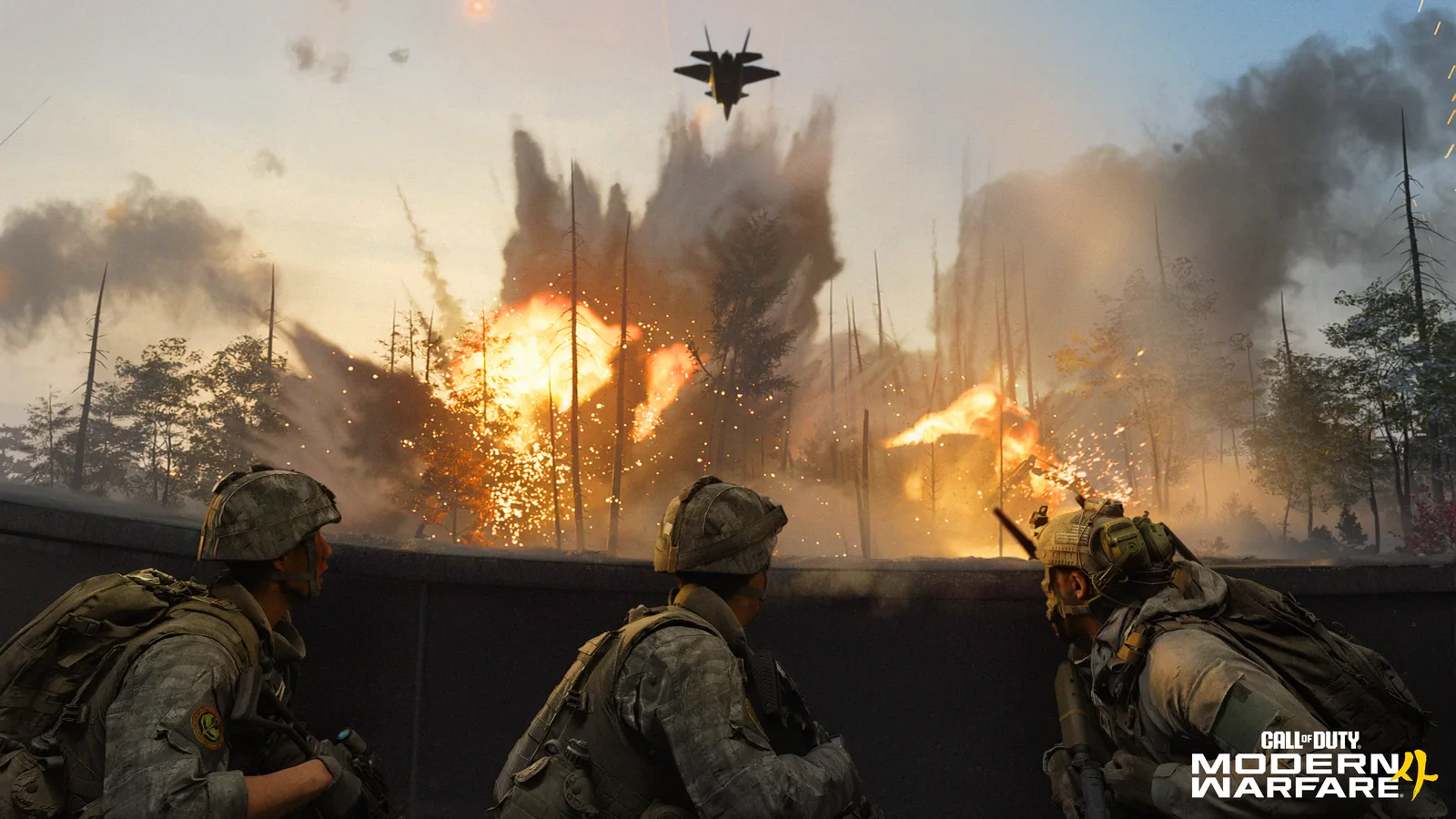
Instead, players using the built-in denoiser must rely on the game’s Filmic SMAA T2X solution. ComputerBase found that this provides acceptable image quality at native resolution but performs considerably worse than modern upscaling technologies when rendering below the display’s native resolution.
Radeon RX 9000 graphics cards avoid this limitation through AMD’s FSR Ray Regeneration 1.1, an AI-powered denoising technology available on RDNA 4 hardware. It can operate alongside FSR 4.1 Super Resolution, allowing players to combine higher-quality ray tracing denoising with modern image reconstruction.
Nvidia’s DLSS Ray Reconstruction is notably absent, despite being supported by Call of Duty: Black Ops 7. Consequently, ComputerBase concluded that Radeon RX 9000 cards deliver the best ray-traced image quality in Modern Warfare 4 under the tested configurations.
This distinction concerns image quality and feature compatibility rather than establishing that Radeon hardware is universally faster than GeForce GPUs. Performance still depends on the graphics card, resolution and selected settings.
The benchmarks also provide useful guidance for players targeting approximately 60 FPS. With DLSS or FSR enabled, ComputerBase identified several GPU classes capable of reaching that performance target at different resolutions.
At 2560 × 1440, suitable cards include Nvidia’s GeForce RTX 5060 and RTX 4060 Ti, alongside AMD’s Radeon RX 9060 XT and RX 7700 XT.
For ultrawide 3440 × 1440 gaming, the identified options include the GeForce RTX 5070 and RTX 4070, as well as the Radeon RX 9060 XT and RX 7700 XT.
Moving to 3840 × 2160 increases the hardware requirements. ComputerBase lists the GeForce RTX 5070 Ti, RTX 4070 Ti, Radeon RX 9070 GRE and RX 7900 XT among the cards meeting its approximately 60 FPS benchmark threshold with upscaling.
These recommendations reflect the publication’s tested configurations rather than guaranteed frame rates in every mission or multiplayer scenario. The results also should not be interpreted as equivalent native-resolution performance.
Modern Warfare 4 introduces a broader ray tracing implementation than Black Ops 7. The new game supports ray-traced global illumination, reflections, shadows and ambient occlusion, with these effects available in the campaign, multiplayer and DMZ modes.
The expanded implementation can noticeably improve interior environments and lighting, although ComputerBase also identified inconsistent visual quality in certain outdoor scenes and aggressive level-of-detail transitions.
Beyond ray tracing, the PC version includes DLSS 4.5, FSR Upscaling 4.1 and Intel XeSS Super Resolution. Nvidia users can access DLSS Multi Frame Generation, including a 6× mode, while AMD users receive FSR 4 Frame Generation.
Nvidia Reflex and AMD Anti-Lag 2 are also supported, but Intel XeSS Frame Generation and XeLL are absent.
These capabilities complement Nvidia’s recent GeForce 617.42 driver update, which introduced game support ahead of Modern Warfare 4’s full release.
ComputerBase’s analysis also confirms that the game provides individual graphics settings, multiple quality presets, an integrated benchmark, an FPS counter and a VRAM usage display. These options allow players to measure performance and adjust visual settings for their hardware.
The benchmark results arrive during the game’s staggered launch. Modern Warfare 4’s campaign became available on October 16, while the DMZ early access period begins October 20 for eligible digital preorders. The complete game, including multiplayer, launches October 23, 2026.
For PC players, the central limitation is the interaction between ray tracing and upscaling. Modern Warfare 4 offers an extensive graphics feature set, but Radeon RX 9000 owners currently have an advantage when combining AI-based ray tracing denoising with modern upscaling. Nvidia and Intel users can still enable ray tracing, although the available denoising and upscaling combinations restrict how those effects can be presented.
