


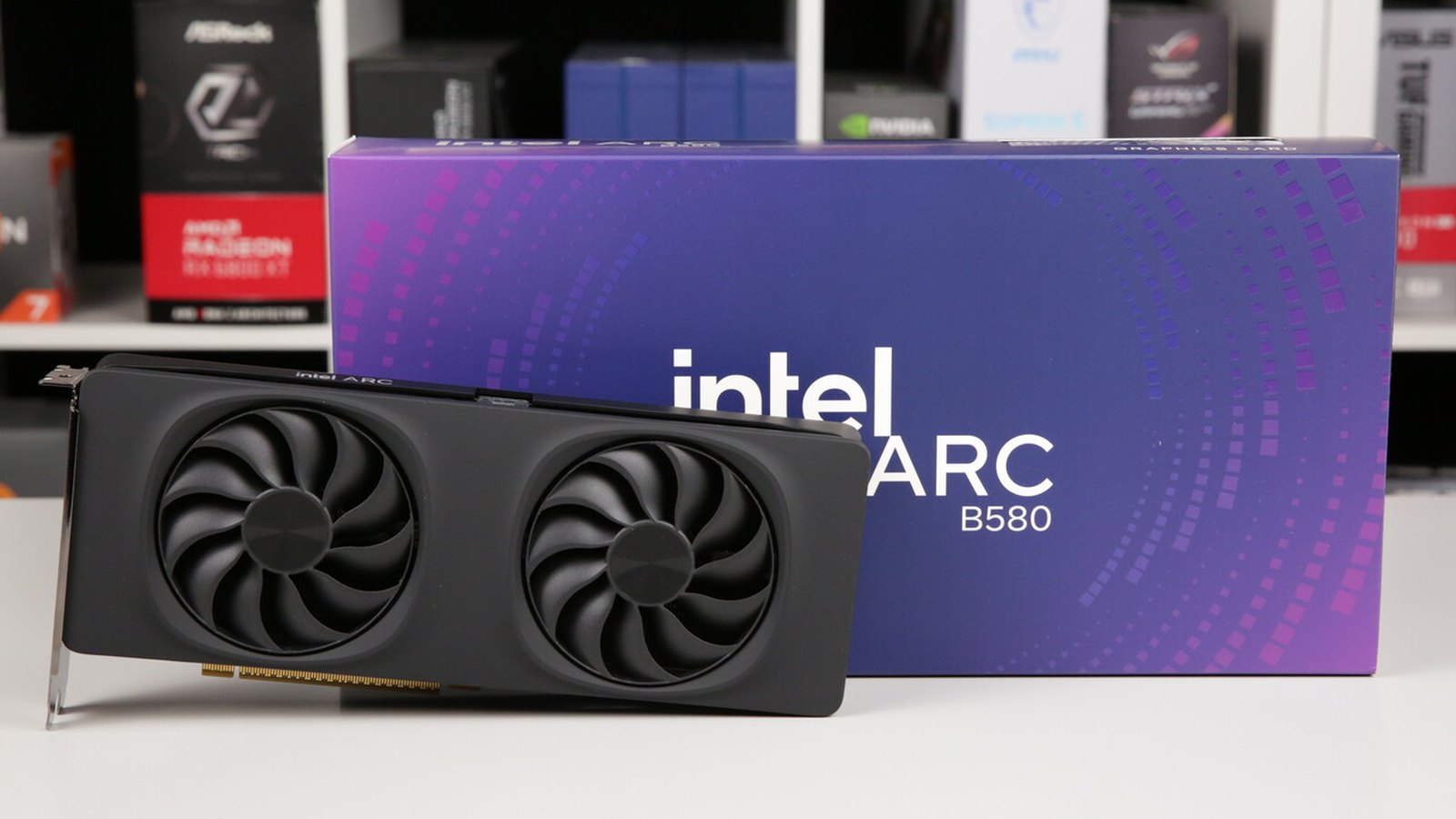
AMD’s FSR 4.1.2 upscaling technology has been modified to run on Intel Arc graphics cards using their dedicated XMX acceleration hardware. The unofficial implementation, developed through the OptiScaler modding community, allows Intel GPUs to execute AMD’s AI-based upscaling models without relying entirely on the slower DP4a processing path. Early community benchmarks show that the lightweight FSR 4.1.2 model can achieve processing times nearly identical to Intel’s native XeSS Super Resolution technology.
The development became public through a Reddit post shared on October 21 by user DarkerThanLpDark, who demonstrated the modified upscaler running on an Intel Arc B580. The tester explained that the modification had been released through the OptiScaler Discord community and published performance comparisons using Clair Obscur: Expedition 33.
The modification uses Intel’s Xe Matrix Extensions (XMX), dedicated hardware designed to accelerate AI and matrix calculations. Normally, running AMD’s newer neural upscaling models on unsupported graphics hardware can require alternative execution paths using DP4a instructions. While these provide broader hardware compatibility, they can introduce substantially higher processing overhead.
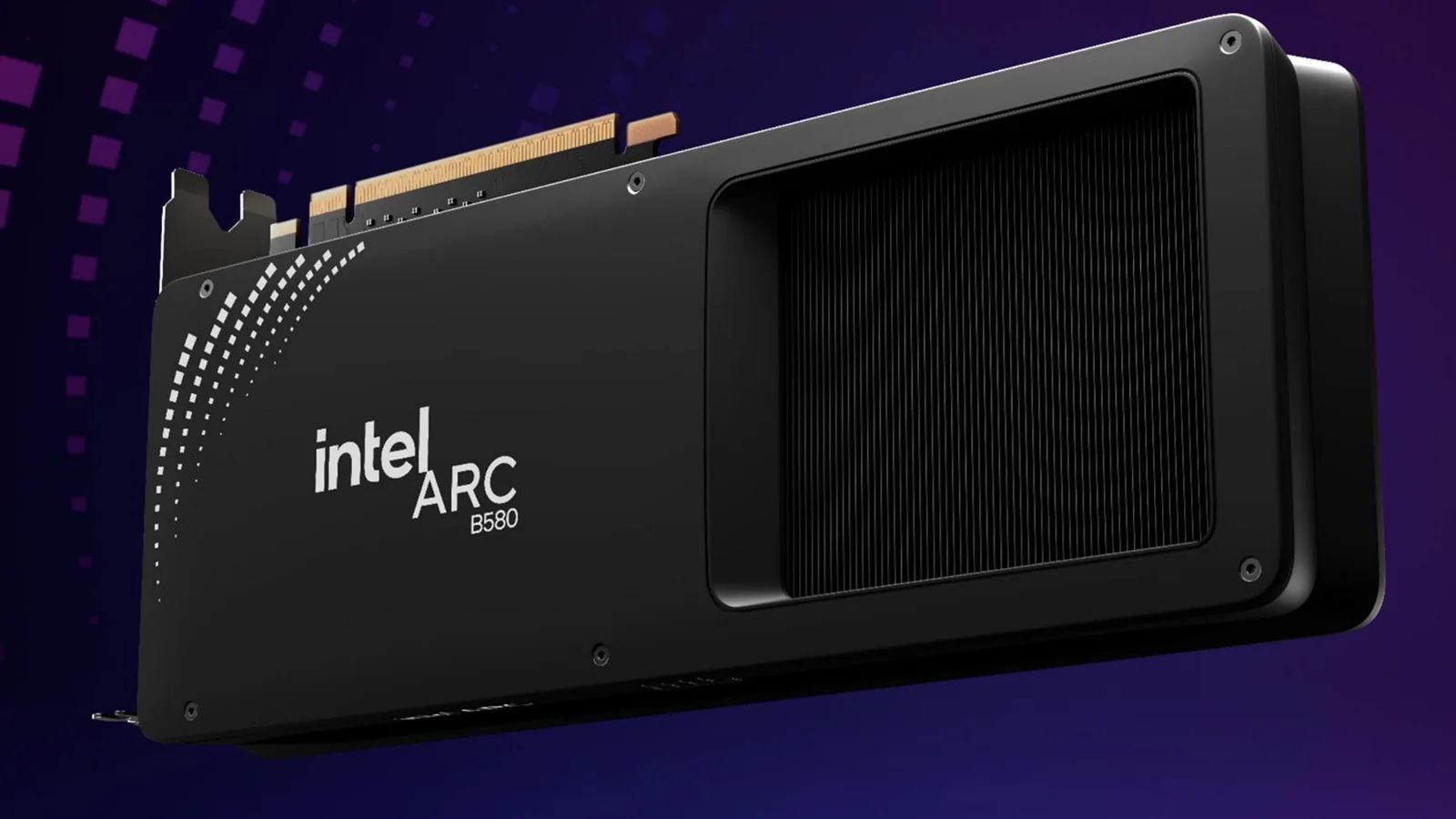
By adapting the FSR 4 INT8 implementation to use XMX acceleration, the community modification takes advantage of hardware already present in Intel’s Arc GPUs. This is particularly relevant for Arc owners who want access to newer upscaling technologies in games without native support for their preferred solution.
In testing conducted by DarkerThanLpDark, the Arc B580 ran Clair Obscur: Expedition 33 at 1080p using the Balanced upscaling preset. FSR 4.1.2 Lite recorded an upscaling processing time of 0.59 milliseconds, compared with 0.58 milliseconds for Intel XeSS Super Resolution.
The full FSR 4.1.2 model required approximately 0.85 milliseconds, while the older FSR 4.0.2 implementation recorded around 0.87 milliseconds. These results suggest that the lightweight model provides a substantial reduction in upscaling overhead while operating close to the speed of Intel’s native solution.
Additional community testing on an Intel Arc A770 produced similar results. In The Witcher 3, tested at 1080p using the Quality preset, FSR 4.1.2 Lite achieved an average of 101.5 FPS with an upscaling time of 0.75 milliseconds. Intel XeSS recorded 101.1 FPS and 0.84 milliseconds under the same reported conditions.
The full FSR 4.1.2 model delivered 98.6 FPS in that comparison, with an upscaling time of 1.11 milliseconds. Although these figures are encouraging, they represent individual community tests rather than comprehensive benchmarks across multiple games and hardware configurations.
The reported performance is also specific to the tested upscaling workloads. Nearly identical processing times do not necessarily mean identical overall game performance, image quality or stability.
DarkerThanLpDark described the modified FSR implementation as producing better image quality than XeSS and suggested that the Lite version retained much of the full model’s visual quality. However, these assessments remain subjective, and no comprehensive independent image-quality comparison has established a consistent advantage for either technology.
OptiScaler is an open-source project that enables users to substitute and experiment with different upscaling technologies across GPU brands. Similar cross-vendor modifications have already brought Nvidia's DLSS technology to AMD Radeon graphics cards, demonstrating growing community interest in running GPU-specific rendering features beyond their officially supported hardware.
The latest Intel Arc implementation remains experimental. It requires OptiScaler and modified FSR components rather than a standard Intel driver update or an official AMD installation. Compatibility is not guaranteed across games, and the available demonstrations do not establish support for every Intel Arc GPU.
The modification is also separate from AMD’s official FSR 4.1 expansion to Xbox gaming hardware, which involves supported platforms rather than community adaptations for competing graphics architectures.
For Intel Arc users, the immediate benefit is another potential AI upscaling option that can make use of the GPU’s dedicated acceleration hardware. The early B580 and A770 results demonstrate that FSR 4.1.2 Lite can operate competitively with XeSS in specific games, although broader testing will be needed to establish its practical compatibility, visual quality and performance across different titles.
