


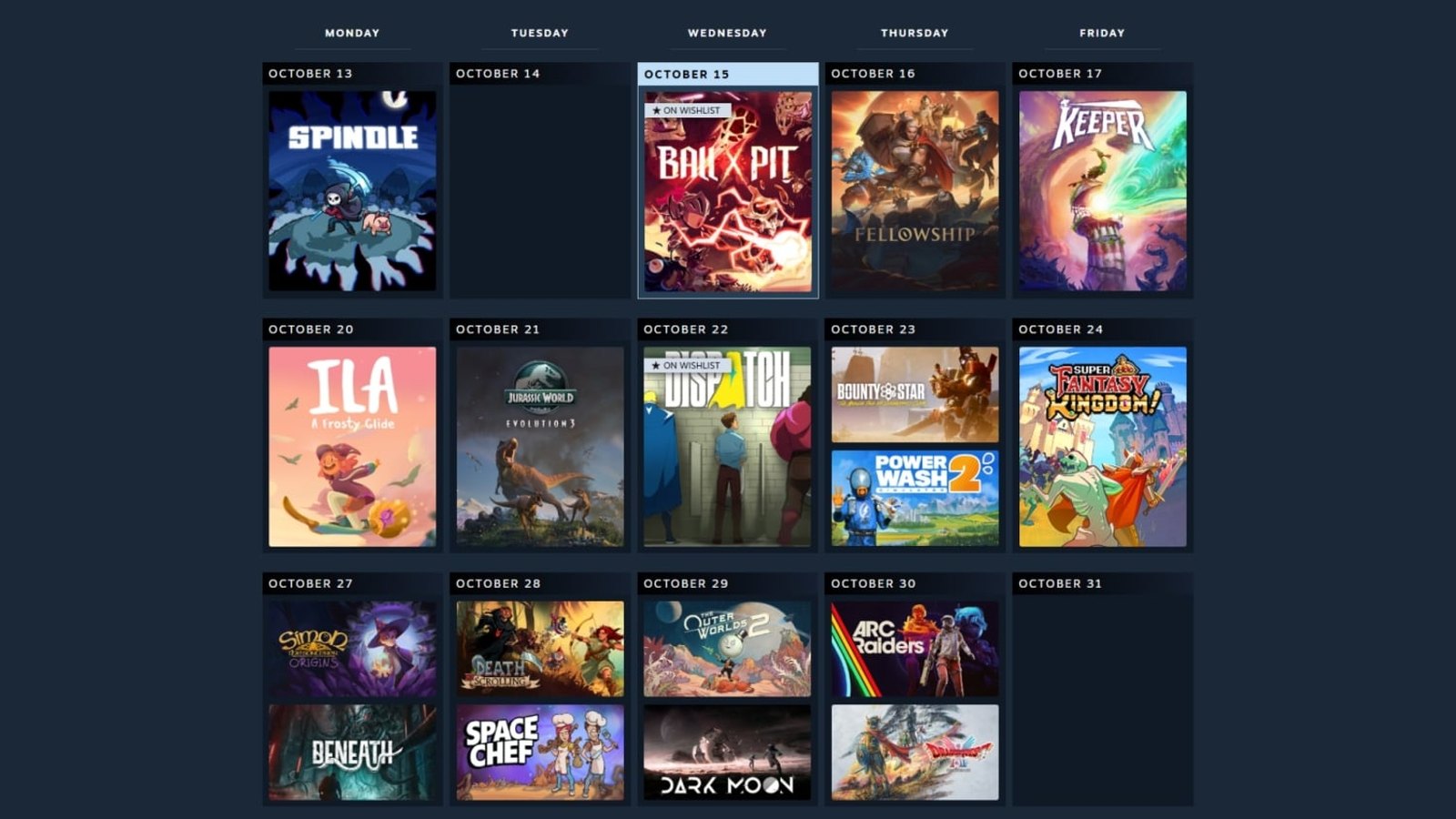
Valve has acknowledged concerns about low-quality and AI-generated games appearing in Steam Next Fest, but the company believes improving game discovery is a better approach than restricting which developers can participate.
During the Steam Indie Connect event in Seoul on October 27, 2026, Valve representatives Tom Giardino and Marc Wilkinson discussed how Steam recommends games, why some questionable submissions receive early visibility, and how the platform handles its growing catalog.
Wilkinson explained that Steam Next Fest initially displays participating games in a largely randomized order before shifting toward personalized recommendations based on player activity. Valve recognizes that this approach can temporarily expose users to low-quality games, but considers the initial discovery period important for giving smaller developers an opportunity to be seen.
The explanation is consistent with Valve’s official Steamworks documentation, which states that most Next Fest sections begin with randomized placement, excluding explicitly curated lists and personalized areas.
After the first few days, Steam adjusts recommendations using activity collected during the event. These personalized selections help players discover games based on the interests and behavior of users with similar preferences.
Wilkinson said the randomized opening period serves two purposes: preventing developers from manipulating early visibility and giving participating games an opportunity to attract attention before the recommendation system becomes more selective.
He acknowledged the drawback, saying Valve was “fully aware” that some low-quality games receive exposure as a result.
The growing number of submissions makes that balance increasingly difficult. Giardino recalled that approximately three years ago, Valve was encouraging developers to join Steam Next Fest when participation was limited to around 50 to 100 games. Today, the event attracts thousands of titles.
The October 2026 edition ran from October 19 through October 26, with Valve subsequently highlighting the 50 most-played demos from the event.
Despite concerns about AI-generated submissions, Valve has not announced a new system for excluding such games from Steam Next Fest.
Giardino explained that the company does not want to dictate which development tools studios can use, including generative AI. Instead, Valve prefers improving how players discover games and allowing developers to compete through the quality of their work.
He drew comparisons with earlier debates surrounding Steam Greenlight and Steam Direct, when developers and players also questioned whether the platform should introduce stronger barriers to publishing.
Valve’s preferred response has been to improve discovery rather than decide in advance which games deserve visibility.
The discussion also addressed concerns about developers having their games copied using generative AI. Giardino encouraged studios to focus on maintaining player communities and regularly improving their games, arguing that an established relationship with players offers advantages that copied mechanics alone cannot reproduce.
For indie developers, Valve’s explanation highlights why early Steam Next Fest visibility does not necessarily translate into sustained promotion. A demo may receive initial exposure through randomized placement, while later recommendations increasingly depend on how players interact with participating games.
The distinction also helps explain why a large wishlist count does not automatically guarantee prominent placement throughout the event. Wishlists remain useful for tracking interest and notifying prospective buyers, but Steam’s personalized discovery systems also consider player behavior.
Valve has continued expanding its recommendation tools outside Next Fest. Its recently launched Steam Personal Calendar uses personalized recommendations to highlight upcoming releases that may interest individual players.
For now, Valve’s position is to keep Steam broadly accessible to developers while refining the systems that help players find worthwhile games. The company acknowledged that its current approach is imperfect, but did not announce a specific new AI-content filter or a timetable for changes to Next Fest discovery.
