


The Legend of Zelda: Ocarina of Time’s Nintendo Switch 2 remake is already running on Windows PCs through an experimental project called Hookshot, approximately two days after the game’s November 5, 2026 launch. Developed by NotRexed, the open-source project uses static recompilation to turn the game’s ARM64 code into a native PC application without relying on a conventional Nintendo Switch 2 emulator.
The developer has published Hookshot’s source code and building tools on GitHub, alongside documentation explaining the technology and its current limitations. Early testing confirms that players can enter Kokiri Forest, move around, use controllers, hear game audio and save their progress. However, most of the game remains untested, and the project is not yet a verified, fully playable PC port.
Nintendo officially released the remake exclusively for Switch 2 on November 5. The new version of the 1998 Nintendo 64 classic features substantially redesigned visuals, modernized movement and camera controls, voiced cutscenes and orchestral music. The game’s Switch 2 performance analysis also examined its 60 FPS target, rendering resolutions and upscaling implementation.
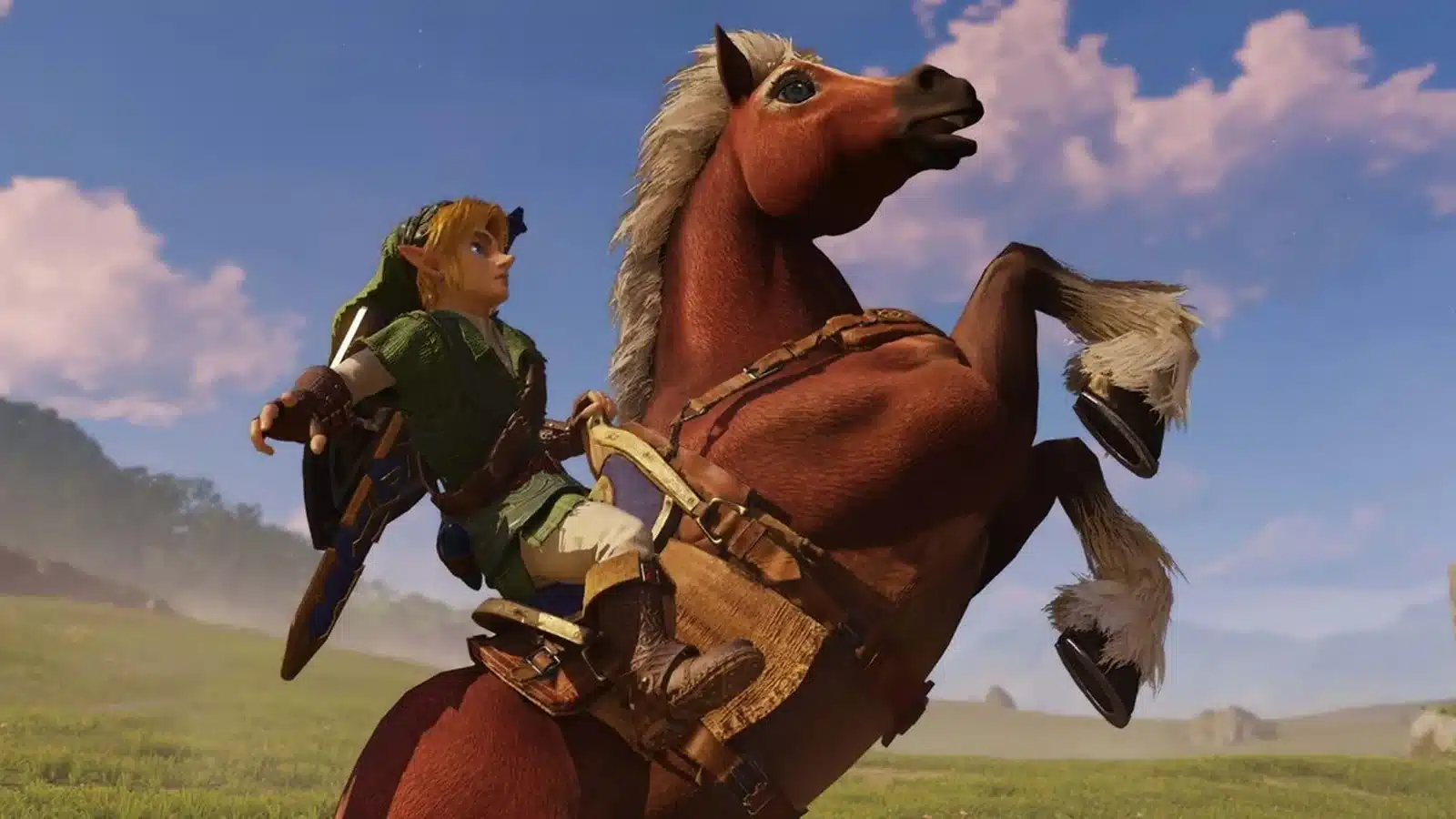
Hookshot takes a different approach from conventional console emulation. Instead of continuously interpreting or translating the console’s processor instructions during gameplay, the project converts the game’s ARM64 machine code into C ahead of time and compiles the resulting code into a native x86-64 Windows application.
The project also implements the necessary console system services and converts Nintendo’s NVN2 graphics commands into Vulkan operations. Its graphics pipeline translates Switch 2 shader instructions into a format compatible with PC graphics hardware.
This approach allows Hookshot to run the game without a complete Switch 2 emulator, although the native application still requires substantial compatibility work to reproduce the original console’s behavior.
NotRexed has previously worked on similar projects involving Tears of the Kingdom and Mario Kart World. Hookshot builds on that development experience, including technology for translating Switch 2 graphics workloads.
The project’s published testing results come from a single Windows PC equipped with an AMD Ryzen 5 7600X processor and an Nvidia GeForce RTX 4060 Ti with 16 GB of VRAM.
According to NotRexed, Hookshot currently achieves approximately 50 FPS while walking around Kokiri Forest without frame generation. The developer has not yet demonstrated consistent native 60 FPS performance, and occasional stuttering remains when entering new areas.
Several additional graphics features are already available through an in-game configuration menu. These include adjustable rendering resolution, ultrawide display support, image upscaling and frame generation with 2x, 3x or 4x output options.
Frame generation can increase the number of displayed frames, but it does not increase the game’s underlying simulation rate. The developer also notes that ultrawide mode currently stretches interface elements and can produce a softer image.
Compatibility remains limited. Hyrule Field and other major areas have not undergone comprehensive testing, while AMD and Intel graphics cards have not yet been evaluated. This means the current results cannot establish how reliably the entire game performs across different PC configurations.
Hookshot is available as an experimental open-source project rather than a downloadable, ready-to-play copy of Ocarina of Time. Its repository does not distribute Nintendo’s game files, encryption keys or a precompiled game executable.
Instead, users must provide their own game files and build the Windows application locally using Hookshot Builder. The developer lists Windows 10 or 11, at least 16 GB of system memory and a graphics card supporting Vulkan 1.3 and mesh shaders among the requirements. Approximately 60 GB of free storage is recommended during compilation.
Using personally obtained game files does not automatically resolve every copyright or anti-circumvention question, and the project’s availability does not constitute an official Nintendo PC release.
Hookshot also represents a different development approach from conventional Switch 2 emulation efforts such as Eglantine's experimental Mario Kart World compatibility. While an emulator attempts to reproduce a console environment capable of running compatible software, Hookshot targets a specific game through ahead-of-time code conversion and a custom runtime.
Separately, developer Joe Jiang has demonstrated an early attempt to run the Switch 2 remake on an iPhone. Jiang described memory limitations as a major obstacle and reported reducing peak memory usage during scene loading to approximately 3.4 GB. Footage shows Kokiri Forest running on the device, but sustained performance and broader playability have not been established.
For Windows users, Hookshot currently demonstrates that portions of Nintendo’s newly released remake can execute through native recompilation shortly after launch. Whether the project can deliver stable performance and complete-game compatibility remains uncertain, with further testing and development still required.
