


The Legend of Zelda: Ocarina of Time remake maintains a consistent 60 frames per second on Nintendo Switch 2, according to a new technical analysis from Digital Foundry. The game reportedly renders between 1080p and 1440p in docked mode, while handheld resolution ranges from 720p to 1080p, with some graphical compromises to maintain performance.
Digital Foundry’s John Linneman examined the remake ahead of its November 5, 2026, release, evaluating image quality, rendering resolution, graphical effects and frame-rate stability. The November 4 analysis provides a more detailed assessment of the game’s technical performance than the earlier examination of its Nintendo Direct trailer.
The most significant finding concerns frame-rate consistency. Digital Foundry reports that Ocarina of Time maintains its 60 FPS target throughout gameplay, with only occasional minor interruptions associated with loading. These brief hiccups do not appear to undermine the game’s overall performance stability.
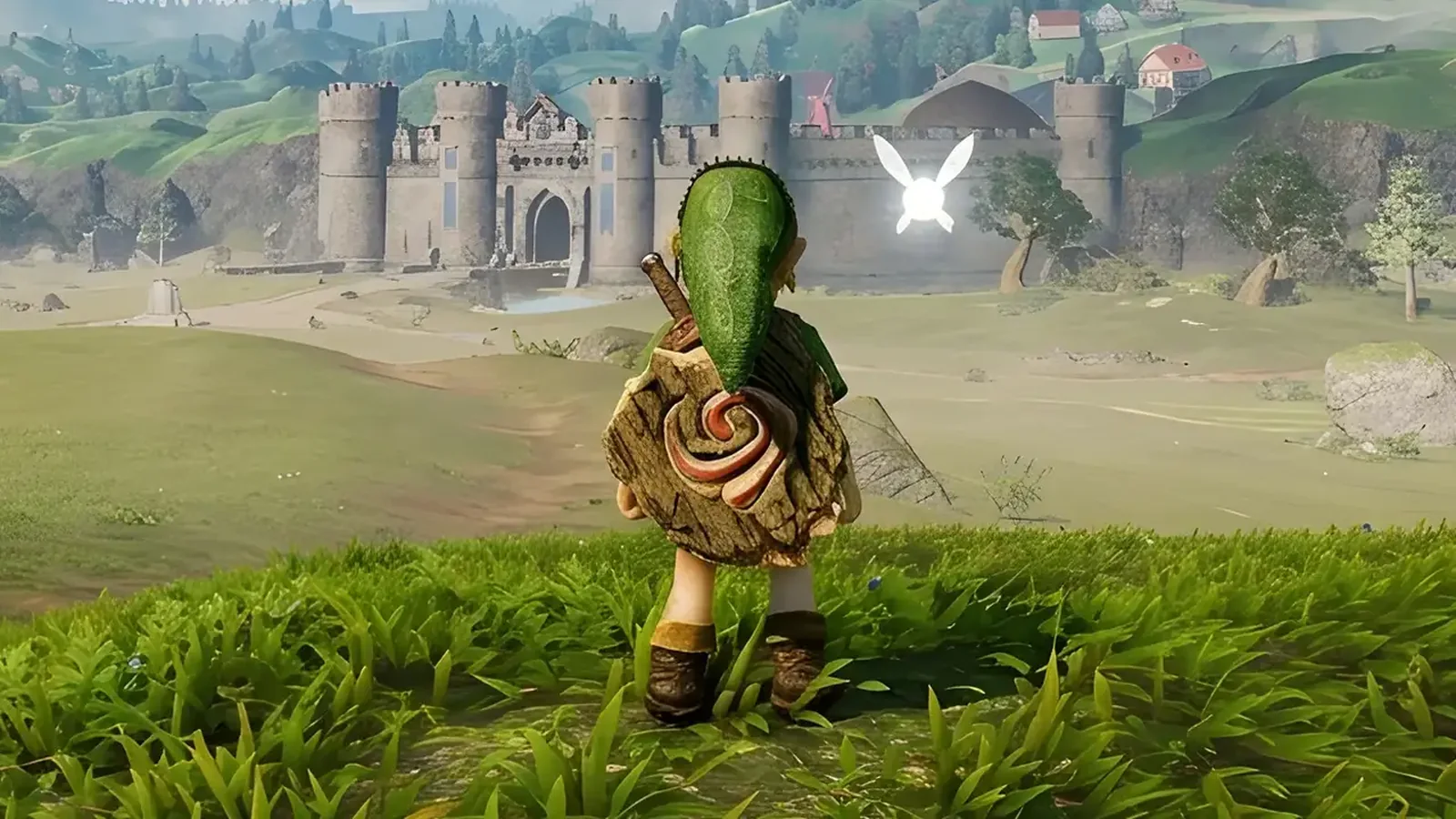
That represents a substantial improvement over previous versions of Ocarina of Time. The original Nintendo 64 release operated at approximately 20 FPS, while the Nintendo 3DS remake increased the frame rate to 30 FPS. The Switch 2 version doubles the 3DS remake’s target, providing smoother movement, camera transitions and animation.
Resolution varies depending on whether the console is docked or used as a handheld. Digital Foundry’s measurements indicate that docked gameplay operates between 1080p and 1440p rather than maintaining a fixed rendering resolution.
In handheld mode, the reported range drops to 720p–1080p. Nintendo has also made adjustments to texture quality and level-of-detail distances, reducing the complexity of some visuals when the game runs on the console’s portable hardware.
These changes mean that distant environmental details and certain textures receive less demanding treatment in handheld mode. Nevertheless, Digital Foundry’s assessment indicates that the portable presentation remains sharp despite those reductions.
Image reconstruction is another area where the remake shows limitations. Digital Foundry believes Nintendo is using an AMD FidelityFX Super Resolution (FSR)-based approach rather than NVIDIA’s Deep Learning Super Sampling (DLSS) technology.
The apparent absence of DLSS is notable because the Switch 2 supports NVIDIA’s image-upscaling technology. However, Nintendo has not publicly confirmed the precise upscaling implementation used throughout Ocarina of Time, so Digital Foundry’s identification should be treated as a technical assessment rather than an official specification.
The game’s image quality also exhibits some visible shimmering, particularly around fine environmental details. Such artifacts can become noticeable when foliage and other intricate objects move across the screen.
Despite these imperfections, Digital Foundry highlights several improvements to the remake’s visual presentation. Environmental fog contributes to the atmosphere of Hyrule’s locations, while lighting effects, including the lava illumination inside the Fire Temple, demonstrate the graphical overhaul.
The technical findings complement the remake’s strong early critical reception, with the game receiving a reported Metacritic score of 96 from 42 reviews ahead of launch.
Nintendo has also modernized several aspects of the original adventure, including free jumping, voiced cutscenes and changes to the Water Temple. These gameplay improvements accompany the visual reconstruction and higher frame-rate target.
For players deciding between docked and handheld play, Digital Foundry’s analysis suggests that the main differences concern resolution, texture fidelity and distant environmental detail rather than frame-rate stability. Both configurations aim to deliver the same 60 FPS experience, although docked mode provides the higher-quality presentation.
The Legend of Zelda: Ocarina of Time launches exclusively for Nintendo Switch 2 on November 5, 2026.
