


Valve has introduced a new Steam Store feature that lets players check the average FPS achieved by Steam Deck users before purchasing a game. The update, announced on November 9, 2026, adds real-world performance measurements and expandable frame-rate distribution graphs for thousands of titles, covering both Steam Deck LCD and OLED models.
Previously, Valve’s Steam Deck compatibility ratings primarily indicated whether a game could run on the handheld and whether it met requirements involving controls, display readability and other compatibility factors. The new performance data gives players additional information about how smoothly a game runs in practice.
According to Valve’s official Steam announcement, the feature uses anonymized frame-rate data collected from Steam Deck owners who have opted in to sharing performance information. Rather than relying on individual benchmark results, the displayed averages reflect measurements gathered from participating players.
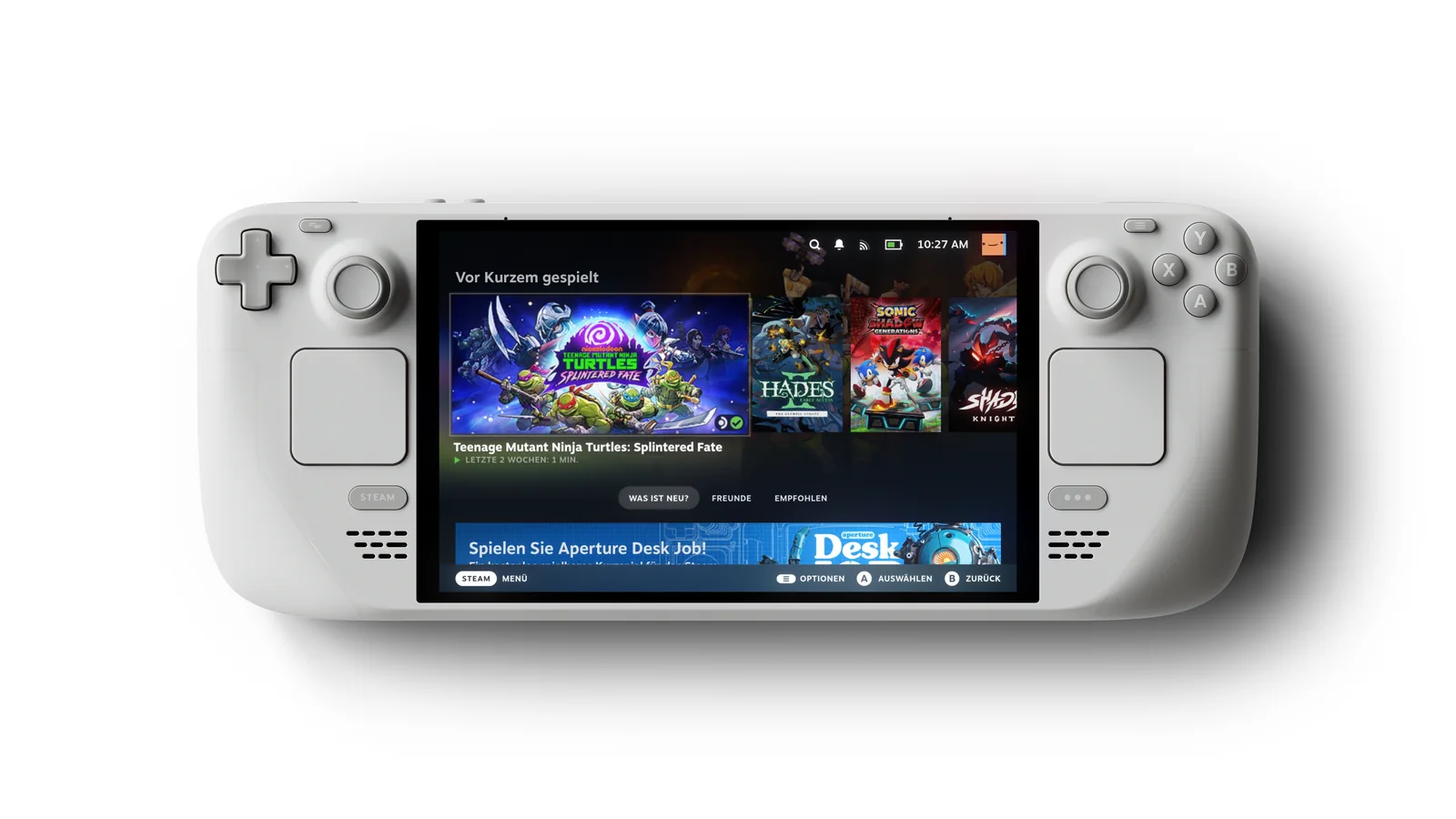
The information is available for games that have undergone Steam Deck compatibility testing, including titles classified as Verified, Playable and Unsupported. Valve says thousands of games already have sufficient data, with more expected to receive performance information as additional measurements are collected.
To access the figures, players can open a game’s Steam Store page, navigate to the Steam Deck Compatibility section and select “Learn more.” The same performance information is also available directly through users’ game libraries when running the Steam Client Beta.
The feature provides another way to evaluate games alongside Valve’s existing compatibility system. For example, players considering a title that recently received Steam Deck Verified status can use available frame-rate measurements to better understand its performance beyond basic compatibility.
Valve has also introduced an expandable histogram showing the percentage of performance samples recorded at different frame rates. Unlike a single average FPS figure, the graph provides a more detailed picture of how consistently a game performs.
The histogram can reveal performance fluctuations, including occasional stuttering or brief frame-rate drops that might otherwise be hidden by an average. Smaller columns at lower FPS values can indicate instances where players experienced hitches during gameplay.
Valve explained that some frame-rate distributions may contain noticeable gaps between values such as 90 FPS and 45 FPS, particularly on Steam Deck OLED.
These gaps can result from vertical synchronization, or VSync, rather than necessarily indicating a straightforward hardware performance limitation. On a 90Hz display, a game that cannot consistently deliver frames at the display’s refresh rate may alternate between presenting frames at 90 FPS and 45 FPS.
For example, Valve illustrated how a sequence alternating between those values can produce an average of 75 FPS, even though the individual frame-rate samples cluster around 90 and 45 rather than 75.
To improve consistency, Valve filters its collected measurements to include only Steam Deck systems using their default frame-rate limits. That means a 60 FPS limit for Steam Deck LCD and a 90 FPS limit for Steam Deck OLED.
However, the company acknowledges that its calculations do not account for players changing graphics settings inside individual games. Differences in resolution scaling, visual quality presets and other in-game options may therefore influence the recorded averages.
Valve says its collected data nevertheless tends to cluster within relatively narrow performance ranges.
The company also requires a minimum amount of anonymous performance data before displaying a game’s average FPS and histogram. This threshold is intended to prevent results from appearing when insufficient measurements are available to provide useful information.
Consequently, not every Steam Deck-compatible game will immediately display performance statistics, even if it has already received a compatibility classification.
The update arrives as SteamOS continues to develop as a gaming platform, with additional ecosystem changes including planned official Epic Games Launcher support for SteamOS.
Valve describes the Steam Deck implementation as an initial step toward providing frame-rate data for additional devices. Starting with the handheld simplifies the process because Steam Deck systems use standardized hardware configurations, making comparisons more consistent than across conventional gaming PCs.
The Steam Client Beta already includes an option for desktop users to contribute anonymized performance data. Valve says that data collection will eventually become available to all Steam customers, although it has not announced when comparable performance statistics might appear publicly for other PC hardware configurations.
For now, the new feature provides Steam Deck owners with a clearer indication of real-world gaming performance before buying, supplementing compatibility ratings with measured frame rates and information about performance consistency.
