


AMD’s rumored Siren Halo APU could introduce dedicated GDDR7 graphics memory alongside LPDDR system memory, potentially marking a significant change to the company’s high-performance integrated graphics processors. The information comes from hardware leaker Gotou_3rd, who shared new details about the unannounced processor on November 12, 2026.
In a post on X, Gotou_3rd claimed that Siren Halo would feature dedicated GDDR7 VRAM. When questioned about whether the processor would use a unified GDDR memory arrangement similar to gaming consoles, the leaker clarified that LPDDR memory would remain part of the design.
The claim suggests AMD could adopt two different memory types within its next-generation Halo platform, potentially giving the integrated GPU access to dedicated high-bandwidth graphics memory while retaining LPDDR for system workloads. However, AMD has not officially announced Siren Halo or confirmed its reported memory configuration.
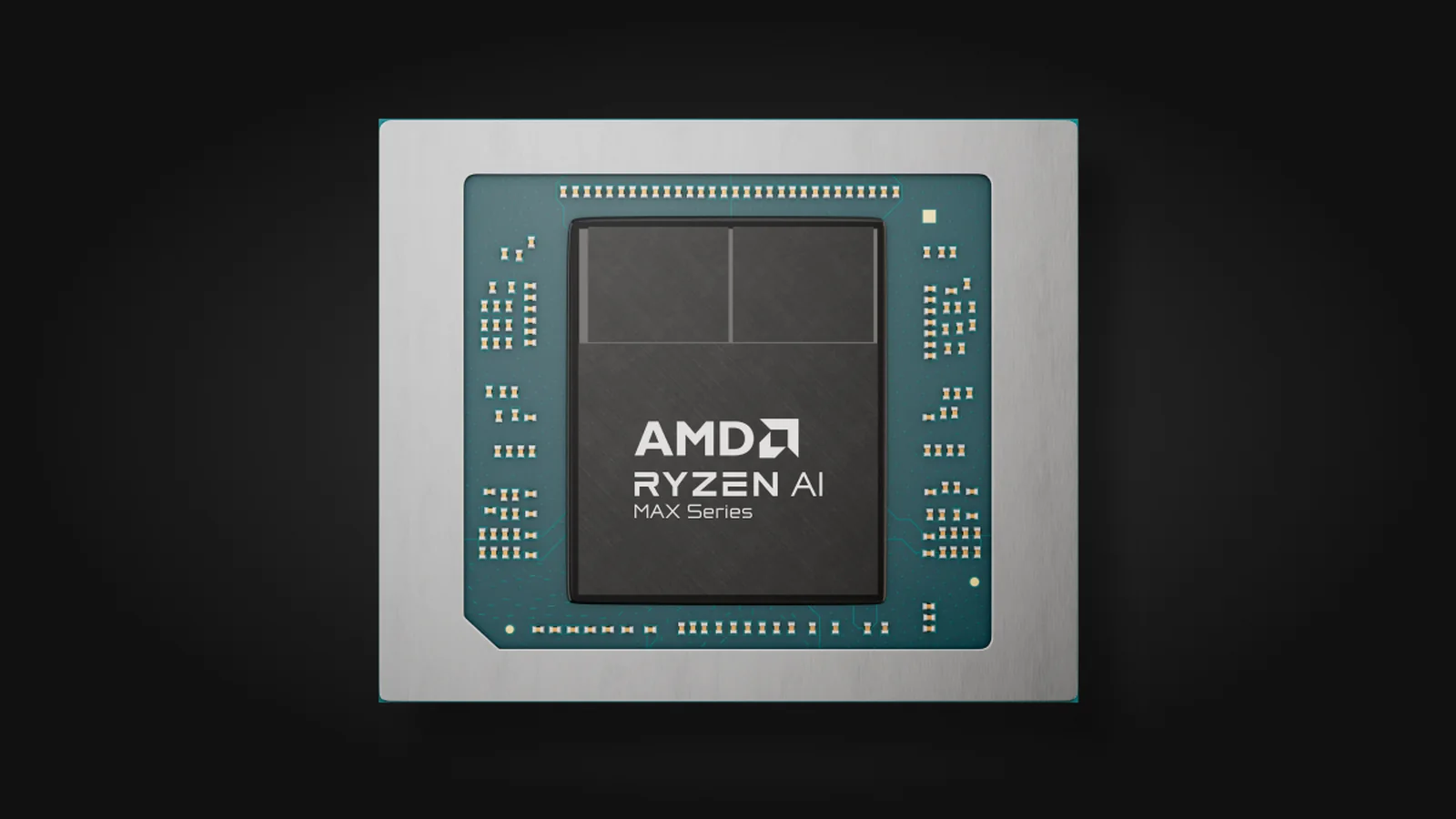
Current Ryzen AI Max processors, including the Strix Halo family and its Gorgon Halo refresh, use a unified LPDDR5X memory architecture. Rather than relying on separate graphics memory, their CPUs and integrated GPUs share a common memory pool.
AMD’s Ryzen AI Max+ PRO 495, part of the Gorgon Halo family, supports up to 192GB of unified memory, with as much as 160GB configurable for graphics workloads. The processor combines 16 Zen 5 CPU cores with Radeon 8065S integrated graphics featuring 40 RDNA 3.5 compute units.
That design is particularly useful for workloads requiring large amounts of GPU-accessible memory, including local AI inference. A move toward dedicated GDDR7 could change how AMD balances graphics bandwidth against memory capacity and flexibility.
For gaming, the potential advantage is higher memory bandwidth. Integrated GPUs depend heavily on memory performance because they share system memory with the CPU. Dedicated GDDR7 could reduce some of those bandwidth constraints, particularly in demanding games and graphics-intensive applications.
However, the actual performance benefit would depend on several factors, including memory bus width, operating speeds, GPU architecture, cache configuration and power limits. No gaming benchmarks or verified performance figures for Siren Halo are available.
It also remains unclear whether the reported GDDR7 and LPDDR memory pools would operate independently or support some form of shared access. That distinction could be important for local AI applications, where AMD’s existing unified-memory architecture allows unusually large memory allocations to the GPU.
The leak also introduces additional uncertainty surrounding AMD’s future processor roadmap.
According to Gotou_3rd, Siren Halo would follow the previously rumored Medusa Halo design, while Siren Point would effectively serve as a refresh of the Medusa family. The leaker suggested that AMD’s lack of a completely new Halo design in 2027 could explain the naming changes.
Earlier roadmap rumors associated Medusa Halo with Zen 6 CPU cores, RDNA 5 graphics and LPDDR6 memory support. The newly reported GDDR7 configuration suggests the eventual design could differ from those expectations, although neither the final specifications nor the relationship between Medusa Halo and Siren Halo has been established.
The reported processor would also arrive within AMD’s broader transition toward its Zen 6 CPU architecture, which introduces changes to the company’s processor core design. Siren Halo’s precise CPU configuration remains unconfirmed.
A possible connection to Microsoft’s next-generation Xbox hardware has also emerged.
VideoCardz, citing its own sources, claims Siren Halo may share AT2 RDNA 5 graphics technology with AMD’s rumored Magnus processor, which has been associated with the next Xbox console. Gotou_3rd separately described a connection between the two designs as likely but acknowledged having no confirmation.
Microsoft has officially confirmed that its next-generation Xbox console, Project Helix, will use a custom AMD system-on-chip developed through the companies’ ongoing partnership. However, Microsoft has not disclosed the chip’s memory architecture or confirmed any relationship with Siren Halo.
Reports that the rumored Magnus processor could feature a 192-bit GDDR7 interface and 68 enabled RDNA 5 compute units should therefore not be treated as specifications for Siren Halo.
AMD has already introduced GDDR7-related support in its Linux graphics driver development, but that does not independently establish which future products will use the memory standard.
For now, Siren Halo remains an unannounced processor known primarily through hardware leaks. Its GDDR7 capacity, LPDDR specification, memory bus widths, CPU and GPU configurations, product availability and launch timing have not been confirmed.
If the reported dual-memory architecture reaches consumer hardware, it could represent a notable departure from AMD’s current unified-memory approach in high-performance APUs, with potential implications for compact gaming PCs and graphics-heavy workloads. Its practical advantages will depend on the final implementation.
