


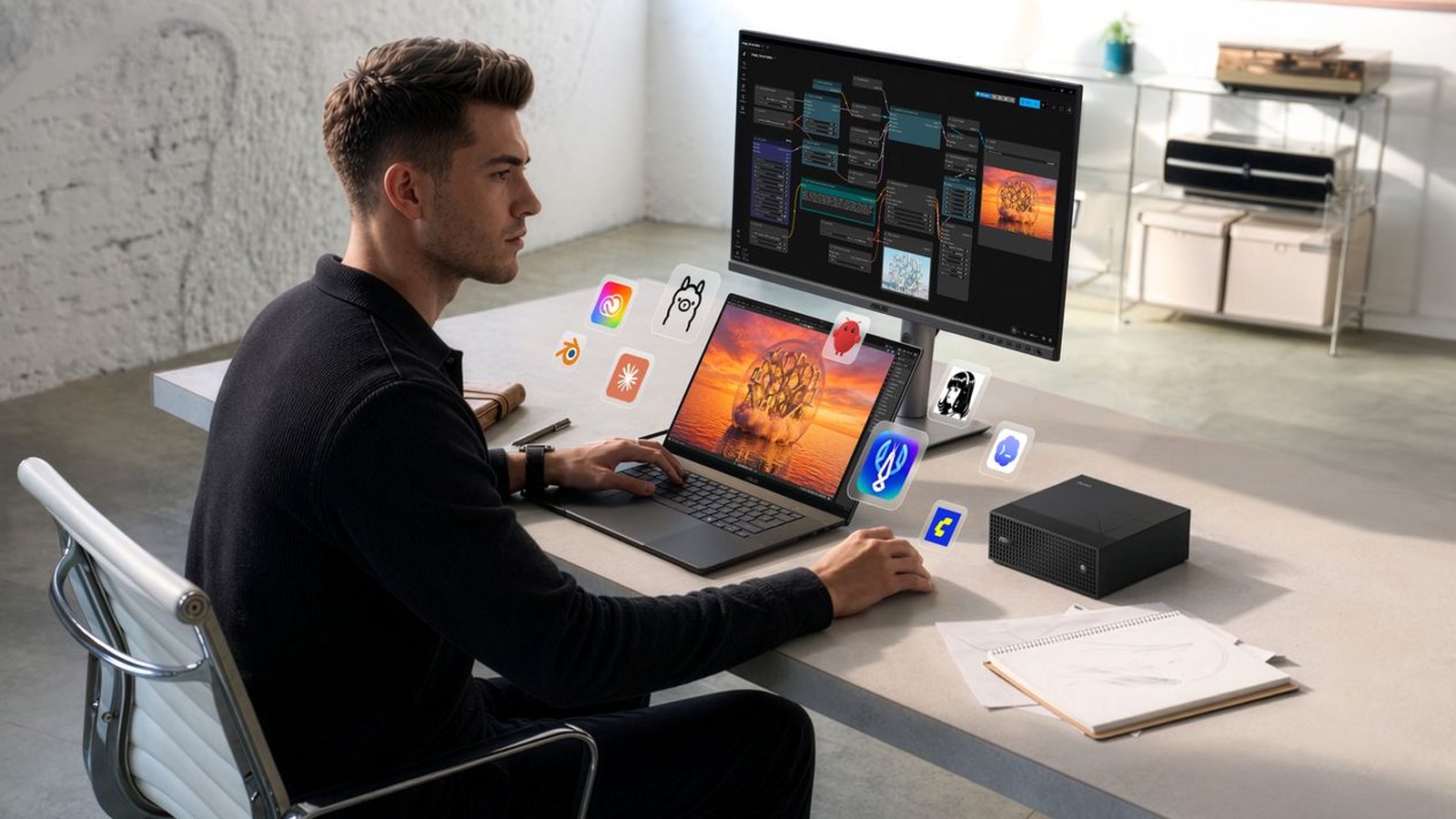
ASUS is rolling out its first ProArt systems powered by NVIDIA RTX Spark, expanding the platform across the ProArt P16 and P14 laptops alongside the compact ProArt GR1X mini PC. The lineup combines an NVIDIA Grace CPU, Blackwell RTX graphics and high-capacity unified memory in Windows 11 systems designed for local AI, creative workloads and gaming. ASUS had previously shown the hardware at Computex and IFA, with the latest rollout moving the products from preview hardware toward commercial availability.
Both ProArt laptops can be configured with up to 128GB of unified memory, allowing the CPU and GPU to draw from the same high-bandwidth memory pool. RTX Spark pairs a Grace CPU with up to 20 cores and a Blackwell GPU containing 6,144 CUDA cores, while NVIDIA rates the platform for up to one petaflop of FP4 AI performance. The same hardware also carries NVIDIA’s wider RTX stack, including CUDA, ray tracing, DLSS, Reflex and G-SYNC support.
The ProArt P16 is the larger of the two laptops and uses a 16-inch ASUS Lumina Pro OLED touchscreen with options reaching 4K resolution, a 120Hz refresh rate and up to 1,600 nits of HDR peak brightness. ASUS says the system measures 12.9mm at its thinnest point and weighs 1.77kg, making it noticeably slimmer than earlier high-performance ProArt machines. It also includes a 99Wh battery and full-size connectivity aimed at creators who need to work without relying heavily on adapters.
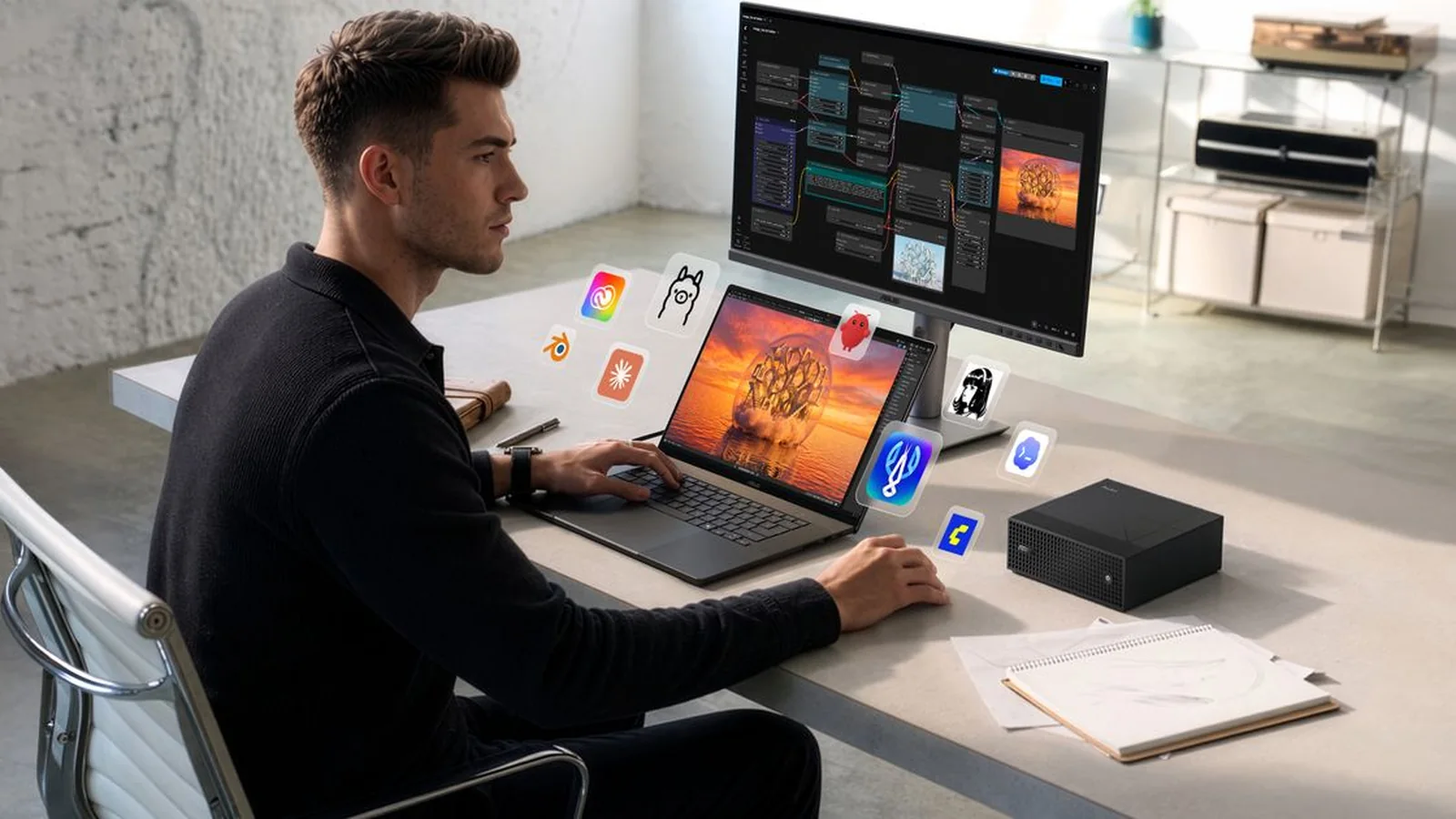
The ProArt P14 applies the same RTX Spark architecture to a smaller chassis. It uses a 14-inch Lumina Pro OLED display with up to 3K resolution and the same 120Hz target, while weighing 1.48kg and measuring 13.9mm thick. Its 90Wh battery is intended to keep the system usable for longer mobile creative sessions despite the high-end GPU and unified-memory hardware inside.
ASUS is also bringing RTX Spark to the desktop through the ProArt GR1X. The mini PC measures just 150 x 150 x 51mm but supports the same core platform features, including up to 128GB of unified memory and Blackwell RTX graphics. ASUS has designed the system for sustained 24/7 workloads with a dual-fan cooling setup, while connectivity includes 10GbE networking, Wi-Fi 7, Bluetooth 5.4 and support for as many as four 4K displays.
The GR1X is particularly notable because it extends RTX Spark beyond thin laptops into a compact desktop form factor intended for local AI agents, 3D rendering and professional creative applications. ASUS describes the machine as an always-on system capable of handling heavy local workloads without relying exclusively on cloud services. Gaming remains part of the platform’s feature set, even though the ProArt branding clearly puts creators and developers first.
ASUS joins several other PC manufacturers already building around NVIDIA’s new architecture. Microsoft has introduced the Surface Laptop Ultra with RTX Spark, while MSI has launched the Prestige N16 Flip AI+ and Dell is extending the platform to its XPS 16 Creator Edition and Creator Edition Desktop. Together, those systems establish RTX Spark as a broader Windows hardware platform rather than a single reference design.
The architecture is unusual for high-end Windows PCs because it combines an Arm-based CPU with NVIDIA’s Blackwell graphics hardware. NVIDIA is still positioning the systems as capable gaming machines, with support for ray tracing, DLSS and Reflex, but real-world compatibility will depend on Windows on Arm support, translation layers and individual anti-cheat implementations. For creators and developers, the much larger unified-memory pool is arguably the bigger attraction, particularly for workloads that would otherwise require expensive discrete GPUs with large amounts of VRAM.
ASUS has already indicated that demand for its RTX Spark laptops has been stronger than expected, with early channel allocations reportedly fully reserved ahead of wider availability. The ProArt P16, P14 and GR1X therefore arrive as part of one of the first major waves of commercial RTX Spark hardware, giving NVIDIA another foothold in premium Windows laptops and compact desktops beyond conventional x86 gaming PCs.
